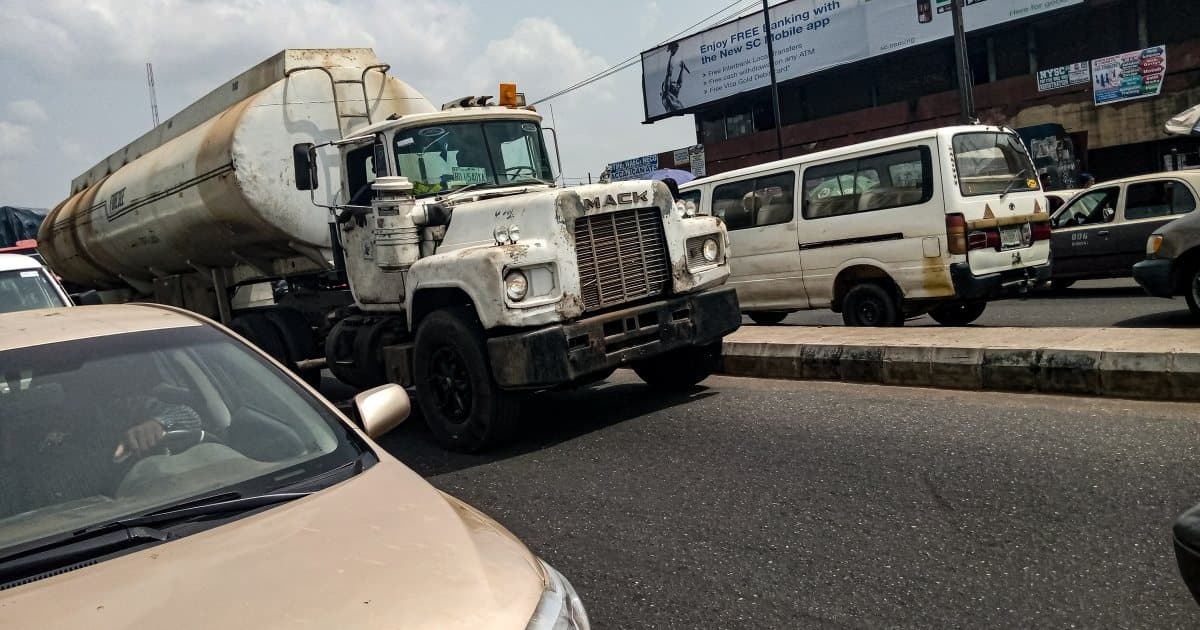
In Bamako, a litre of diesel costs 940 CFA francs. In Niamey, 618. In central and northern Mali, it sold for up to 2,500 CFA francs in spring 2026. The difference is not one of quality: it is a journey. The journey of a litre of diesel that leaves a refinery, crosses the sea, waits at the port of Dakar, travels more than a thousand kilometres on a threatened road, and ends up in the tank of a mine in the Kayes region.
We followed it, step by step. For each one, what is at stake: price, time, risk, and what a buyer can do so as not to suffer it.
Take action
- Get diesel delivered to your site in Mali or Senegal: write to us on WhatsApp.
- See our fuel offer.
The journey in one table
| Step | What is at stake | Main risk |
|---|---|---|
| 1. The refinery | Quality and the price formula | Off specification product |
| 2. The sea | Freight and timing | A late ship, a disrupted route |
| 3. The port of Dakar | Discharge | Demurrage, waiting for a berth |
| 4. The depot | Storage and loading | Lost volume, measured at the wrong temperature |
| 5. The road tanker | Load and paperwork | Overloading, an incomplete file |
| 6. The road | The route and the border | Waiting at Moussala, the rainy season |
| 7. The convoy | Security | Attacks, the blockade |
| 8. The mine | Receipt and stock | A missing delivery that stops the site |
Step 1: the refinery and the quotation
The litre is born in a refinery: in Europe, India, the Middle East, or now at Lekki, at Dangote, which says its diesel is 10 ppm sulphur. Its price is not negotiated by the litre: it follows an international quotation published every day, plus a negotiated premium that pays for freight, insurance, inspection, financing and the seller's margin. The final price is often the average of quotations over a few days around the bill of lading date. We explain it in Platts plus premium.
Before leaving, the product is inspected at loading by an independent company, and a certificate of analysis records its quality. This is where it is decided whether it is EN590 diesel at 10 ppm or 50 ppm diesel, the ECOWAS ceiling: see EN590 vs AGO diesel.
What to do: write the specification and the price formula into the contract, and choose the inspection company yourself.
Step 2: the sea
A tanker loads the parcel, from a few thousand to several tens of thousands of tonnes. In 2026, the sea was expensive: after the strikes of 28 February and the blockade of the Strait of Hormuz, Brent went from around 70 dollars to a peak of 126 dollars a barrel in March. Every detour of a shipping route ends up in the premium.
What to do: open the documentary credit several days before the loading window, not when the ship arrives.
Step 3: the port of Dakar
The ship arrives. If it waits for a berth, the demurrage meter runs: if the charter party sets it at 30,000 dollars a day, ten days of waiting cost 300,000 dollars, often the whole margin of a cargo. The ship generally undertakes to pump its cargo in 24 hours, if the shore facilities allow. The details are in fuel cargo hidden costs.
What to do: set out in the contract who pays for waiting, and within what time a claim must be filed.
Step 4: the depot
The diesel moves into a depot's tanks. In Dakar, SENSTOCK runs more than 284 million litres of capacity across three depots. For Mali, the product can stay under customs bond, in transit.
An invisible loss happens here: volume depends on temperature. In Senegal's official price structure, a tonne of diesel counts for 1,152 litres at 15 °C and 1,160 litres at 25 °C. A contract that does not say at what temperature volume is measured pays for litres that do not exist.
What to do: count in tonnes or in litres corrected to 15 °C, and see tank farms and tank terminals in West Africa.
Step 5: the road tanker
The litre goes into a 45,000 litre tanker, the region's unit of measure for fuel. Full of diesel, it carries about 36.9 to 38 tonnes of product. UEMOA rules cap the load at 11.5 tonnes per axle and the total weight at 51 tonnes: a 45,000 litre tanker full of diesel is only legal if its empty weight is low enough. A truck offloaded at a weighbridge loses half a day. The calculation is in fuel tanker truck 45,000 litres.
For Mali, the truck leaves under the ECOWAS inter-state road transit regime (TRIE), which avoids paying Senegal's duties.
What to do: check the tanker's empty weight, and leave with a complete file, checked in Dakar before loading.
Step 6: the road
The Dakar Bamako corridor runs about 1,470 kilometres by the northern route, through Kidira, and about 200 fewer by the southern route, through Moussala. In October 2026, the Kidira road was closed: the Kidira Kayes axis has become the most exposed to attacks on convoys. Everything goes through Moussala, where Senegal's interior minister found on 1 October a line of trucks several tens of kilometres long.
Prices follow: a truck from Dakar to Bamako cost around 1.4 million CFA francs before the blockade, and 3.6 to 4 million in August 2026, according to the Malian press. The rainy season, from June to October, lengthens delays further.
What to do: write into the contract who pays for days of immobilisation, and never believe a guaranteed transit time on this corridor in 2026.
Step 7: the convoy
On 3 September 2025, JNIM announced a fuel blockade on Mali. The first tanker convoys were attacked from September in the Kayes region. From late October 2025, the Malian army organised escorted convoys, which brought in 200 to 300 tankers a week. The blockade was reinstated in late April 2026, and by July Senegal's road hauliers' union counted at least 15 Senegalese trucks burned.
The military escort has a price, which rose from 600,000 to 800,000 CFA francs per convoy, according to Mondafrique in April 2026. This is where the Bamako litre at 940 CFA francs becomes the northern litre at 1,250, then 2,500. The figures are in shipping to Mali under blockade.
What to do: split deliveries, track every truck hour by hour, and never push a driver onto a road they refuse.
Step 8: the mine
The truck finally arrives. Before signing, check the seals, the appearance, density corrected to 15 °C, and the volume. The checklist is in the diesel delivery checklist.
Then the litre joins the stock. In an area where fuel travels by convoy, the right level is the one the Malian state set for itself by decree in April 2026: 45 days of consumption. A mine that stops for lack of diesel loses more in one day than its stock would have cost: see diesel buffer stock on site and diesel consumption in mining.
What the journey costs
We do not give a price of the day: the quotation changes every day. But the journey always adds the same items to the product, and they make the difference between Dakar and Kayes:
- the premium above the quotation: freight, insurance, inspection, financing, margin;
- port and depot handling fees;
- storage and volume losses;
- road transport, which has more than doubled on Dakar Bamako since the blockade;
- the escort and convoy insurance;
- waiting: days of immobilisation of the truck, the driver and the product;
- the cost of money tied up for the whole journey.
The product counts, but the road decides. That is why the cheapest diesel in the CFA franc zone is Niger's, which refines its own crude, and the most expensive Mali's, which receives everything by road. The comparison is in our West Africa diesel price barometer.
Our reading
The price of a litre is spoken of as a number. It is in fact the sum of a journey, and every step can derail it. A Sahel mine does not protect itself by negotiating a few francs on the quotation. It protects itself with three decisions: a contract with a price formula and written responsibilities, a second source through another corridor, and a stock that matches the risk of the road.
Frequently asked questions
How long does it take to deliver diesel from Dakar to Bamako?
There is no guaranteed time in 2026. Convoys, security, waiting at Moussala and road conditions change the duration from one week to the next, especially in the rainy season.
How many litres does a road tanker carry?
The common model carries 45,000 litres, about 36.9 to 38 tonnes of diesel. It is only legal when full if its empty weight stays within UEMOA's 51 tonne ceiling.
Does fuel bound for Mali pay Senegal's taxes?
No, if it travels under the ECOWAS inter-state road transit regime: duties are suspended during the crossing and paid in the destination country.
Why is diesel more expensive in northern Mali?
Because every kilometre adds transport, escort and risk. In April 2026, a litre sold for 1,250 to 2,500 CFA francs in the centre and north, against 940 in Bamako.
How many days of stock should a mine keep?
In an area served by convoys, 45 days of consumption, the level the Malian state chose for its national security stock in April 2026.
What we do
GRACECORP AMD GROUP supplies diesel from our own depots or those of our partners in Dakar, Abidjan, Lomé or Cotonou, depending on availability, and GraceRoad organises transport to the site with verified hauliers and tracking of every truck. The price follows the international quotation plus a stated premium; payment is by documentary credit or 50 % with the order.
Request an offer on WhatsApp or see our fuel offer.
Read next: mining companies in Senegal and Mali: the 2026 list and shipping to Mali under blockade.
Sources: GraceRoad articles already published and their primary sources, in particular: Africanews, 23 March 2026 (Dangote Euro 5 diesel); Togo First, 27 May 2026 (Brent after 28 February); standard charter parties and BP general terms 2015 (demurrage, pumping warranty); SENSTOCK, "About" page (capacity); CRSE, price structure (litres per tonne at 15 °C and 25 °C); UEMOA regulation 14/2005/CM/UEMOA (axle load and total weight); Senegal Ministry of the Interior, 1 October 2026, and ISS Africa (Moussala, Kidira Kayes axis); World Bank (length of both routes); Malian press, August 2026 (Dakar Bamako truck price); ISS Africa, 4 June 2026 (escorted convoys, 200 to 300 tankers a week, reinstated blockade); Senegal road hauliers' union, July 2026 (burned trucks); Mondafrique, 14 April 2026 (escort costs, prices outside Bamako); Official Journal of Mali, 2026, no. 7 (45 day national security stock); government of Niger, release of 17 July 2024.