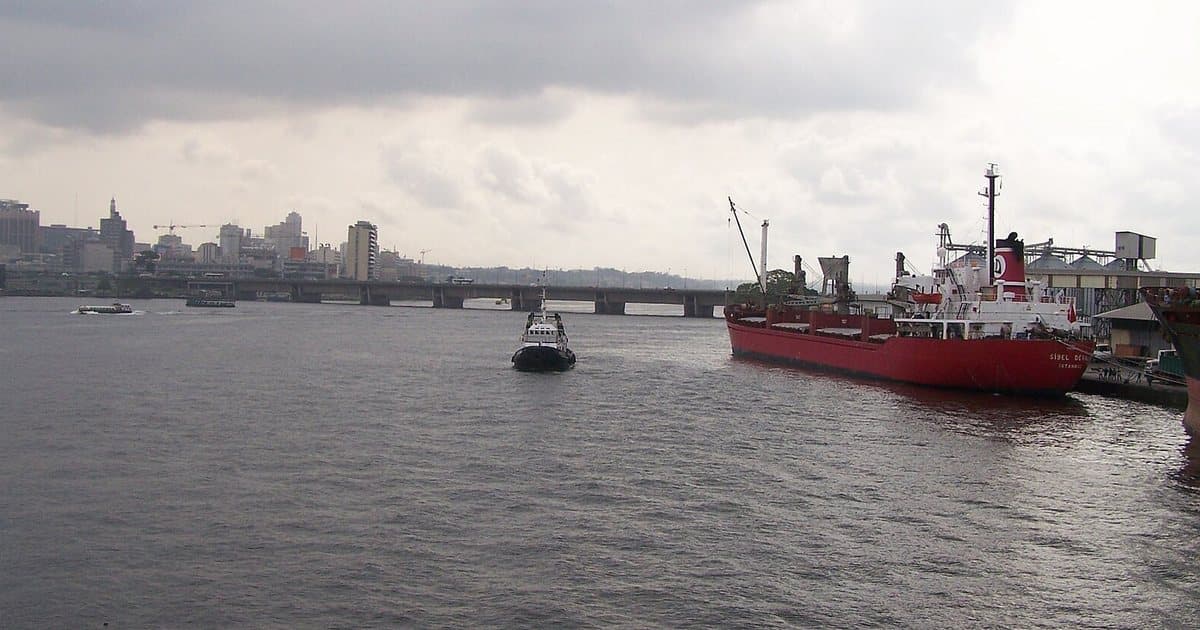
In the first half of 2025, Ghana's fuel importers paid more than 44 million dollars in demurrage, according to their industry chamber. Those waiting penalties were passed on to consumers: an extra 0.47 to 0.60 cedi per litre. By comparison, Kenya paid less than one million over the whole of 2024.
A fuel cargo is almost never lost on the price of the product. It is lost on what comes after: waiting days, pumping, lightering, port charges, volume losses, the cost of money. Here are all of those items, with official figures, and how to protect yourself.
1. Vessel demurrage
How it works
A tanker is chartered with an allowed time to load and discharge, called laytime. When the ship arrives and declares itself ready by tendering a notice of readiness, the clock starts after a short delay. If discharge runs beyond laytime, the charterer pays demurrage, a daily amount set in the charter party and calculated pro rata, hour by hour.
The rate follows the freight market. If the charter party sets demurrage at 30,000 dollars a day, ten days of waiting cost 300,000 dollars. On one cargo, that is the whole margin.
Who pays? Under FOB the buyer chartered the ship, so the buyer pays. Under CFR or CIF the seller chartered, but the sales contract generally passes discharge port demurrage on to the buyer. Either way, whoever receives the ship pays for the wait at arrival.
Why ships wait at African ports
No berth available. In Ghana, a single offshore mooring handled about 80 percent of the country's fuel imports. Slots were allocated at officials' discretion, and operations stopped after 2 pm. Hence the 44 million dollars. Since the 2025 reforms, slots follow written rules, terminals work around the clock and the discharge window is shrinking from 72 to 48 hours.
No room in the tanks. A ship can only discharge if the depot has ullage. If the previous product has not been lifted, the ship waits and the clock runs.
Not enough water. Many West African ports cannot take a fully laden medium range tanker. Cargoes are then transferred ship to ship at sea, notably off Lomé, which has become the main regional hub. In Nigeria, large vessels waited offshore while smaller ones lightered them: the demurrage bill was put at 120 million dollars a year in 2017.
Payment is not ready. When the bank has not opened the letter of credit or foreign currency is short, the ship waits offshore. Nigeria lived it in 2015, when importers could no longer get letters of credit opened. Ghana lived it in the first quarter of 2025, and its central bank has run foreign exchange auctions reserved for fuel importers since 2022.
The product is disputed. In February 2022 Nigeria quarantined petrol cargoes containing too much methanol and turned back two ships loaded in Antwerp. While samples are tested and arguments continue, the ship waits.
2. Pumping
The word covers two very different things.
The ship's pumping. Tanker charter parties generally contain a pumping warranty: the ship undertakes to discharge its cargo within 24 hours, or to maintain 100 psi at its manifold, provided shore facilities permit. If the ship pumps too slowly, the owner loses demurrage for the time lost. But if the terminal's line restricts the rate, time counts against the receiver. Everything turns on the pumping logs and letters of protest signed during the operation: without them, nobody can prove who slowed things down.
Shore pumping and throughput charges. The terminal and the depot charge for moving product from jetty to tank, then from tank to truck. In some countries these charges are public:
- In Senegal, the regulator's price structure at 6 December 2025 included, per tonne of imported diesel, 212 CFA francs of port tax, 750 CFA francs of throughput charge and 1,887 CFA francs of direct costs.
- In Nigeria, the official template of January 2021 included, per litre of petrol, 1.61 naira of jetty throughput, 2.58 naira of storage and 2.38 naira of port authority charge.
Taken one by one these amounts are small. It is their sum, and what they become when the product stays longer than planned, that weighs.
3. All the other costs
| Item | What it is | Official example |
|---|---|---|
| Lightering | Transfer at sea to a smaller vessel | 4.57 naira per litre (Nigeria, January 2021) |
| Port charge | Port dues on ship and cargo | 2.38 naira per litre (Nigeria); 212 CFA francs per tonne (Senegal, diesel) |
| Maritime agency charge | National maritime administration | 0.23 naira per litre (Nigeria) |
| Jetty and throughput | Jetty to tank to truck | 1.61 naira per litre (Nigeria); 750 CFA francs per tonne (Senegal) |
| Storage | Tank rental | 2.58 naira per litre (Nigeria) |
| Insurance | Cargo during the voyage | 0.21 naira per litre (Nigeria) |
| Financing | Interest and bank charges | 1.33 naira per litre (Nigeria) |
| Security and support funds | National levies on every tonne imported | 17,400 CFA francs per tonne each for two funds (Senegal, diesel) |
In the Nigerian template of January 2021, these items, excluding product and freight, came to 12.91 naira per litre, almost 9 percent of the delivered product price (145.62 naira). In Senegal, the two funds levied on imported diesel alone weighed 34,800 CFA francs per tonne, or 8 percent of the product cost.
Then come costs that appear in no template:
Volume losses. You generally pay for the bill of lading quantity, measured at loading. What reaches the tank is always slightly less. And volume depends on temperature: in the Senegalese structure, one tonne of diesel counts as 1,152 litres at 15 °C and 1,160 litres at 25 °C. A contract that does not state the measurement temperature leaves 0.7 percent of the volume undefined.
Inspection. An independent inspector must gauge and sample at loading and at discharge. The cost is modest; its absence is ruinous.
Price and currency risk. Price is often set on an average of quotations around the bill of lading date. Between that date and payment, the market and the currency move.
Agency and port call costs. Pilotage, towage, ship's agent: advanced by the agent and recharged.
Overstay at the depot. Product not lifted within the agreed time pays higher storage and blocks the next cargo.
4. How to protect yourself
Before signing
- Get a written commitment from the terminal: berthing window, available ullage, permitted draft, maximum vessel size.
- Match the vessel's arrival window to the terminal's, not the other way round.
- Check that import licences and discharge permits will be ready.
In the contract
- State laytime and the demurrage rate, and require it to be supported by the charter party.
- Set a deadline for presenting any demurrage claim, with documents. Oil contracts commonly provide 90 days; after that the claim is time barred.
- Specify where quantity and quality are final (at loading or in the receiving tank), at what temperature, and by which inspector.
- Include the pumping clause, and who bears lost time if the shore line restricts the rate.
On the money side
- Have the letter of credit opened several days before the loading window, not when the ship arrives.
- Secure foreign currency before committing.
During the operation
- Have time sheets, pumping logs and letters of protest signed as events occur.
- Take sealed samples at every stage.
Or change the model. A buyer with no terminal and no bank behind it does not have to carry a ship's risk. It can buy "delivered into tank", the seller keeping the vessel at its own risk as far as the depot, or buy ex tank, in parcels, from a company that has already imported.
Our reading
Demurrage is not an African curse. Ghana paid 44 million dollars of it in six months, then changed the rules for allocating slots, and the problem eased. These are costs of organisation: a saturated terminal, a late bank, a badly written contract.
What destroys a fuel deal is believing that the price of the product is the price of the deal. A professional calculates the other way round: start from everything that can go wrong between ship and tank, put a number on it, write it into the contract, and only then look at the price per tonne.
Frequently asked questions
What is vessel demurrage?
Compensation owed to the shipowner for each day the ship waits beyond the time allowed to load or discharge. It is set in the charter party and calculated pro rata.
Who pays demurrage at the discharge port?
The charterer, towards the shipowner. In practice, in a CFR or CIF sale, the contract generally passes it on to the buyer, who is the party receiving the ship.
What are pumping charges?
Charges made by the terminal or depot for moving product from jetty to tank, then from tank to truck. Not to be confused with the ship's pumping warranty, which concerns the speed of discharge.
What is lightering?
The transfer at sea of part of a cargo to a smaller vessel, when the port cannot take the large ship fully laden. In Nigeria it was counted at 4.57 naira per litre in January 2021.
How do you avoid demurrage on a fuel cargo?
By getting a written commitment from the terminal on berth and tank ullage, opening the letter of credit before loading, writing laytime and the claim deadline into the contract, and documenting every hour of the operation.
What we do
GraceRoad buys fuel from companies with their own depots in Côte d'Ivoire, Benin, Togo and Senegal, and from international traders for full cargoes. For a cargo, we prepare the reception with you before you sign: terminal, ullage, window, inspection, bank. For smaller volumes, we buy ex depot and deliver to your site, so you never carry the risk of a ship.
Read next: petroleum products trading in Africa and fuel storage in West Africa.
Sources: The Business and Financial Times (Ghana), 21 July 2025, citing the Chamber of Bulk Oil Distributors (44 million dollars of demurrage in the first half, 80 percent of imports through the offshore mooring, per litre impact, reforms, Kenya comparison, foreign exchange) and 4 April 2022 (Bank of Ghana foreign exchange auctions); allAfrica, 28 August 2017 (120 million dollars of demurrage a year in Nigeria); BusinessDay Nigeria, 15 January 2021 (official pricing template at 7 January 2021, item by item, definition of lightering) and 2026 (offshore Lomé transfer hub, citing S&P Global Energy); Senegal energy sector regulator (CRSE), petroleum price structure at 6 December 2025 (port tax, throughput charge, direct costs, funds, conversion factors at 15 °C and 25 °C); Arise News, February 2022 (methanol petrol cargoes); Reuters, May 2015, carried by Arab Times (letters of credit in Nigeria); ASBATANKVOY charter party form and Britannia P&I, "Demurrage claims and the pumping warranty" (laytime, pumping warranty, claim deadline).