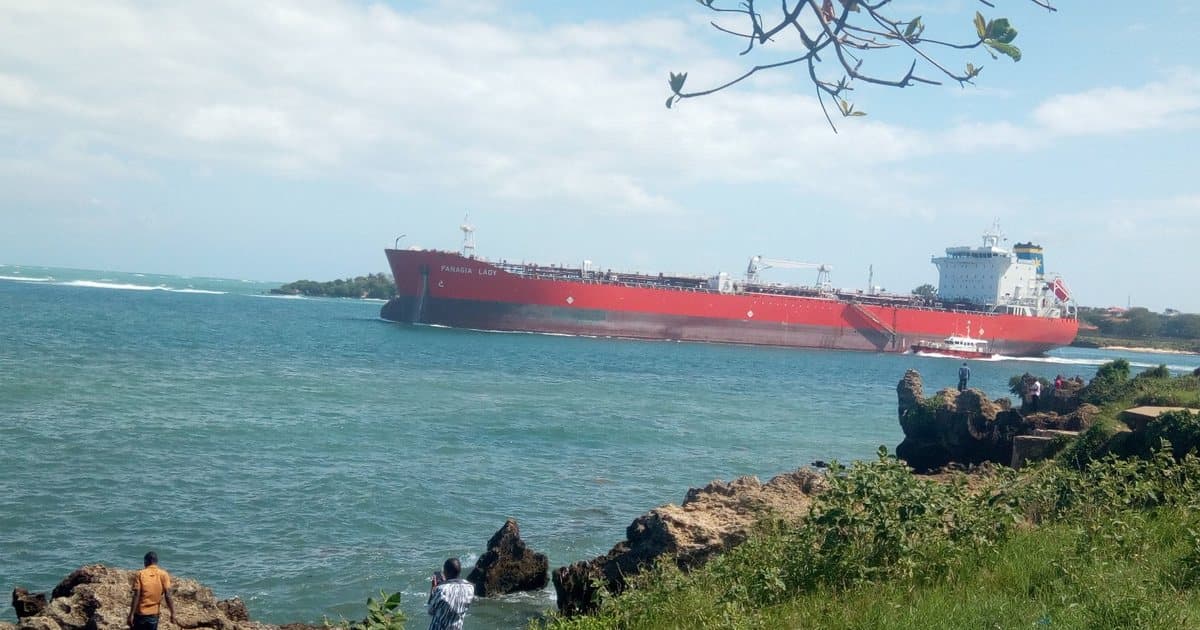
Between the refinery and the tank of a motorcycle in Cotonou, a litre of fuel changes hands five or six times. Each step has its own trade, its own risk and its own margin. Understanding that chain explains why the price is what it is, why some players are so powerful, and where a newcomer can find room.
1. The refinery
It starts with a refinery selling its product, usually in whole cargoes, free on board. In March 2026 the Dangote refinery sold twelve petrol cargoes, 456,000 tonnes in total, an average of 38,000 tonnes per ship. The rest of the region's fuel comes from refineries in Europe, Asia or the Middle East.
2. The global trader
Whoever buys a whole cargo must pay or guarantee it before loading, charter and insure the ship, find a depot at destination and hedge price risk during the voyage. That is the business of the big trading houses. Ship tracking data published by Bloomberg in 2024 showed Vitol, Trafigura and BP lifting the vast majority of the Dangote refinery's loadings.
These traders do not stop at the jetty. In 2022 Vitol took full control of Vivo Energy, which markets Shell and Engen branded fuels through more than 2,300 stations in 23 African countries. In 2021 Trafigura consolidated Puma Energy, present in around thirty countries including thirteen in Africa, and a shareholder of SENSTOCK in Senegal. From ship to pump, part of the chain is held by the same groups.
3. The licensed importer
In every country, importing is reserved for licence holders or a national company. In Senegal, law 98-31 requires imports to arrive by sea and pass through a bonded depot, and obliges each importer to contribute to the security stock. In Burkina Faso, only SONABHY imports.
4. The depot
The product is discharged into a port depot, then possibly moved to an inland one: SENSTOCK in Dakar, GESTOCI in Abidjan and Yamoussoukro, BOST in Ghana, SONABHY at Péni. Storage costs money, and its scarcity inland explains part of the region's shortages. In Senegal the law requires depots, refineries excepted, to accept any authorised importer or distributor without discrimination.
5. The marketer and the station
The licensed marketer buys at the depot, hauls by road tanker and sells through its stations or to industrial customers. In countries with administered prices its margin is set by the state. In Senegal, the price structure published by the energy regulator stacks up:
- the import parity price, what the product costs delivered to the port, calculated from international quotations;
- port and customs duties;
- a specific tax on some fuels;
- distributor margins, including a transport equalisation so the price is the same everywhere;
- VAT.
6. The informal reseller
At the end of the chain are those with no licence at all: kpayo in Benin, bottles along Mali's roads, the black market during shortages. They live on gaps: in price between two countries, in availability between a dry station and a hidden stock. It is also where quality disappears.
Where the margin is made
With the trader, on volume, access to bank credit and risk management. The margin per tonne is thin, but it applies to tens of thousands of tonnes per ship.
With whoever holds the depot, because without tanks nobody imports.
With the marketer, on a regulated but steady margin, and above all on industrial customers.
In special regimes. The same Senegalese price structure of December 2025 provided cheaper diesel for companies under a special tax regime, such as some mines, and a partial duty exemption for the national power utility's diesel. The price of the same litre also depends on who buys it.
Our reading
The global traders dominate the top of the chain because they have the capital, the credit lines and the ships. That is not an injustice, it is a barrier to entry: one cargo costs tens of millions of dollars.
But the chain has a poorly served middle. Between the coastal depot and a mine in the Sahel, someone must buy from the right depot, haul safely, check quality and commit to a delivery schedule. That link needs no ship. It needs knowledge of depots, roads and customers. It is where the region lacks serious players most.
Frequently asked questions
What does a petroleum products trader do?
It buys cargoes of fuel, finances them, organises shipping, manages price risk during the voyage and resells them to importers or marketers. In West Africa, Vitol, Trafigura and BP are among the most active.
What is the import parity price?
The cost of a petroleum product delivered to the importing country's port, calculated from international quotations and freight. It is the first line of Senegal's fuel price structure.
Who owns Shell stations in Africa?
Vivo Energy, which markets Shell and Engen brands through more than 2,300 stations in 23 African countries, has been wholly owned by the trader Vitol since 2022.
Can you trade fuel in Africa without owning ships?
Yes, in the middle of the chain: buying at the depot, hauling and delivering to industrial customers, with the licences each country requires. Trading whole cargoes, by contrast, needs very large capital and credit lines.
What we do
GraceRoad works on that middle link: we buy certified fuel from partner depots in Côte d'Ivoire, Benin, Togo and Senegal, or from traders for full cargoes, and deliver it to your site with a schedule and a price formula. Send us your monthly volume and delivery point.
Read next: Dangote refinery sales: who can buy and selling fuel in West Africa: licences.
Sources: Africanews and allAfrica, 23 March 2026 (Dangote cargoes); BusinessDay, 7 November 2024, citing Bloomberg (Dangote's leading buyers); Financier Worldwide and Akin Gump (Vitol's acquisition of Vivo Energy, completed 25 July 2022, 2,300 stations in 23 countries); Puma Energy, statement of 30 September 2021 (consolidation into Trafigura, regional presence); SENSTOCK, "About" page (shareholders); Senegal law 98-31 of 14 April 1998, articles 5, 6 and 8; Senegal energy regulator (CRSE), petroleum price structure of 6 December 2025, published by Vie publique Sénégal; SONABHY official website.