In fuel tenders and offers across Africa, two acronyms keep coming back: EN590 and AGO. They are often used interchangeably, wrongly. One is a precise standard, the other a trade name whose quality depends on the country. Mixing them up means risking paying for premium diesel and receiving the ordinary product, or the other way round.
Here is the difference, the specifications to demand, how the EN590 price is set, why the pump price is no benchmark for you, and how to spot a fake offer.
Take action
- Request an offer for EN590 or 50 ppm diesel: write to us on WhatsApp.
- See our fuel offer: by road tanker in West Africa, by ship from 2,000 tonnes.
EN590 and AGO: what are we talking about?
EN590 is the European standard EN 590 for diesel engine fuel. It sets a precise list of properties, including a cap of 10 mg of sulphur per kilo, hence "EN590 10ppm". It is the diesel of recent cars and trucks in Europe, also called Euro 5 diesel.
AGO, automotive gas oil, is simply the name of road diesel in the oil trade and in the English speaking countries of the region, Nigeria and Ghana in particular, next to PMS for petrol and DPK for kerosene. It is not a standard: an AGO has the quality required by the standard of the country where it is sold, or by the contract.
An "AGO" with nothing more therefore guarantees nothing. "AGO 50 ppm" or "AGO meeting EN590" already says something.
EN590 vs AGO in one table
| EN590 diesel | AGO | |
|---|---|---|
| What it is | A precise European standard | The trade name of road diesel |
| Sulphur | 10 mg/kg maximum | 50 ppm maximum for diesel imported into ECOWAS; some local refineries have been granted extensions |
| Other properties | Set by the standard: density, cetane, flash point, distillation | Set by the national standard, to be copied into the contract |
| Where it is required | International contracts, mines, recent engines and generators | Domestic market, distribution, many public tenders |
| Price | The benchmark for 10 ppm diesel quotations | 50 ppm gasoil generally trades at a discount to that benchmark |
EN590 specifications
The values below are the main limits of the EN 590 standard. The line by line detail, with the test methods, is in our article on how to read a diesel certificate of analysis.
| Property | EN590 limit |
|---|---|
| Sulphur | 10 mg/kg maximum |
| Density at 15 °C | 820 to 845 kg/m³ |
| Flash point | above 55 °C |
| Cetane number | 51 minimum |
| Cetane index | 46 minimum |
| Viscosity at 40 °C | 2.00 to 4.50 mm²/s |
| Distillation | 95 % recovered at 360 °C maximum |
| Water content | 200 mg/kg maximum |
| Total contamination | 24 mg/kg maximum |
| Fatty acid methyl esters (biodiesel) | 7 % by volume maximum |
| Lubricity | wear scar diameter of 460 µm maximum |
| Copper strip corrosion | class 1 |
Density is also what converts tonnes into litres: a tonne of diesel at 840 kg/m³ is about 1,190 litres at 15 °C. The calculation is in diesel tonnes to litres.
AGO sulphur, country by country
| Zone | Diesel sulphur cap | Since |
|---|---|---|
| Europe, EN590 standard | 10 ppm | |
| ECOWAS, imported diesel | 50 ppm | 1 January 2021 |
| ECOWAS, diesel from regional refineries | 50 ppm in principle, with extensions granted | 1 January 2025 |
| Ghana, imported diesel | 50 ppm | July 2017 |
| Togo | new specifications adopted | 11 July 2025 |
| Nigeria, imported diesel | 50 ppm | 1 June 2024 |
| Côte d'Ivoire, SIR refinery diesel | above 2,000 ppm in 2026, upgrade expected by 2031 |
A 50 ppm diesel is therefore perfectly legal in Dakar, Abidjan or Lomé, but it does not meet a contract that requires EN590 10ppm. Conversely, the Dangote refinery says its diesel meets Euro 5, so 10 ppm. The details are in our article on 50 ppm diesel and the ECOWAS standard.
The EN590 price: why it changes every day
We do not give an "EN590 price today" here: it moves every day, and a figure published in the morning is wrong by the evening. What does not change is how it is calculated.
- A benchmark quotation. Price reporting agencies, Platts and Argus, publish the value of 10 ppm diesel every day on the main markets: Northwest Europe, the Mediterranean, the Arab Gulf. In London, the ICE Low Sulphur Gasoil futures contract is the public reference. These prices are quoted in dollars per metric tonne.
- A premium. Freight, insurance, inspection, financing and the seller's margin come on top. The premium is negotiated and written into the contract.
- A pricing period. The final price is often the average of quotations over a few days around the bill of lading date, so the exact price is only known after loading.
This is what is called a "Platts plus premium" price, explained in detail in how a diesel cargo price is calculated. On this market, the gap between 50 ppm gasoil and the 10 ppm benchmark is generally a small discount: the choice between EN590 and 50 ppm is decided by what your engines need more than by price.
Pump price and market price: two different worlds
In West Africa, the price at the pump is often administered, and sometimes subsidised. It says almost nothing about the price of a cargo.
- In Senegal, the pump price is a ceiling set by the state. In August 2026, the government estimated the real cost of diesel at close to 40 % above the posted price, and had already spent more than 245 billion CFA francs on subsidies since January.
- In Guinea, the April 2026 price structure makes the mining sector pay close to 30 % more for diesel than motorists.
- In Ghana and Nigeria, the price is free: the Ghanaian authority publishes a floor price, and in Nigeria Dangote's ex refinery price is the reference.
For a mine, a power plant or an importer, the real price is the market price: the quotation plus the premium, then the logistics to the site. In a country with subsidised pumps, a bulk offer can therefore be more expensive than the price at the station without being abusive. Comparing a cargo offer with the pump price is comparing two different things. Pump prices country by country are in diesel prices in West Africa.
Fake EN590 offers: how to spot them
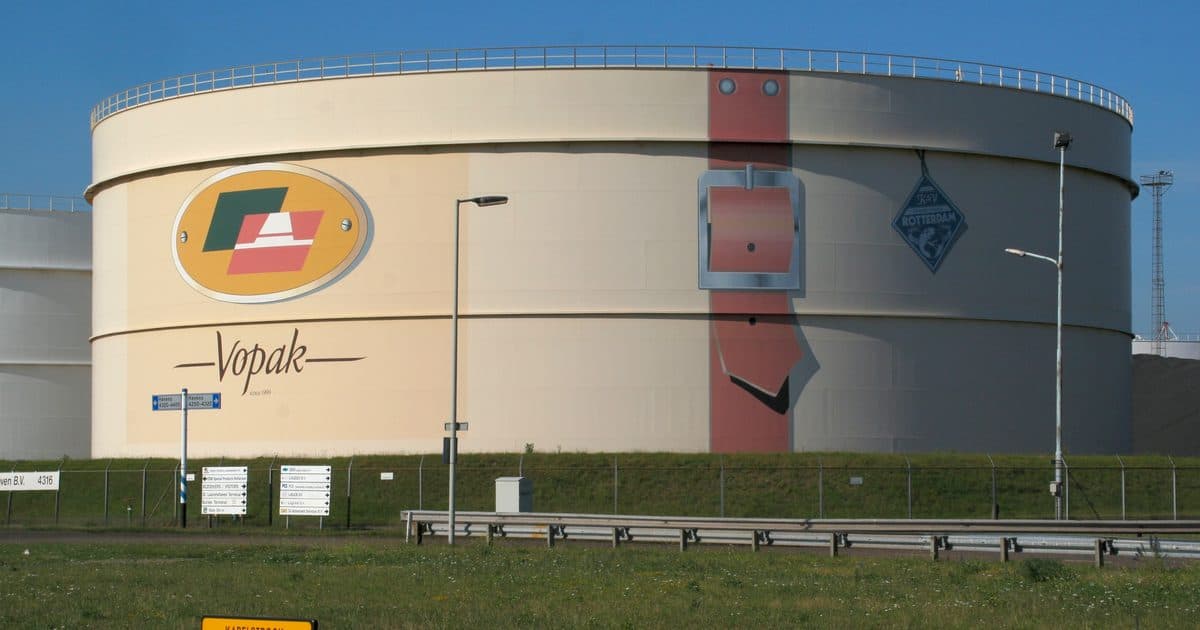
EN590 is the favourite product of trading fraudsters. The offers circulate on LinkedIn and by email: hundreds of thousands of tonnes "in tanks in Rotterdam or Houston", a "procedure" with ICPO, SPA, "dip test" and tank storage receipt, and a price below the market.
In Rotterdam, the phenomenon has a name: storage spoofing, selling storage capacity and stocks that do not exist. The Port of Rotterdam Authority and the Dutch association of tank storage companies, VOTOB, have set up a working group that publishes a whitelist of genuine terminals and a blacklist of fake websites. An investigation by the Dutch daily De Volkskrant, reported in February 2026, counted 421 fraudulent websites and about 2.5 billion euros of suspicious transactions, and a first case was brought before the Rotterdam court in February 2026.
The signals that should stop you:
- A price below the day's quotation. Nobody sells diesel below the market for long.
- Paying before seeing the product: tank fees, a storage agreement to sign, an "injection" to finance.
- Documents that cannot be verified: a storage receipt, injection report or tank number the terminal does not confirm.
- Refusal of an independent inspection appointed by the buyer, at loading.
- Free email addresses and contacts who keep changing.
Always check the terminal on its official website or on the Rotterdam whitelist, and pay by documentary credit against documents. Our articles on commodity trading scams and on ICPO, LOI, FCO and POF detail the schemes.
Buying EN590 or AGO without getting it wrong
- Write the specification into the contract: "diesel meeting EN 590, 10 mg/kg sulphur maximum", or "50 ppm diesel to the national standard", never just "AGO". The clauses to check are in fuel supply contract clauses.
- Demand a certificate of analysis and an independent inspection at loading, by a company you choose.
- Pay by documentary credit, against the loading and inspection documents: see payment terms in commodity trading.
- Check on receipt: density, appearance, seals. The checklist is in the diesel delivery checklist.
Frequently asked questions
What is the difference between EN590 and AGO?
EN590 is a precise European standard, with 10 mg/kg of sulphur at most. AGO, automotive gas oil, is the trade name of road diesel: its quality depends on the country's standard or the contract, often 50 ppm of sulphur in West Africa.
Are EN590 and 10 ppm diesel the same thing?
Almost: "EN590 10ppm" means a diesel that meets the whole EN 590 standard, including the 10 mg/kg sulphur cap. A diesel can have 10 ppm of sulphur and still fail another requirement of the standard, such as cetane or flash point.
What is the EN590 price today per MT?
It changes every day. It follows the 10 ppm diesel quotation published by Platts or Argus, and the ICE Low Sulphur Gasoil contract in London, in dollars per tonne, plus a premium. A serious offer is indexed on that quotation.
Why is the pump price sometimes lower than a cargo price?
Because in several countries, such as Senegal, the pump price is capped and subsidised by the state. A cargo price follows the world market.
Is the diesel sold in West Africa EN590?
Not necessarily. The ECOWAS standard requires 50 ppm of sulphur for imported diesel, five times more than EN590. The Dangote refinery says its diesel is 10 ppm.
How do you spot a fake EN590 offer?
A price below the market, a request for payment before any verification, storage documents the terminal does not confirm, and refusal of an independent inspection. In Rotterdam, check the terminal on the whitelist of the storage spoofing working group.
What we do
GRACECORP AMD GROUP supplies diesel to the specification written into the contract, EN590 10ppm or 50 ppm to the ECOWAS standard, with a certificate of analysis and independent inspection at loading. In West Africa, we deliver by road tanker from our own depots or those of our partners in Dakar, Abidjan, Lomé or Cotonou, depending on availability; elsewhere in Africa, by ship from 2,000 tonnes. The price follows the international quotation for the product plus a stated premium, and payment is by documentary credit or 50 % with the order.
Request an offer on WhatsApp or see our fuel offer.
Read next: adulterated diesel: how to spot it and fuel trading: who really has the product.
Sources: European standard EN 590, general requirements and test methods, as reproduced by Wikipedia (revision of 10 November 2025), already used in our certificate of analysis article; ECOWAS directive C/DIR.1/9/2020 on harmonised automotive fuel specifications, and Le Sahel, June 2023 (2021 and 2025 deadlines); SGS, note on Ghana standard GS 141:2017 (50 ppm for imported diesel since July 2017); Journal du Togo, July 2026 (Togolese specifications of 11 July 2025); Argus Media and BusinessDay, 2024 (Nigerian interim 200 ppm cap in March 2024, then 50 ppm for imported diesel from 1 June 2024); allAfrica, 15 June 2026 (sulphur in SIR diesel, 2031 deadline); Africanews, 23 March 2026 (Dangote Euro 5 diesel); S&P Global Commodity Insights, October 2026 (assessment of 50 ppm gasoil FOB ARA barges against the ICE Low Sulphur Gasoil contract); government of Senegal, cited by Sénégal Direct, August 2026 (pump price, real cost and subsidies); Soleil FM Guinée, April 2026 (price structure of the national petroleum company); MyJoyOnline, 1 October 2026 (Ghana National Petroleum Authority floor price); NL Times, 7 February 2026, citing De Volkskrant (Rotterdam storage fraud, 421 websites, 2.5 billion euros); Storage Spoofing working group, storagespoofing.nl (definition, whitelist and blacklist, Port of Rotterdam and VOTOB partnership, first case in court in February 2026).