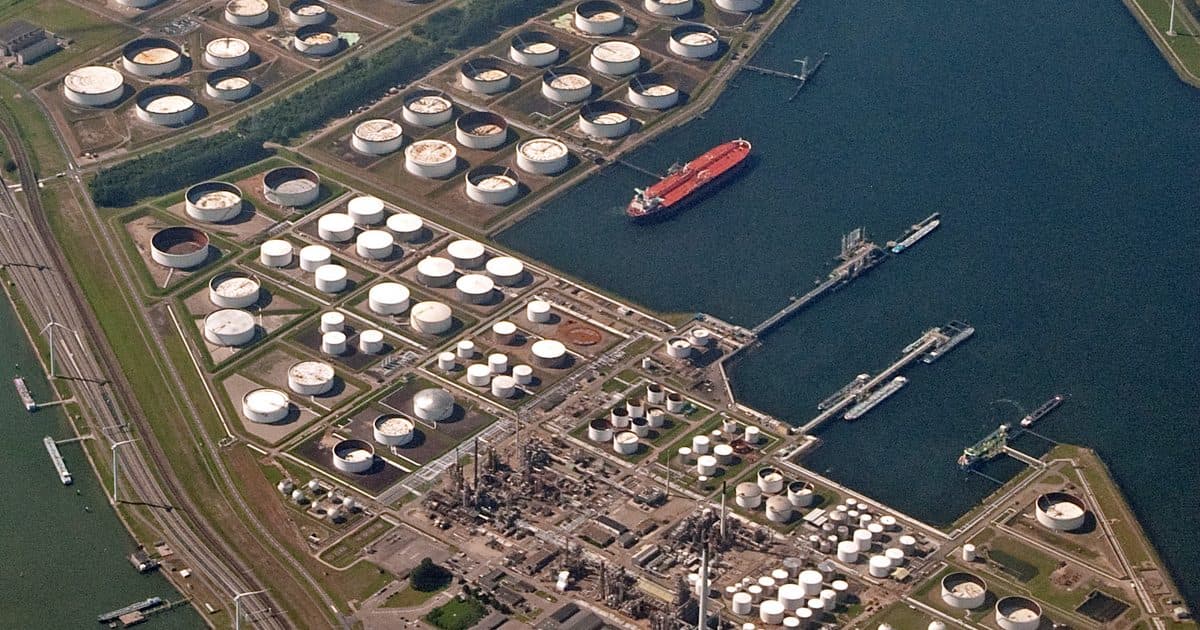
On 13 March 2026, the Rotterdam court convicted four people in a case of forged sampling reports. Between March 2021 and July 2022, they had staged seven fake sample takings from Shell tanks at Pernis and Europoort, without the consent of Shell or of the inspection company SGS. The reports from these staged operations were meant to prove the existence of 2 million barrels of crude oil, offered for US$155 million. The oil did not exist. A Shell employee and an SGS employee were convicted as accomplices.
The case shows that even a real terminal and real inspectors can be used as a stage set. The working group formed by the Port of Rotterdam Authority, the terminals and the police estimates traders' losses at a minimum of €10 million a year, and the fraudulent offers reported to it in 2025 totalled €2.5 billion. Here are the twelve red flags that should stop you, whether the offer is for diesel, cocoa, cashew or gold.
The 12 red flags
1. An offer you did not ask for
An unknown seller writes to offer you large volumes. The US International Trade Administration puts unsolicited offers at the top of its list of warning signs.
2. A price far below the market
Nobody sells below the market for long. A large discount on a product quoted in Rotterdam, London or New York is almost always bait.
3. Fees to pay before you see the goods
Taxes, registration, bank fees, lawyer's fees, certificates, storage: each fee is presented as the last one. It is the classic advance fee scheme.
4. Urgency and secrecy
"The ship sails tomorrow", "the offer expires tonight", "tell no one about this deal". The pressure is there to stop you checking.
5. A website that imitates a known terminal
In Rotterdam, fraudsters build fake websites copying real storage terminals and sell stocks that do not exist. The Storage Spoofing working group publishes a whitelist of legitimate sites and a blacklist of fraudulent ones. Always contact the terminal through the details on its official website, never through those supplied by the seller.
6. Documents you cannot verify yourself
A "storage receipt" with no tank number, no measured quantities and no inspector's signature, a quality certificate sent as a PDF: none of this proves that a product exists. SGS offers free verification of its documents. For other inspection companies, ask their head office directly.
7. A chain of intermediaries
The seller is the "mandate" of a mandate, representing a "direct supplier" you will never meet. The longer the chain, the less anyone is accountable.
8. An imposed, non-negotiable procedure
You are asked to send a letter of intent, an irrevocable purchase order or proof of funds before receiving any verifiable offer. A real seller adapts the procedure to the buyer.
9. Payment to a personal account or one unrelated to the seller
The account is in an individual's name, or in a country unrelated to the goods or the company. Payment must go to the selling company, into an account in its own name.
10. A refusal of inspection or a documentary credit
The seller refuses to let you choose the inspection company, or refuses a documentary credit and demands an advance wire transfer. A real seller accepts payment against documents.
11. Connections at the highest level
The seller stresses ties with ministers, a central bank or a national company. The US alert on Ghana notes that these scams usually rely on claimed ties with public officials.
12. Gold at a cut price
You are promised large quantities of gold below the world price, provided you pay taxes, insurance or licences in advance. The US International Trade Administration lists the purchase, sale or payment in gold among the main categories of scams reported in Ghana.
How to verify an offer
- The company: registration in its country's trade register, a real address, a website and email on its own domain.
- The product: ask the terminal or warehouse, through its official contact details, whether the stock exists and in whose name.
- The documents: have every certificate verified by the body that supposedly issued it.
- The inspection: choose the inspection company yourself, and inspect before any payment.
- The payment: documentary credit or payment against documents, to the selling company.
If you have already paid, keep every exchange and alert your bank and the police without delay.
Our view
Scams cost more than the money lost. They make buyers wary of any offer from Africa, including those from genuine producers. Every buyer who is defrauded is a customer honest exporters will never see.
The best defence is not general suspicion but systematic verification. A serious seller is never offended by checks: it expects them.
Frequently asked questions
How do I spot a fake EN590 diesel offer?
A price far below the market, an imposed procedure with advance fees, stock in a terminal you cannot contact yourself, and inspection documents that cannot be verified.
What is storage spoofing?
The name used in Rotterdam for selling storage capacity or stocks that do not exist, often through fake websites imitating real terminals.
How do I verify an SGS certificate?
SGS offers a free document verification service on its website. For other inspection companies, contact their head office through official channels.
Should I pay for a dip test before buying?
Not to a seller you do not know. A dip test is done with an inspection company of your choice, which you contact yourself.
What should I do if I have been scammed?
Keep all exchanges, alert your bank immediately to try to stop the transfer, and file a police complaint.
What we do
GraceRoad vets suppliers before any commitment: registration, licences, existence of the stock, a site visit when the volume justifies it, inspection by an independent company. Payment is made by documentary credit, against documents. We do not deal in gold, diamonds or precious stones.
Read next: sourcing agent in Africa: what it does, what it costs and payment terms in commodity trading: LC, SBLC, cash.
Sources: Rotterdam District Court, judgments of 13 March 2026 in the Barrel case (ECLI:NL:RBROT:2026:2480 and following), summarised by BijzonderStrafrecht.nl; Storage Spoofing working group (Port of Rotterdam Authority, VOTOB, The Commodity Traders and Seaport Police), "About" and "Historic: first case" pages, February 2026; Hansa, 12 February 2026; US International Trade Administration, "Ghana Scam and Fraud Alert"; SGS, document verification service.