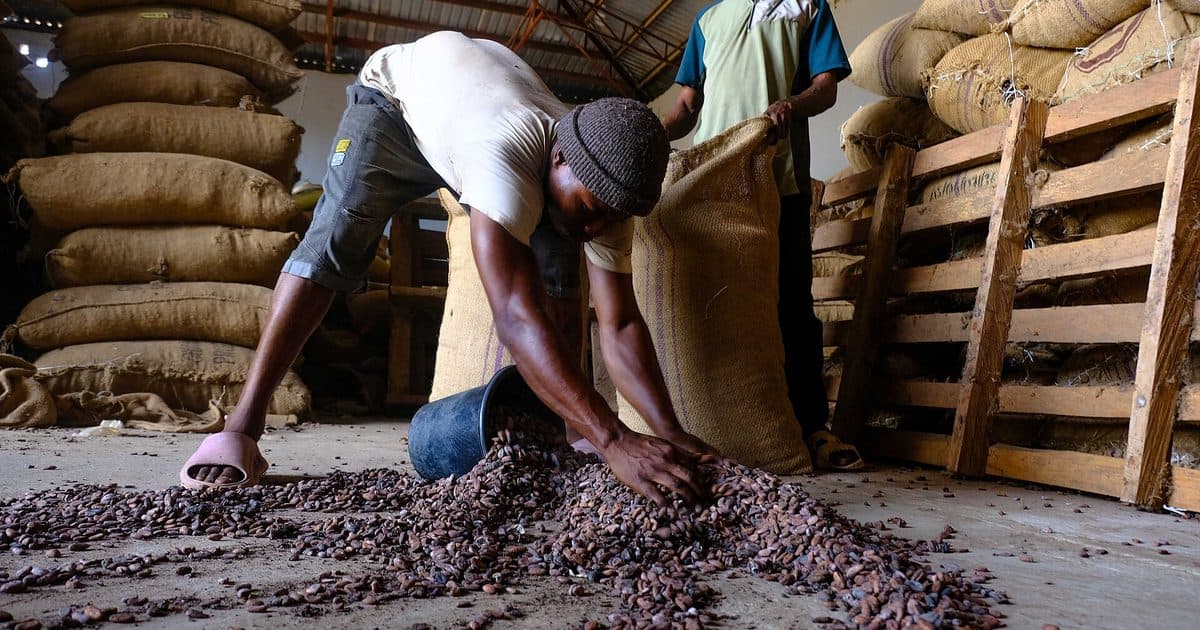
A sourcing agent finds suppliers for a buyer who cannot travel, checks them, negotiates, and follows the goods to the port. In West Africa, where online offers are many and real suppliers fewer, the agent is often what separates a successful purchase from a lost wire transfer.
But the word covers different jobs, paid in very different ways. Here is what a sourcing agent does, what the law says, what it costs, and what the mandate should contain.
What a sourcing agent does
- Find the producers and exporters who actually hold the volume, rather than middlemen reselling someone else's stock.
- Check them: registration in the trade and personal property credit register (RCCM), exporter approval from the sector authority where required, bank references, real capacity.
- Visit the sites when the volume justifies it.
- Obtain samples and have them tested.
- Negotiate price, quality and loading date.
- Have the goods inspected before shipment by an independent body.
- Assemble the export documents: certificate of origin, phytosanitary certificate, quality certificate, and whatever the destination country requires.
Agent, commission agent, broker: what the law says
In the seventeen OHADA countries, the Uniform Act on General Commercial Law, adopted on 15 December 2010, governs commercial intermediaries. An intermediary acts "usually and professionally" on behalf of another person (article 169). It is a trader, subject to the same conditions as other traders (article 170).
The Act distinguishes three trades:
| Intermediary | What it does | How it is paid |
|---|---|---|
| Commission agent (article 192) | Signs the contract in its own name, on behalf of its client | A commission |
| Broker (article 208) | Brings the parties together, without signing for them | A percentage of the transaction (article 212) |
| Commercial agent (article 216) | Negotiates and concludes on a permanent basis, in the name and on behalf of its principal | A commission; it is entitled to an indemnity when the contract ends (article 229) |
The last line matters. At the end of the contract, a commercial agent is entitled to an indemnity of at least one month's commission after the first year, two months after the second and three months after the third (article 231). A buyer who wants a one-off mandate must say so clearly in writing.
How much a sourcing agent costs
There are three ways to pay an agent. The ranges below are those published in 2026 by sourcing agencies working mainly with China for British and American clients; there is no public rate card for West Africa.
| Model | Published range | What to know |
|---|---|---|
| Commission on order value | 3 to 15%, most often 3 to 10%; the rate falls as orders grow | The agent is only paid if you buy; the more expensive the goods, the more it earns |
| Fixed fee per assignment | US$300 to 1,500 to find and vet a supplier, up to US$5,000 or more for a full project | You pay for the work, not the result; the price is known upfront |
| Monthly retainer | US$500 to 3,000 a month | For regular purchases |
One question to ask in every case: who else pays the agent? An agent who also takes a commission from the supplier is no longer entirely on your side. It is not forbidden, but it must be written down.
The sourcing mandate: what it must contain
- The parties, with their registration.
- The specification: product, quality and grade, quantity, preferred origin, destination, delivery period.
- The assignment and deliverables: number of vetted suppliers, visit reports, samples, firm offers.
- The fee: amount, payment schedule, reimbursable costs, and any commission received from a supplier.
- Duration and exclusivity: one-off or permanent mandate, which changes the agent's rights at the end of the contract.
- Confidentiality and non-circumvention: the agent does not resell your information, and you do not bypass the agent to deal directly with the supplier it introduced.
- Inspection: the body, the criteria, who appoints it and who pays.
- Payment for the goods: never to the agent or to a personal account, but by documentary credit or against documents to the supplier.
- Termination, governing law and jurisdiction, chosen according to each party's country.
How to choose
Be wary of an agent who:
- has no verifiable registration;
- asks you to pay for the goods into their account or a personal account;
- guarantees a price far below the market;
- refuses a visit or an independent inspection;
- offers you gold, diamonds or precious stones without the licences the law requires.
A good agent also tells you no: when the grade you want does not exist, when the harvest is over, when the volume is unrealistic.
Our view
A commission seems risk free for the buyer, since you only pay if you buy. But it pushes the agent to close a sale, and the more expensive the goods, the more it earns. It also leads agents to query producers for buyers who never buy, and a producer approached three times for nothing stops answering.
A fixed fee, agreed upfront for a written assignment, aligns interests better: the agent is paid to check and to tell the truth, including when the answer is no.
Frequently asked questions
What is a sourcing agent?
A professional who finds, vets and follows suppliers on behalf of a buyer. Under OHADA law, it may be a commission agent, a broker or a commercial agent depending on what it actually does.
How much does a sourcing agent cost?
Agencies that publish their rates most often quote a commission of 3 to 10% of the order, a fixed fee of US$300 to US$5,000 or more per assignment, or a monthly retainer of US$500 to US$3,000.
What is a sourcing mandate?
The contract that sets the agent's assignment: specification, deliverables, fee, duration, confidentiality, inspection and dispute resolution.
Does a sourcing agent need to be registered?
In the OHADA area, a commercial intermediary is a trader: it must be registered in the trade and personal property credit register.
Should I pay for the goods through the agent?
No. The goods are paid to the supplier, preferably by documentary credit or against documents, never into a personal account.
What we do
GraceRoad works under a written mandate, with a fixed sourcing fee quoted against your specification and settled before the work starts, not a commission on a deal that does not exist yet. We identify producers and approved exporters, vet them, have the goods inspected and deliver to your warehouse, with payment by documentary credit.
Read next: commodity trading scams: 12 red flags and sourcing from Africa: three worked cases.
Sources: OHADA Uniform Act on General Commercial Law of 15 December 2010, articles 169, 170, 192, 208, 212, 216, 229 and 231; Epic Sourcing, "How Much Does a China Sourcing Agent Cost? (UK Guide 2026)" and "Sourcing Agent Fees in the USA: What You'll Really Pay in 2026"; Cosmo Sourcing, "How Much Does a Sourcing Company Cost? Pricing Models Explained".