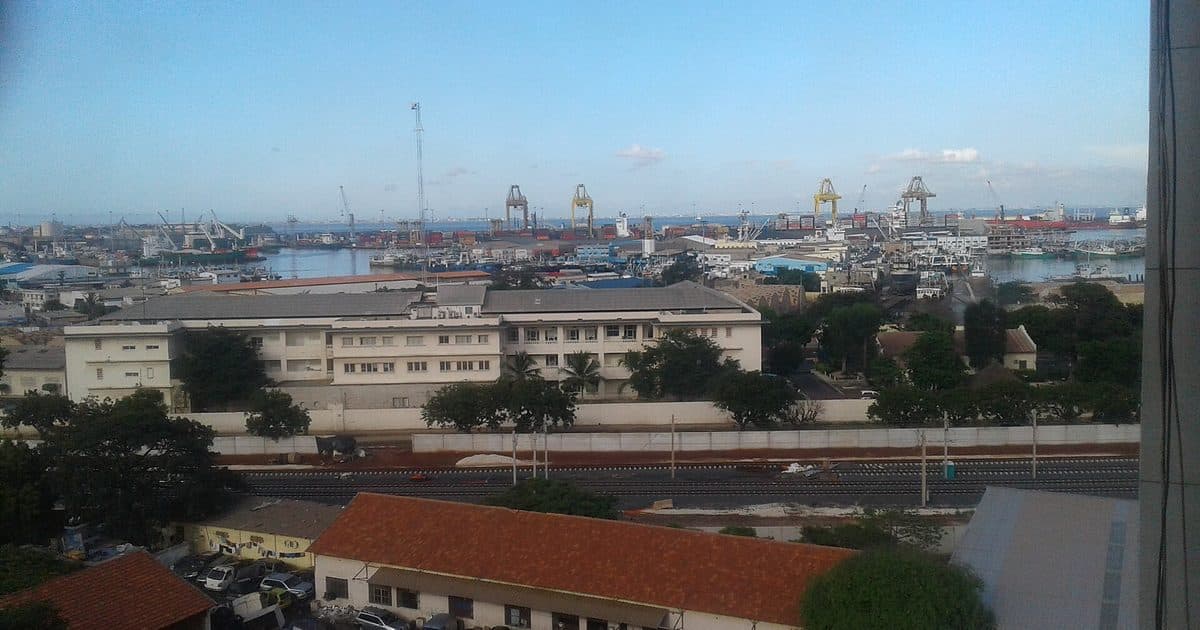
A mine running short of diesel, a European manufacturer looking for a reliable African raw material, an American freight forwarder who has to deliver clients in Mali, an investor studying a mining project: their needs differ, but they all ask the same question. Who, on the ground, can find the right supplier, check that it exists, deliver on time and answer for what it delivers?
GraceRoad answers that question from Dakar. We are a sourcing, logistics, trucking and fuel supply company working across West Africa. Here is who we are, what we do, and how we can help you, situation by situation.
Take action
- Send your sourcing request: an answer within two working days, no commitment.
- Ask for a fuel quotation on WhatsApp: diesel and gasoline delivered to site.
- Arrange trucking in West Africa: vetted carriers, a quote within 24 working hours.
- Get a container delivered from the port of Dakar: port clearance, customs support, delivery.
Who we are
GraceRoad is the brand of GRACECORP AMD GROUP SAS, a Senegalese company registered in the Dakar trade register (RCCM SN DKR 2022 B 31511, NINEA 009713274), managed by Amara Dramé. A logistics company in Senegal, a fuel supplier and a sourcing agent, we work across West Africa.
We run four businesses that fit together:
- sourcing of all raw materials from Africa, agricultural, forestry or mineral, except precious metals and precious stones;
- fuel: diesel and gasoline delivered to site, in West Africa and anywhere in the world, with Africa as our speciality;
- road freight, national and international, with a network of vetted carriers;
- logistics in West Africa: port clearance, transit, oversized convoys, delivery to the warehouse or the site.
What ties the four together: one counterparty that finds, vets, buys, transports and delivers, instead of a chain of intermediaries where nobody answers for anything.
You run a mine and need fuel
Your need. A regular supply of diesel for your equipment, trucks and generators, on time and to specification. A shortage stops production; off-spec diesel damages engines.
What we do. As a diesel supply company, we deliver 50 ppm diesel compliant with the ECOWAS standard, and gasoline, from our own depots or those of our partners in Dakar, Abidjan, Lomé or Cotonou, depending on availability. For the largest volumes, we charter a vessel. The product reaches your site by road tanker:
- every batch comes with a certificate of analysis;
- tankers are sealed and trucks are GPS tracked;
- loading respects the weight limits of UEMOA Regulation 14, strictly enforced in Mali since April 2025;
- quantities are measured at 15°C, and mass in tonnes is what counts.
How the price is set. Our offers rest on a clear formula: the Platts assessment of the product, plus a premium covering transport, storage and delivery. The formula is firm; the amount follows the assessment and the exchange rate until the pricing date. Payment is cash and carry, 50% in advance with the order, or by irrevocable documentary credit. For long term supply, we sign a contract backed by a documentary credit.
What we need to answer you. The product, the monthly volume, the delivery point, your on-site storage capacity and your schedule. To estimate your requirement, our guide on generator fuel consumption gives manufacturers' figures.
You run a power plant, an industry or a fuel distribution business
Your need. One more reliable source, to secure supply when cargoes run late or prices soar, as in 2026 with the Strait of Hormuz crisis.
What we do. We supply diesel and gasoline ex coastal depots or by cargo, and other petroleum products on request: kerosene, Jet A-1, fuel oil, bitumen, liquefied petroleum gas, lubricants. For a landlocked country, we also arrange transport to your depots.
You are a German manufacturer looking for a raw material in Africa
Your need. A cosmetics maker looks for shea butter, a food company for gum arabic, a roaster for robusta, a tyre maker for natural rubber. It wants the right product, at the right quality, with proof of origin and the documents the European Union requires.
What we do, step by step.
- You send your specification: product, quality, quantity, destination, schedule.
- Within two working days, we tell you whether it is feasible at that quality, in that season and at that volume. And we say so plainly when it is not.
- We quote the sourcing assignment: a fixed fee, known upfront, not a percentage of a deal that does not exist yet.
- We find and vet suppliers: producers and approved exporters who actually hold the volume, trade register checks, export licences, site visits where the volume justifies them. We check that the goods meet your country's standards, then come back with real offers.
- You open a documentary credit in our favour.
- We buy, have the goods inspected before loading, arrange transport and deliver to your warehouse. You pay against compliant documents, never before.
What to know for Europe. For cocoa, coffee, rubber and timber, the EU deforestation regulation applies from 30 December 2026: plot geolocation will be required. For gum arabic, proof of origin has been essential since the war in Sudan. We build these requirements into the specification from the start.
How we work in sourcing: graceroad-group.com/en/sourcing.
The African products we source
We source all raw materials from Africa, except precious metals and precious stones. For each product family, here is what we check before proposing a supplier.
| Family | Examples | What we check |
|---|---|---|
| Nuts and oilseeds | Raw cashew nuts and kernels (W180 to W450), groundnuts, sesame, shea, soybean, kola nuts | Outturn and grade, moisture, aflatoxins, floor prices and the season's export rules |
| Cocoa, coffee and spices | Cocoa, robusta and arabica, ginger, chilli, dried hibiscus | Grade and quality, the EU deforestation regulation for cocoa and coffee |
| Medicinal and pharmaceutical plants | Moringa, baobab, kinkeliba, griffonia, voacanga, pygeum bark | Botanical identification, laboratory analyses, CITES permits, Nagoya Protocol |
| Timber | Iroko, sapele, sipo, padauk, teak, sawn wood | Legality of the concession, CITES permits for protected species, the CEMAC log export ban from 2028 |
| Gums, oils and rubber | Gum arabic, palm oil, natural rubber | Proof of origin, E414 additive specifications, the deforestation regulation |
| Fibres, hides and fish products | Cotton, hides and skins, frozen fish | Grade, health certificates |
| Grains, fruit and vegetables | Fonio, millet, sorghum, mango, pineapple, avocado | Phytosanitary requirements of the destination country |
| Petroleum products | Diesel, gasoline, Jet A-1, kerosene, fuel oil, bitumen, liquefied petroleum gas, lubricants | Specification, certificate of analysis for every batch |
On request, we also source other raw materials, mineral ones included. Our ten main agricultural commodities and their 2026 prices give a first idea of prices.
You are a laboratory looking for medicinal plants
Your need. A pharmaceutical laboratory, a food supplement or cosmetics manufacturer looks for an African plant: moringa or kinkeliba leaves, baobab pulp, griffonia or voacanga seeds, pygeum bark. It needs the right species, the right plant part, a consistent content of active compounds, and a legal origin it can prove to its authorities.
What we do.
- Exact identification: Latin name, plant part, cultivated or wild harvested, harvest area.
- Suppliers who follow good agricultural and collection practices for medicinal plants as defined by the World Health Organization.
- Analyses before shipment in an independent laboratory: botanical identity, active compound content if you require it, pesticide residues, heavy metals, microbiology.
- Permits where required. Pygeum bark, from Prunus africana, has been listed in CITES Appendix II since 1995: it can only be exported with a permit, and since 2007 only Cameroon, Uganda and the Democratic Republic of Congo have had export quotas. For research and development, the Nagoya Protocol, in force since 12 October 2014, requires compliance with the country of origin's access and benefit sharing rules. In the European Union, Regulation (EU) No 511/2014 requires users to check that the resource was legally acquired and to keep that information for twenty years. We gather these documents with the supplier.
- Shipping documents: phytosanitary certificate, certificate of origin, certificate of analysis.
For food use, the European Union also requires a novel food authorisation. Baobab fruit pulp, for example, has been authorised since 27 June 2008.
You are a trader in Dubai or Asia buying cashew kernels
Your need. You already buy kernels from Vietnam or India, but much of the raw nut comes from West Africa, where Côte d'Ivoire now processes hundreds of thousands of tonnes. You want to buy at the source.
What we do. We consult West African processors on your grade (W240, W320), your packing and your certifications, then send you an FOB, CFR or CIF offer. We propose independent inspection at loading against your own specification, with payment by documentary credit at sight. You keep control of quality before the goods leave Africa, and the processor can ship without waiting for arrival at your port. Grades and prices are covered in our article on W320 cashew kernels.
You are an investor looking for a mining project
Your need. Identify a licence or project that fits your strategy, check that the title exists and is valid, understand the technical data and the country's legal risk, then build the project.
What we do, on mandate and for a fee agreed upfront.
- Your specification: commodity, country, project stage, size, budget.
- Identification of projects and licence holders matching that specification.
- Verification of titles with the mining cadastres, of compliance with the mining code in force, and of the history of relations between the State and the sector's operators. We also read technical reports under the JORC or NI 43-101 standards.
- Project logistics once it starts: fuel, equipment transport, oversized convoys, port clearance.
Our guides on getting a mining licence in West Africa, JORC terms and legal security for investors explain what to check. We also tell you when the risk looks too high to us.
You are an American freight forwarder looking for trucks for your clients
Your need. Your clients have containers or equipment arriving in Dakar or Abidjan that must reach a site in Mali, Guinea or Mauritania. You need reliable trucks, documents in order, and someone who follows the cargo all the way.
What we do.
- Vetted carriers: identity, vehicle documents, insurance and licence are checked before any job.
- The right vehicle: flatbed, semi-trailer, 20 or 40 foot container carrier, refrigerated truck, tanker, van.
- Corridors served: Dakar to Bamako, Nouakchott, Conakry and Kaolack, Bamako to Abidjan, Kaolack to Banjul, Lomé, Cotonou and Abidjan to Ouagadougou, Conakry to Bamako, and other routes between two cities in the region.
- Port of Dakar clearance, with transit and customs formalities handled alongside you, and the transport documents, consignment note included.
- Oversized convoys: measurements, route survey, permits in every country crossed, escort.
- Tracking: a file reference and a phone number are enough to follow a request on our public tracking page. GPS tracking is included in the subscription.
What it costs and how it is paid. You describe your need to our assistant, which builds the file with you. The file study costs 11,800 CFA francs including tax; a priced quote from our team follows within 24 working hours. For regular shippers, the subscription at 22,302 CFA francs a month replaces the study fee with unlimited files. Transport is paid with the order, no later than 48 hours before pickup, by Orange Money, Wave, bank card or transfer.
You are a company in Senegal shipping to Mali
Trader, construction company, importer: you have cement, rice, materials or a container to send to Bamako or Kayes. We arrange trucking from Dakar to Mali, groupage for small volumes or a full truck for large ones, with a vetted carrier, a proper consignment note and, on request, cargo insurance and an escort. Every Monday, our corridor weather bulletin reports on road conditions and official fuel prices in the region.
You are a carrier looking for jobs
If you own a truck or a fleet, you can join our network for free. Our team reviews your file within 48 to 72 working hours; you then receive invitations to bid on jobs that match your vehicles and areas. Jobs are vetted, and so are clients. Become a partner carrier.
What sets us apart
- Vetting first. Suppliers, carriers and clients are checked before any commitment.
- Clear rules. A transport price comes from our team, never from a machine; sourcing fees are agreed upfront; the fuel price formula is written down.
- Compliance. ECOWAS standard for fuel, UEMOA Regulation 14 for loads, the EU deforestation regulation for agricultural products, Incoterms 2020 for contracts.
- Secure payment. Documentary credit, payment against documents, independent inspection.
- Knowledge of the ground. Our guides, published every week with sources, explain the prices, rules and pitfalls of each sector.
- What we do not do. No gold, no diamonds, no precious stones.
How to reach us
- For trucking: describe your need to the assistant on the graceroad-group.com home page.
- For fuel or sourcing: write to contact@graceroad-group.com or on WhatsApp at +221 77 877 99 13, with the product, quantity, delivery point and schedule.
- Our addresses: registered office at Ngor Extension, lot 365, Dakar; offices at Immeuble Futura, route des Almadies, Dakar.
Frequently asked questions
What does GraceRoad do?
GraceRoad, the brand of GRACECORP AMD GROUP SAS in Dakar, sources African commodities, supplies fuel, and arranges road freight and logistics across West Africa.
Can you find any product in Africa?
All African raw materials, agricultural, forestry or mineral, except precious metals and precious stones. We tell you within two working days whether your request is feasible.
I import cashew nuts: can you supply me directly?
Yes. We source raw nuts in Côte d'Ivoire or Guinea-Bissau, and kernels from West African processors, from W180 to W450, to your grade, packing and certifications. We send you an FOB, CFR or CIF offer, with inspection at loading and payment by documentary credit. The same applies to sesame, shea, cocoa, coffee or any other product.
What is the minimum order quantity?
It depends on the product and the supplier. For cashew kernels, it is often a full container. We state the minimum in our reply, within two working days of receiving your specification.
How can I be sure of the quality before paying?
The goods are inspected before loading by an independent body, against your own specification, and your inspector can attend the loading. With a documentary credit, payment is only made against compliant shipping documents and the inspection certificate.
Can you deliver to my warehouse?
Yes. We arrange transport to the port of your choice or to your warehouse. You receive the certificate of origin, phytosanitary certificate, inspection certificate, bill of lading, invoice and packing list, plus the traceability information required in Europe for cocoa, coffee, rubber and timber.
Do you source African medicinal plants?
Yes: moringa, baobab, kinkeliba, griffonia, voacanga and others, with botanical identification, independent laboratory analyses, and CITES permits or Nagoya Protocol documents where required.
Do you deliver fuel outside Africa?
Yes. We can deliver diesel and gasoline anywhere in the world, with Africa as our speciality.
How much does a trucking quote cost?
The file study costs 11,800 CFA francs including tax, and the quote follows within 24 working hours. The subscription at 22,302 CFA francs a month covers unlimited files.
How is sourcing paid?
Through an assignment fee agreed upfront, then by documentary credit for the goods, paid against compliant documents.
Are your carriers vetted?
Yes: identity, vehicle documents, insurance and licence are checked before any job.
What we do
A mine to supply, a raw material to find, trucks to mobilise, a project to secure: tell us what you need. We will tell you plainly what is feasible and on what terms, and we will handle it end to end.
Take action
- Send your sourcing request: an answer within two working days, no commitment.
- Ask for a fuel quotation on WhatsApp: diesel and gasoline delivered to site.
- Arrange trucking in West Africa: vetted carriers, a quote within 24 working hours.
- Get a container delivered from the port of Dakar: port clearance, customs support, delivery.
Read next: sourcing agent in Africa: what it does, what it costs and fuel tanker truck: 45,000 litres.
Sources: UEMOA Regulation No. 14/2005/CM/UEMOA on heavy vehicle dimensions, weight and axle load; ECOWAS Directive C/DIR.1/9/2020 on fuel specifications; Regulation (EU) 2023/1115 on deforestation; CITES, listing of Prunus africana in Appendix II (1995) and CITES fact sheet on Cameroon; Nagoya Protocol and Regulation (EU) No 511/2014; Commission Decision 2008/575/EC of 27 June 2008 on baobab fruit pulp; World Health Organization, guidelines on good agricultural and collection practices for medicinal plants; International Chamber of Commerce, Incoterms 2020; Le Soleil, 3 May 2025, on the enforcement of Regulation 14 in Mali; African Cashew Alliance, on processing in Côte d'Ivoire.