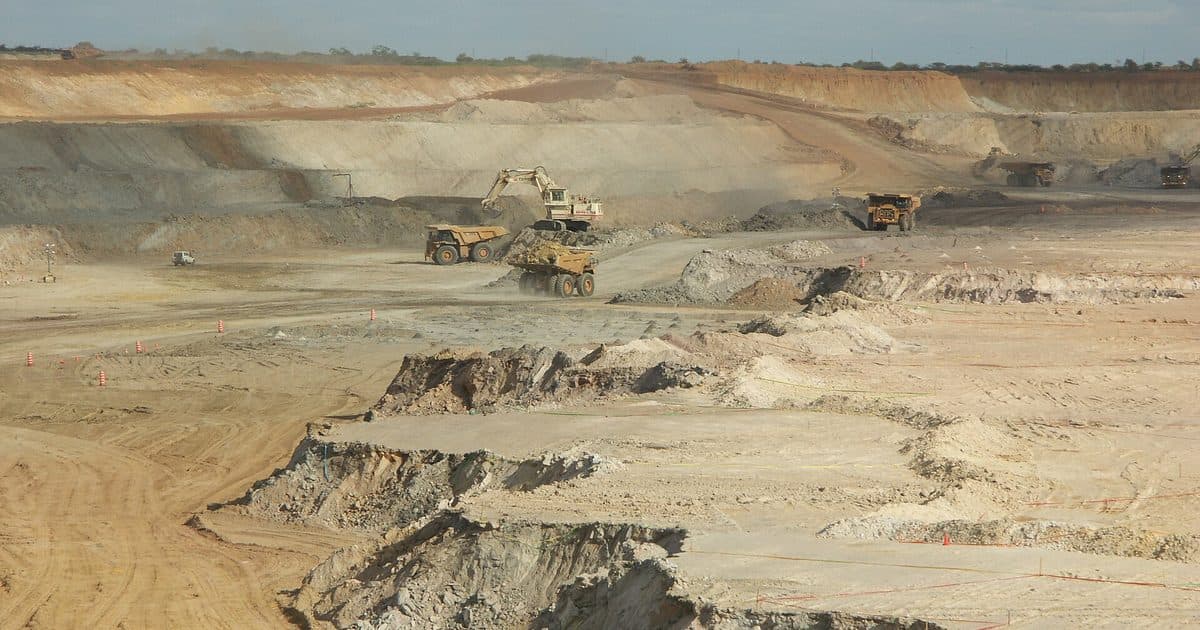
On 4 August 2025, a decree of Guinea's president withdrew from GAC, a subsidiary of Emirates Global Aluminium, its 690 km² bauxite concession in Boké. According to the official statement, the concession was handed over free of charge and without compensation to a state company created right after, Nimba Mining. Two months earlier, Burkina Faso had completed the transfer of five gold assets to its state mining company. On 19 June 2025, Niger had announced the nationalisation of SOMAÏR, the Arlit uranium company created in 1968 with the French group Orano. And on 16 June 2025, a Malian court had placed Barrick's Loulo-Gounkoto gold complex under provisional administration.
It is often said that Africa lacks capital. The facts say something else. The barrier is that the signed word does not hold.
The money exists, including in Africa
In October 2024, Montage Gold raised US$825 million to build the Koné gold mine in Côte d'Ivoire, from a Canadian financier and a Chinese mining group. The Ivorian mining code dates from 2014, and its only tax amendment, in 2018, spared the agreements already signed. The financiers knew what to expect.
And the money is not only foreign. According to the OECD's 2025 report on African capital markets, the continent's insurance companies and pension funds hold about US$775 billion, of which US$455 billion in pension funds alone. In some countries, 70 to 80% of these portfolios sit in government securities. Very little of this money finances mines, factories or infrastructure on the continent.
So Africa has the raw materials, and part of the savings. What it does not build is the value chain between the two.
What changed in two years
| Date | Country | Decision |
|---|---|---|
| 20 June 2024 | Niger | Imouraren mining licence withdrawn from the Orano subsidiary |
| 19 June 2025 | Niger | Nationalisation of SOMAÏR announced, a company created in 1968 |
| 26 May 2025 | Guinea | 129 exploration permits revoked |
| June 2025 | Burkina Faso | Five gold assets, including Wahgnion and Boungou, transferred to the state company |
| 16 June 2025 | Mali | Loulo-Gounkoto placed under provisional administration |
| 4 August 2025 | Guinea | Concession withdrawn from GAC, a subsidiary of Emirates Global Aluminium, without compensation |
Each State has its reasons, and some are legitimate: a fairer share of the wealth, processing plants promised and never built, dormant permits. Mali and Barrick eventually reached an agreement in November 2025, which ends the provisional administration and hands control of the site back to Barrick. But the method matters as much as the goal. When a contract can be torn up by decree, the next financier adds a risk premium, demands a higher return, or goes elsewhere.
The cost of a word that does not hold
Mining investors commit their money for fifteen or twenty years. They accept uncertain geology, moving prices, difficult roads. What they cannot price is the risk that the rules change after construction.
International arbitration does not repair that damage. In September 2025, Orano obtained a decision from an ICSID arbitral tribunal ordering Niger not to sell the withheld uranium produced by SOMAÏR. But an arbitration decision does not restart a mine, and it does not reassure the next investor.
Everyone pays the price of this insecurity: the State, which sells its resources for less because the risk is higher; local companies, which cannot find partners; and the people, who are still waiting for the jobs.
What we believe
We do not think Africa is a victim. We think it does not yet dare to believe in itself.
A country that believes in its resources builds three things at once. A value chain, to process locally instead of selling raw material for a few cents. A chain of legal protection, so that the signed word is honoured by the next government. And its own capital, so that its savings invest alongside foreigners instead of sleeping in Treasury bills.
The three go together. An African pension fund will not invest in a mine whose permit can disappear. A processing plant cannot be financed if its supply depends on a decree. And a foreign investor stays more willingly where nationals have put their own money.
Côte d'Ivoire shows that a country can attract capital while keeping its rules. It is not a question of means. It is a question of initiative and consistency.
Frequently asked questions
Why is investing in Africa risky?
Geological, security and infrastructure risks are real, but the hardest to price is legal risk: the possibility that the State changes the rules, withdraws a permit or nationalises an asset after the investment.
Which African countries have nationalised mines recently?
In 2024 and 2025, Niger withdrew the Imouraren licence and announced the nationalisation of SOMAÏR, Burkina Faso transferred five gold assets to its state company, and Guinea withdrew its concession from GAC, a subsidiary of Emirates Global Aluminium.
Does Africa lack capital?
Less than is often said. African insurers and pension funds hold about US$775 billion according to the OECD, but much of it is invested in government securities rather than productive projects.
How can an investment in Africa be protected?
With a clear agreement with the State, stability clauses, an arbitration mechanism, political risk insurance, and local partners who have invested themselves.
What we do
GraceRoad works for buyers and investors who want to operate in West Africa. Before any project, we check the titles, the agreements and the history of relations between the State and the operators of the sector, and we say so when the legal risk seems too high to us.
Read next: why there is no African Glencore, Cargill or Nestlé and what is JORC: mineral resource vs reserve.
Sources: Mining Weekly, 5 August 2025, Mining.com and Le360 Afrique, 6 August 2025, on the withdrawal of GAC's concession in Guinea and its transfer to Nimba Mining; Mining Weekly, 12 June 2025, on the transfer of five gold assets in Burkina Faso; Orano, press releases of 20 June 2024, June 2025 and 26 September 2025, and World Nuclear News, on Imouraren, SOMAÏR and the ICSID decision; Barrick Mining, press release of 24 November 2025, on Loulo-Gounkoto; Government of Guinea, statement of 26 May 2025, on the 129 permits; Mining Weekly and The Northern Miner, 24 October 2024, on the Koné financing; Ordinance No. 2018-144 of 14 February 2018 amending the Ivorian mining code; OECD, "Africa Capital Markets Report 2025", chapter on insurance companies and pension funds, citing the Africa Finance Corporation.