Glencore was founded in 1974 in Zug, Switzerland, a country with no oil well, no mine and no seaport. Today, according to the Swiss Academies of Sciences, one third of the oil traded in the world is bought and sold in Geneva, and two thirds of international trade in base metals and cereals goes through companies based in Switzerland.
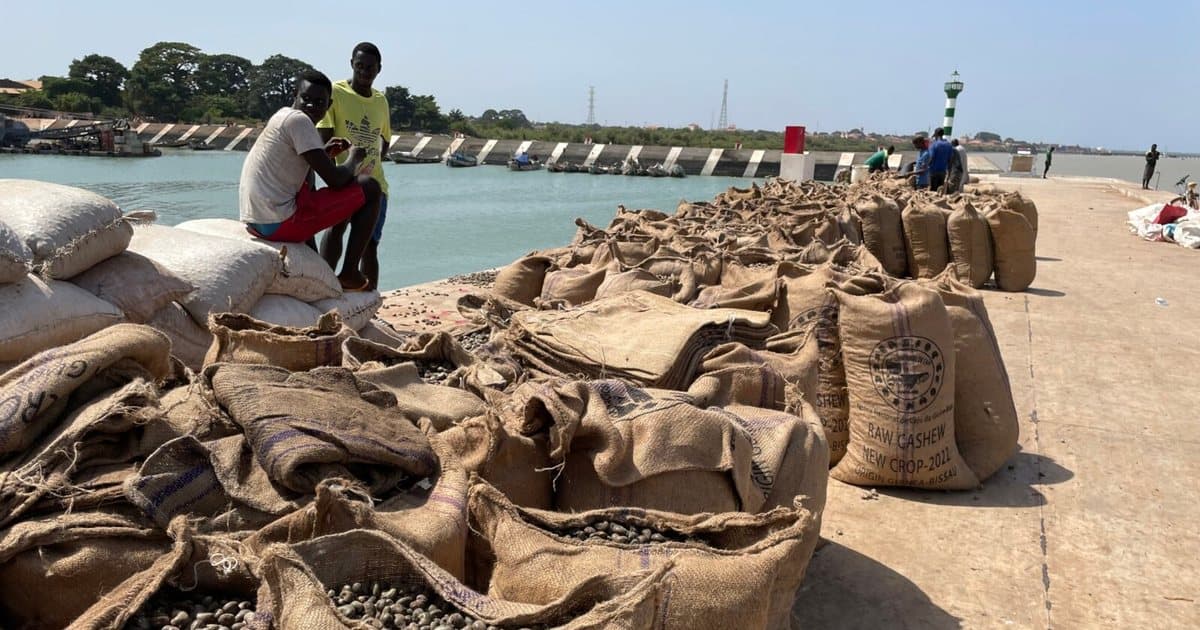
Olam, one of the giants of agricultural trading, was founded in 1989 in Nigeria. It started by exporting Nigerian cashew nuts to India. Its headquarters are now in Singapore, it operates in 65 countries, and it is not African: it was created by a family group of Indian origin long established in Nigeria.
Those two stories say what matters. You can build a trading giant without a single resource at home. And you can build one from Africa. So the question is not why the world will not let us do it. The question is why we have not done it.
What a Glencore or a Cargill really is
Neither a mine nor a field. Cargill started in 1865 with a grain warehouse beside a railway line in Iowa. Nestlé, in 1866, with condensed milk. What these companies own first is not the commodity: it is the organisation around the commodity.
A large trader does five things. It buys where the product is plentiful. It moves and stores it. It finances it during the voyage. It takes the price risk. And it delivers, on the agreed date, the promised quality, to a customer who will come back. None of the five requires ore under your own soil. All of them require method, a kept word and time.
The numbers that should wake us up
Côte d'Ivoire and Ghana together produce about 60 percent of the world's cocoa. The growers' share of the value of a chocolate bar is, on the most often quoted estimates, around 6 percent.
In 2026, the twelve petrol cargoes exported by the Dangote refinery to Côte d'Ivoire, Ghana, Togo and Cameroon were lifted by international traders. As early as 2024, ship tracking data showed Vitol, Trafigura and BP taking the vast majority of loadings. The fuel is refined in Africa and consumed in Africa, and an intermediary in Geneva or London earns the margin in between.
Trade between African countries accounts for only 14.4 percent of the continent's total trade, according to Afreximbank, against 60 percent in Europe and more than 40 percent in Asia. We sell to the whole world, and hardly at all to our neighbours.
The explanations we do not accept
The usual answers are well known: colonial legacy, unfair rules, lack of capital. Each holds some truth. None explains the present.
The capital exists. In March 2026 Afreximbank underwrote 2.5 billion dollars of a 4 billion dollar loan to the Dangote refinery. In June, eight Ivorian banks lent 254 billion CFA francs to the Abidjan refinery. African banks finance what is structured, secured and carried by someone who has already delivered.
The rules are the same for everyone. Olam started in Lagos, with the same roads, the same ports and the same customs as any Nigerian exporter.
Scale is possible. An African group built the continent's largest refinery, 650,000 barrels a day, and is now opening its capital on the stock exchange. What Dangote did in cement and then in refining, nobody has yet done in trading.
Calling oneself a victim is comfortable: it excuses inaction. That is not our reading.
What is missing: initiative
We sell at the farm gate. The African producer sells as early as possible, at the price of the day, and stops there. Whoever buys carries the goods to the end customer and takes the margin. Selling delivered, duty paid, at the customer's door is more work and more risk. It is also where the value is.
We prefer the commission to the position. The continent is full of intermediaries who "hold a mandate", "know a seller" and wait for a percentage without ever buying or delivering. A trader buys, owns, moves and answers for the goods. A commission does not build a company. A position does.
We do not build the boring things. Warehouses, tanks, tracked trucks, a laboratory, audited accounts. Those unglamorous things are what a bank finances, because they prove you know how.
We do not keep our word in writing often enough. A contract, a specification, a date. Reputation is a trader's only capital, and it is built cargo after cargo. A single default destroys it.
We think country, not continent. Fifty four markets, fifty four sets of rules. Glencore was global from day one. A West African trader working only in its own country stays small by design.
We wait for the state. A licence, a subsidy, a monopoly, a decree. Governments are starting to move, and that is welcome: Benin has banned exports of raw cashew nuts, Mali, Côte d'Ivoire and Togo have restricted shea kernel exports, Côte d'Ivoire processed 600,000 tonnes of cashew in 2025. But a decree does not replace an operator. Someone has to buy, process, finance and sell.
What initiative means in practice
It starts small. A first customer, a first delivery kept, then a second. It means learning the trade in its least glamorous details: a tariff line, a demurrage clause, a transferable letter of credit, a certificate of analysis.
It means partnering rather than distrusting. The big traders grew out of small teams that trusted one another and shared the capital. Many African companies remain one man's business, and die with him.
And it means accepting the long run. Cargill took a century and a half to become Cargill. But Olam took only thirty years, starting from Lagos.
Our conviction
There will be an African Glencore. It will not come from a summit or a government plan. It will come from an operator that started by delivering one truck properly, then ten, then a ship, and that its customers and banks ended up trusting.
That is the bet we are making at GraceRoad. We started with transport, because that is where trust is earned: goods delivered on time, tracked, documented. Trading comes next, delivered to the customer's door. We are not a giant. We simply try to do, every day, what we criticise others for not doing.
Frequently asked questions
Why are the big commodity traders based in Switzerland?
Not for resources: Switzerland has none. For organisation: banks, contract law, logistics and financial know-how. One third of the oil traded in the world is bought and sold in Geneva.
Are there large traders born in Africa?
Yes. Olam, now based in Singapore and present in 65 countries, was created in 1989 in Nigeria to export cashew nuts. It was founded by a family group of Indian origin, not by African capital.
Does lack of capital explain the absence of African champions?
Only in part. African banks have lent billions of dollars to the Dangote refinery and the Abidjan refinery. They finance structured projects carried by operators with a track record.
How much of Africa's trade is between African countries?
14.4 percent in 2024 according to Afreximbank, against 60 percent in Europe and more than 40 percent in Asia.
What we do
GraceRoad hauls, buys and delivers: general cargo, fuel, commodities, across West Africa, with tracked trucks, written contracts and delivery to the customer's door. If you are looking for a partner that takes a position rather than a commission, write to us.
Read next: petroleum products trading in Africa and an enormous market, badly served.
Sources: Swiss Academies of Sciences, factsheet "Switzerland and the Commodities Trade" (Geneva's share of oil, Swiss based firms' share of base metals and cereals); How We Made It In Africa, "Olam, from small Nigerian trading outfit to global commodities giant" (founded 1989 in Nigeria, cashew to India, 65 countries, Singapore headquarters); official histories of Cargill (1865) and Nestlé (1866), founding of Glencore in 1974 as Marc Rich + Co; UNCTAD (shares of Côte d'Ivoire and Ghana in world cocoa production); Africanews and allAfrica, 23 March 2026, and BusinessDay, 7 November 2024 (Dangote cargoes and buyers); Afreximbank, African Trade Report 2025 (14.4 percent intra-African trade); Afreximbank, March 2026 (loan to the Dangote refinery); Sika Finance, 11 June 2026 (loan to SIR); African Cashew Alliance (600,000 tonnes processed in Côte d'Ivoire); Agence Ecofin, 2026 (shea export restrictions); Bénin Web TV (ban on raw cashew exports).