In short. Regulation (EU) 2023/1115 applies to large and medium operators from 30 December 2026, and to micro and small operators outside the timber sector from 30 June 2027. It covers cattle, cocoa, coffee, oil palm, rubber, soya and wood. Goods must be deforestation-free against a cut-off of 31 December 2020, legally produced, and covered by a due diligence statement. Exporters must supply the geolocation of every plot of land where the commodity was produced. Mixing compliant and non-compliant product makes the whole lot non-compliant.
If you buy cocoa, coffee, timber, palm oil, rubber, soy or cattle products from Africa and place them on the EU market, the rules change on 30 December 2026. If you export any of those commodities to Europe, your buyer will be asking you for something you may not currently collect.
The European Commission confirmed in 2026 that this date holds for large and medium operators, with no further postponement. Micro and small operators outside the timber sector follow on 30 June 2027.
This is not a tariff measure and it cannot be paid around. Goods without a valid due diligence statement cannot be placed on the EU market.
What the regulation requires
Regulation (EU) 2023/1115 on deforestation-free products entered into force on 29 June 2023. It covers seven commodities — cattle, cocoa, coffee, oil palm, rubber, soya and wood — and products derived from them.
To place them on the EU market, an operator must establish that the goods are:
Deforestation-free — produced on land not subject to deforestation after 31 December 2020. That cut-off is fixed and it is the reference date everything turns on.
Legally produced — in compliance with the laws of the country of production: land use rights, environmental and forestry law, labour and human rights, tax and trade rules.
Covered by a due diligence statement, submitted in the EU information system before the goods are placed on the market.
The part African exporters have to supply: geolocation
This is the operational heart of it, and the part that cannot be produced retrospectively.
The regulation requires the geolocation of all plots of land where the commodity was produced, with the date or time range of production. For smallholdings below a defined size the requirement is a point coordinate; above it, a polygon of the plot boundary.
For a cooperative aggregating from several thousand smallholders in Côte d'Ivoire or Ghana, that is a mapping exercise, not a paperwork exercise. It takes a season to do properly, and it cannot be improvised in the month before shipment.
Three consequences follow for anyone in this trade.
Mixing loses compliance. Once compliant and non-compliant product are combined, the whole lot is non-compliant. Segregation has to run from the plot through collection, storage and shipping.
Traceability is now a commercial asset. An exporter who can produce plot-level data will sell into Europe. One who cannot will be pushed toward markets that do not ask — at the prices those markets pay.
The buyer carries the legal obligation, and passes it back by contract. The EU operator is liable, so the requirement arrives in the purchase contract, with warranties and a right of rejection attached.
The 2026 simplification package, and what it does not change
The Commission published a simplification package in 2026, with revised guidance, an updated FAQ and a draft delegated act adjusting product scope and improving the information system. Compliance costs are expected to fall substantially against the original framework.
What has not changed is the substance: the deforestation-free requirement, the 31 December 2020 cut-off, the legality requirement and the geolocation obligation remain in force. Anyone reading "simplification" as "postponement" will be unprepared in December.
What this means commodity by commodity
Cocoa — Côte d'Ivoire and Ghana supply the majority of the world crop to the EU. Both have national traceability programmes at various stages. Buyers should be asking their supplier which programme covers the lot and whether plot data is available now.
Coffee — robusta from Côte d'Ivoire, Cameroon and Uganda; arabica from Ethiopia, Kenya, Rwanda and Burundi. Smallholder-dominated, which makes it a mapping challenge of the same order as cocoa.
Timber — Gabon, Cameroon, Congo. This sector already lives with legality verification under the EU Timber Regulation and, where a Voluntary Partnership Agreement exists under FLEGT, with licensing. EUDR adds the deforestation-free test and geolocation on top. Note that timber's small-operator deadline is not deferred to June 2027 in the same way as other commodities.
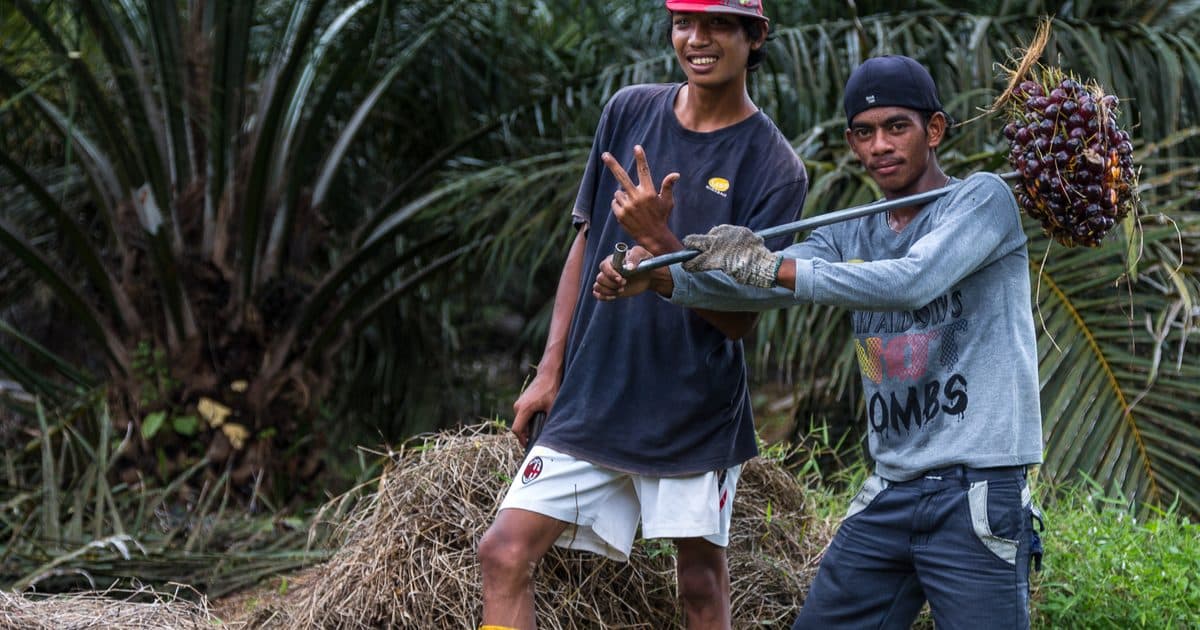
Palm oil and rubber — Côte d'Ivoire, Ghana, Nigeria, Cameroon, Liberia. Plantation-based production makes polygon mapping more tractable than smallholder crops; outgrower schemes reintroduce the difficulty.
Soy and cattle products — smaller volumes from this region, same obligations.
What to do now, on each side
If you buy in the EU: identify which of your suppliers fall in scope, ask each of them today whether they hold plot-level geolocation for the lots you will take after December, and write the requirement into your contracts with a rejection right. Register for the EU information system and run a submission before you need one under pressure.
If you export from Africa: map your plots now if you have not. Establish segregation from collection through to loading. Assemble your legality file — land title or use rights, forestry or agricultural permits, tax compliance, labour compliance. And treat the ability to demonstrate all of this as a commercial argument, because it is about to become the difference between having European buyers and not having them.
Where we fit
We are a freight forwarder and customs agent. We are not a certification body and we do not issue due diligence statements — that obligation sits with the EU operator, and nobody can take it off them.
What we do is the export side of the file: identifying and verifying suppliers, checking company registrations and sector licences, arranging independent pre-shipment inspection, obtaining certificates of origin and phytosanitary certificates, and keeping consignments segregated through inland transport, storage and stuffing so that a compliant lot stays a compliant lot.
Where a buyer wants a single accountable counterparty rather than a chain of them, we buy the goods ourselves and deliver DDP — which does not transfer the EUDR obligation, but does put one identifiable company behind the documentation.
Sources
- European Commission, Access2Markets — Delay until December 2026 and other developments in the implementation of the EUDR.
- Council of the EU — Council signs off targeted revision to simplify and postpone the regulation, 18 December 2025.
- Council of the EU — Council and Parliament reach a deal on targeted revision, 4 December 2025.
- Hogan Lovells — Commission publishes simplification package ahead of the December 2026 application date.
This regulation has been amended twice and remains subject to delegated acts. Verify the requirements in force with the European Commission before relying on any summary, including this one.
Read next
Buying from Africa: commodities, seasons and delivery, and due diligence on an African supplier.