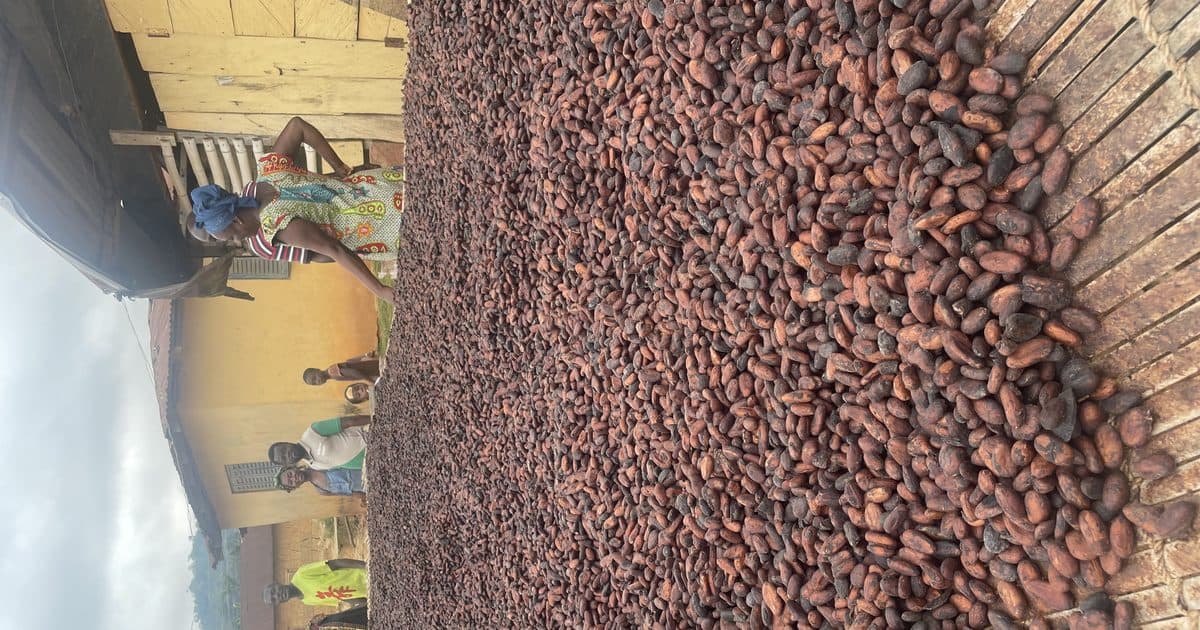
In short. Around thirty-five commodities are exported from West and Central Africa, each with a fixed harvest window: raw cashew February to June, cocoa main crop October to March, cotton December to April, sesame October to January, shea nuts June to September, gum arabic November to May, fresh mango April to August. Buying out of harvest means paying more for stored goods. The three recurring losses are a supplier that does not exist, declared quality that is not delivered quality, and an FOB price that ignores inland haulage, port handling, export formalities, inspection, freight and clearance at destination.
A buyer in Antwerp writes to us. He wants three containers of raw cashew nuts, export grade. He has found six suppliers online, four of whom replied within twenty minutes with very low prices and identical photographs. He would like to know, reasonably enough, which of them exists.
This is the position of every buyer approaching Africa for the first time. The commodity is there. The volumes are there. The prices are real. What is missing is any way to tell an exporter from an intermediary, an available crop from a promise, and an FOB price from what the goods will actually cost you delivered.
What is exported, and when
Seasons govern everything. Buying out of harvest means paying more for goods that have been stored for months, with the quality risk that implies.
| Commodity | Main origins | Harvest / availability | Usual packing |
|---|---|---|---|
| Raw cashew nuts | Côte d'Ivoire, Guinea-Bissau, Senegal, Benin, Ghana, Nigeria | February to June | Jute bags 80 kg, 20' container |
| Cashew kernels | Côte d'Ivoire, Benin | Year-round | Vacuum cartons 22.68 kg |
| Cotton lint | Mali, Burkina Faso, Benin, Chad, Côte d'Ivoire | December to April | Pressed bales 220 kg |
| Shea butter | Mali, Burkina Faso, Ghana, Nigeria, Benin | Year-round (nuts June–September) | Drums 200 kg, cartons 25 kg |
| Shea nuts | Mali, Burkina Faso, Ghana | June to September | Bags 50 kg |
| Sesame seed | Mali, Burkina Faso, Nigeria, Ethiopia, Sudan | October to January | Bags 50 kg, big bags |
| Gum arabic | Sudan, Chad, Senegal, Mali, Nigeria | November to May | Bags 50 kg |
| Cocoa beans | Côte d'Ivoire, Ghana, Cameroon, Nigeria | October to March (main crop) | Jute bags 62.5 kg |
| Robusta coffee | Côte d'Ivoire, Cameroon, Uganda | November to April | Bags 60 kg |
| Arabica coffee | Ethiopia, Kenya, Rwanda, Burundi | October to February | Bags 60 kg |
| Groundnuts | Senegal, Nigeria, Sudan | November to February | Bags 50 kg, bulk |
| Groundnut oil | Senegal | Year-round | Drums, food-grade tanker |
| Palm oil | Côte d'Ivoire, Ghana, Nigeria, Cameroon | Year-round (peak March–June) | Food-grade tanker, drums |
| Dried hibiscus | Senegal, Nigeria, Burkina Faso | November to February | Compressed bales, cartons |
| Fonio, millet, sorghum | Senegal, Mali, Burkina Faso, Niger | October to December | Bags 50 kg |
| Soybean | Togo, Benin, Nigeria, Uganda | October to December | Bags 50 kg, bulk |
| Kola nuts | Côte d'Ivoire, Ghana, Nigeria | August to December | Ventilated bags |
| Dried ginger | Nigeria, Cameroon, Uganda | December to March | Bags 50 kg |
| Penja pepper, spices | Cameroon | November to February | Cartons, bags |
| Vanilla | Madagascar, Uganda, Comoros | July to November | Vacuum cartons |
| Cloves | Madagascar, Tanzania | October to December | Bags 50 kg |
| Fresh mangoes | Senegal, Mali, Côte d'Ivoire, Burkina Faso | April to August | Cartons 4 kg, reefer |
| Pineapple, banana | Côte d'Ivoire, Cameroon, Ghana | Year-round | Reefer |
| Avocado | Kenya, Tanzania, South Africa | March to September | Reefer |
| Cut flowers | Kenya, Ethiopia | Year-round | Refrigerated air freight |
| Frozen fish products | Senegal, Mauritania, Morocco | Year-round | Reefer −18 °C |
| Hides and skins | Mali, Niger, Nigeria, Ethiopia | Year-round (peak after Tabaski) | Salted bales |
| Natural rubber | Côte d'Ivoire, Liberia, Ghana | Year-round | Bales 33 kg, palletised |
| Timber — okoumé, sapele, azobé, iroko, padouk | Gabon, Cameroon, Congo, CAR | Year-round (outside peak rains) | Logs, sawn, container or breakbulk |
| Salt | Senegal, Mauritania | November to May | Bags 50 kg, bulk |
| Phosphates | Senegal, Togo | Year-round | Bulk vessel |
| Manganese | Gabon | Year-round | Bulk, rail then vessel |
| Bauxite | Guinea | Year-round (outside July–September) | Bulk vessel |
| Iron ore | Mauritania, Liberia | Year-round | Bulk vessel |
| Zircon, ilmenite | Senegal | Year-round | Bulk, big bags |
One necessary statement: we do not deal in gold, diamonds or precious stones. Those trades operate under specific licensing and traceability regimes, and the overwhelming majority of unsolicited offers circulating in that field are fraudulent.
The three expensive mistakes
The supplier who does not exist. A polished website, a WhatsApp number, photographs borrowed from a genuine exporter, and a request for a thirty percent advance. The money leaves, the goods never come. No amount of remote checking substitutes for a physical visit and a look at the company registry.
Declared quality that is not delivered quality. On cashew, everything turns on outturn and nut count — two figures a seller can quote without having measured them. On sesame it is the impurity rate. On shea butter, free fatty acid and moisture. Independent pre-shipment inspection costs a fraction of a container, and it is the most profitable money you will spend on the transaction.
The FOB price that becomes something else. A quoted ex-works price ignores inland haulage, port handling, export formalities, inspection, stuffing, ocean freight, insurance and clearance at destination. A buyer who discovers these afterwards also discovers the deal was not one. This is why we prefer to work DDP: one price, all in, to your door.
How we take a file
We identify and verify the supplier. Company registry, exporter licence, actual production capacity, references. We visit the site when the volume justifies it.
We buy on your behalf, or we introduce you. Under the first arrangement you have one counterparty, one contract and one payment — GraceCorp carries the supplier relationship and the performance risk.
We arrange pre-shipment inspection by an independent body, against the criteria that matter for your commodity.
We move the goods inland to the port — Dakar, Abidjan, Lomé, Cotonou or Douala depending on origin — with hauliers whose licences, roadworthiness certificates and insurance we have checked.
We handle export formalities: certificate of origin, phytosanitary certificate, quality certificate, and whatever the specific trade requires.
We deliver to your warehouse, import clearance included if you want it.
You follow the operation at every stage, from any time zone.
It works in the other direction too
A large share of our files run the other way: bringing a machine, a production line, a generator or mining equipment into Africa. Port, clearance, haulage to site, and where the value justifies it, escort and real-time tracking.
How to start
Tell us the commodity, the volume, the final destination and the timing you need. We come back with feasibility, the real seasonality, and a costed file.
We do not quote before studying the file, and we are wary of anyone who quotes over the phone: on these commodities, a price given without knowing grade, quality and exact origin means nothing.
Start here
If you already know what you want to buy, send us your specification — commodity, grade, quantity, destination. One working day for an answer.
Read next
Securing payment between Africa and abroad, and quoting DDP into West Africa.