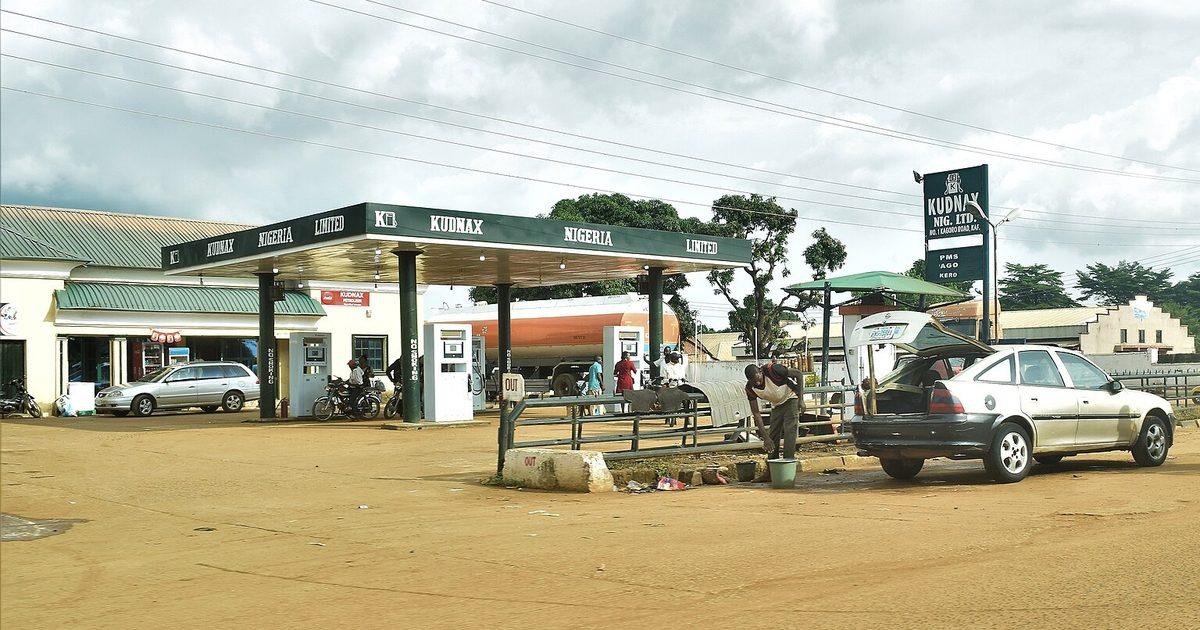
In Benin, the number of filling stations has risen from 215 in 2019 to nearly 500 today, according to the director general of the state depots, Dépôts pétroliers du Bénin. And demand is still moving their way: according to the spokesman of the Union progressiste le Renouveau party, the country uses about 2.5 million litres of fuel a day, of which 2.2 million came from the informal market and only 300,000 from stations. As fuel on the parallel market becomes scarcer and dearer, buyers are turning to licensed stations, and queues are forming in front of them.
Opening a filling station remains one of the most searched business projects in West Africa. It is also a trade of thin margins and large volumes, closely supervised by the state. Here is what to know before you break ground: the possible models, the real margin per litre, the approvals country by country, what to build, and the question that decides everything, fuel supply.
Take action
- Talk to us about supplying your station: message us on WhatsApp.
- See our fuel offer: products, delivery, pricing and payment.
Three ways to own a station
Run a branded station. A licensed distributor owns the brand, often the site, and hands you the operation. It is the cheapest way in. Your income depends on the contract signed with the brand; in Senegal, the official price structure sets the retailer's margin at 14.5 CFA francs a litre.
Build an independent station under your own licence. You obtain the distribution licence, build, and buy at the depot yourself. You then capture the distributor's margin on top of the retailer's, but you carry the investment, the stock and the logistics.
Build in partnership with a licensed distributor. You provide the land and the facilities; a licensed distributor supplies the station under contract. Roles and margins are negotiated. The exact structure depends on the country and on the partner's licence: have it checked before you build.
Filling station profit margin: what the official structure shows
In Senegal, the official price structure published by the Energy Sector Regulatory Commission (CRSE) itemises every link. In the one in force since 7 November 2026:
| Per litre | Diesel | Gasoline |
|---|---|---|
| Price to the retailer, paid by the station to its distributor | 740.5 CFA francs | 975.5 CFA francs |
| Retailer margin | 14.5 CFA francs | 14.5 CFA francs |
| Pump price | 755 CFA francs | 990 CFA francs |
| Distributor margin, including 20 of transport equalisation | 69.7 CFA francs | 69.7 CFA francs |
The station's gross margin is therefore fixed per litre. Worked example, with a volume chosen for illustration and not an average: a station selling 5,000 litres a day earns 72,500 CFA francs a day of gross margin on fuel, about 2.2 million CFA francs over 30 days, before wages, power, maintenance and losses. A station lives on volume, and on what comes with the fuel: lubricants, car wash, shop.
Elsewhere, the rules differ. In Côte d'Ivoire, the Directorate General of Hydrocarbons sets monthly maximum prices: 725 CFA francs a litre of diesel and 905 for gasoline in November 2026. In Benin, official prices have been 750 CFA francs for gasoline and 765 for diesel since 8 October 2026. In Nigeria the market is deregulated: on 12 November 2026, petrol averaged 1,210 naira a litre at Lagos depots, while motorists paid 1,325 to 1,420 naira at the pump; the gap has to cover transport, running costs and the station's margin.
Licences and approvals, country by country
Nigeria
Since the Petroleum Industry Act 2021, the downstream sector has been regulated by the NMDPRA. Its Midstream and Downstream Petroleum Operations Regulations, 2025, issued in early 2026, consolidate the earlier instruments and expressly cover retail trading. Applications and permit checks for filling stations go through its online portal, the Retail Outlets Monitoring System.
The most detailed published checklist is still the 2015 guidelines of the former regulator, the DPR, for approval to construct and operate a filling station:
- Site suitability: outside pipeline and high voltage line rights of way, at least 15 metres from the road edge to the nearest pump, at least 400 metres from an existing station, no more than four stations, yours included, along a two kilometre stretch, drainage that does not run into a stream, and an environmental impact assessment.
- Approval to construct: company documents, tax clearance, police and fire reports, approved building plan, land title; meaningful work must start within three months or the approval lapses.
- Licence to operate: at least three underground tanks and three pumps, one each for petrol, kerosene and diesel, a canopy, a concreted forecourt, a perimeter wall, safety equipment, a standby generator and a price board; tank burial and pressure and leak tests are witnessed by the regulator.
Because the 2025 regulations revoked the earlier DPR instruments, check the current version with the NMDPRA before starting work.
Senegal
- A licence. Law no. 98-31 of 14 April 1998 makes the import, storage, transport, distribution and marketing of hydrocarbons subject to licence (article 2). Licences are granted by order of the minister in charge of hydrocarbons, after an opinion from the National Hydrocarbons Committee, on criteria of capacity, integrity, safety and environmental protection.
- Retail sales at stations. Except for kerosene, any sale to a person without a tank must take place at a filling station (article 14).
- The environment. A filling station is a classified installation: it cannot be sited without the opinion of the ministry in charge of the environment, which checks in particular the tanks and the distance to homes. The Environment Code, law no. 2023-15 of 2 August 2023, makes classified installations subject to authorisation or declaration depending on their class, and decree no. 2025-227 of 31 January 2025 sets out the categories, inspection and emergency plans.
- Construction, like any building, needs a building permit.
Côte d'Ivoire
To buy directly from approved suppliers and open stations, you need a petroleum products distributor approval from the Directorate General of Hydrocarbons. According to the official Ivorian public service portal, it is open only to public limited companies and limited liability companies, with a minimum share capital of 200 million CFA francs, fully paid up, and the file includes a feasibility study and proof of land ownership. The procedure is free. Without the approval, the route is a partnership with a licensed distributor.
Benin
The state depots, Dépôts pétroliers du Bénin, receive and process orders from licensed operators, who buy the product at the depot and truck it to their own stations. Roadside fuel selling has been banned since a law of June 2018, and the state is rolling out licensed mini stations to bring informal sellers into the legal market, as we explain in our article on kpayo, Benin's informal fuel trade.
What to build, and what drives the cost
A filling station starts with a well placed plot with easy access in and out. Then come:
- underground tanks, one per product, tested before use;
- calibrated pumps that display volume and price;
- a canopy over the pumps and a concreted forecourt;
- controlled drainage and safety equipment: extinguishers, sand buckets, visible warnings;
- a backup power source, an office, a sales room and toilets.
How much does it cost to build a filling station? We found no reliable public source giving an average cost for Nigeria, Ghana, Senegal or Côte d'Ivoire, and we will not make one up. The cost depends first on the land, the number and size of tanks, and the number of pump islands. Get separate quotes: land, civil works, tanks and piping, pumps, canopy, safety, studies and permits.
Fuel supply: what makes or breaks a station
A station with an empty tank loses its customers, sometimes for good. In Benin, the director general of the state depots said so in November 2026: stations sized for a fraction of demand must enlarge their teams and their delivery fleets, and ordering and transport delays slow down resupply even when product is available at the depot.
Three rules follow.
Size your tanks in days of sales. Worked example: at 5,000 litres a day, a 45,000 litre tanker covers nine days of sales. Keep a reserve that covers the longest delivery delay you have ever had, as we do for sites in our article on diesel buffer stock on site.
Sign a supply contract, with a schedule, a price formula, a certificate of analysis for every batch and sealed trucks. Check every delivery on receipt, as in our fuel delivery checklist.
Keep a fallback source. A second supplier, a second depot, or a loaded tanker you can buy when your delivery runs late: that is the idea behind our rolling stock of loaded fuel tankers.
Pricing rules
In Senegal, Côte d'Ivoire and Benin, the pump price is set by the state: the station applies it and displays it. In Nigeria the price is free, but the competition authority, the FCCPC, has warned refiners and marketers over high petrol and diesel prices while crude prices were falling.
Our reading
The risk in a filling station is not the construction. It is cash and supply: a station pays for its fuel before selling it, on a margin of a few francs a litre. Whoever controls deliveries, quantity checks and working capital lasts. The others close or sell out.
The timing is good wherever demand is moving from the informal market to stations, as in Benin. It is good too wherever existing stations run dry as soon as a road closes: customers go to whoever has product.
What we do
GRACECORP AMD GROUP (GraceRoad) supplies filling stations and distributors with diesel and gasoline, by tank truck, from our own depots or those of our partners, in Dakar, Abidjan, Lomé or Cotonou, depending on availability. Where the law requires it, the sale and delivery go through our licensed partners. Every batch ships with its certificate of analysis, and every truck is sealed and tracked. Payment is by documentary letter of credit, or 50% with the order and the balance before loading.
Planning a station? Let's talk about its supply before the first brick: the target volume is what sizes the tanks.
Talk to us about supplying your station on WhatsApp or see our fuel offer.
Read next: selling fuel in West Africa: who is allowed to?, buying diesel in bulk, from a tank truck to a full cargo and the 45,000 litre fuel tanker truck.
Frequently asked questions
How do I start a filling station business in Nigeria?
Applications go to the NMDPRA, through its retail outlets portal. The known stages are site suitability, approval to construct, then the licence to operate, with distance and equipment rules. Check the current version, since the 2025 regulations replaced the earlier instruments.
How profitable is a filling station?
It depends on volume and on the country's price rules. In Senegal, the official retailer margin is 14.5 CFA francs a litre, for diesel as for gasoline; in Nigeria, the station sets its own price over its depot cost. A station earns on volume and on lubricants, car wash and shop sales.
How much does it cost to build a filling station in Nigeria or Ghana?
There is no reliable public figure. The cost depends on the land, the number and size of tanks, the number of pump islands and the equipment: get separate quotes for each item.
Can I open a filling station without a brand?
Yes, provided you hold the licence or approval the country requires, or buy from a licensed distributor under an authorised arrangement. In Côte d'Ivoire, the distributor approval requires a company with at least 200 million CFA francs of share capital.
How do I open a filling station in Senegal?
You need a distribution licence granted by order of the minister in charge of hydrocarbons, or a partnership with a distributor that holds one, the opinion of the ministry in charge of the environment, since a station is a classified installation, and a building permit.
Where do I buy fuel for my station?
From a distributor or supplier that loads at a licensed depot, delivers in a sealed tank truck with a certificate of analysis, and accepts a contract with a schedule and a price formula.
Sources: La Nouvelle Tribune, 19 November 2026 (statements by the director general of the Bénin state depots: number of stations, queues, order chain); La Nouvelle Tribune, 22 November 2026 (consumption and split between the informal market and stations, according to the UP-R spokesman); Energy Sector Regulatory Commission of Senegal (CRSE), price structure from 7 November 2026 (document no. 6886); law no. 98-31 of 14 April 1998 (Senegal), articles 2 and 14; law no. 2023-15 of 2 August 2023 on the Environment Code (Senegal) and decree no. 2025-227 of 31 January 2025; Le Quotidien (Dakar), "Multiplication des stations-service : Dakar, une densité hors norme" (filling stations as classified installations); Côte d'Ivoire public service portal, procedure "Demander un agrément pour la distribution des produits pétroliers et dérivés"; KOACI, 1 November 2026, and Fraternité Matin, 31 October 2026 (Ivorian maximum prices); Benin official prices from 8 October 2026, as tracked in our corridor weather; Aboki Forex, 13 November 2026, citing Petroleumprice.ng (Lagos depot prices, pump prices, FCCPC warning); Templars, "Nigeria's 2025 Petroleum Regulations", 30 March 2026; NMDPRA, Retail Outlets Monitoring System portal; Department of Petroleum Resources, 2015 guidelines for approval to construct and operate a petroleum products filling station, summarised by TheNigeriaLawyer, 23 April 2021; Wikipedia, Kpayo article (Benin law of June 2018).