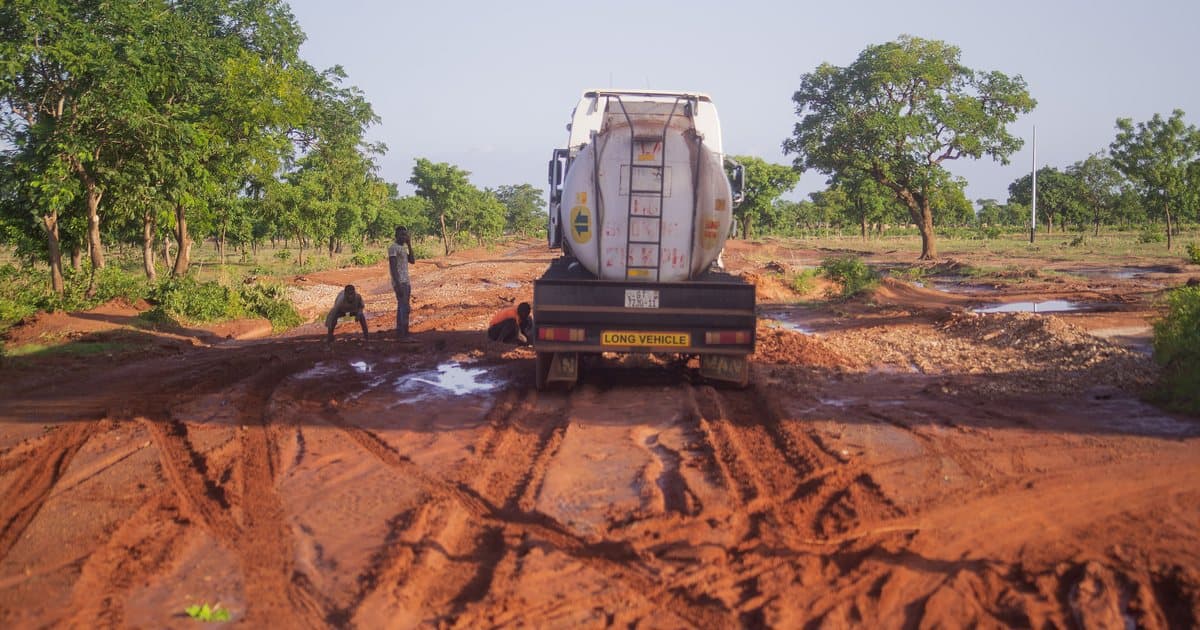
A mine in Mali, a power plant in Guinea, a road project in Senegal, a truck fleet in Abidjan: all share the same problem. They burn diesel every day, and a one week outage stops everything. Since the blockade of Mali began, more than 300 fuel tankers have been destroyed on the region's roads. Fuel supply is no longer a purchasing line. It is a continuity question.
Here is how buying refined products works in West Africa, and how to make it predictable.
Where the region's fuel comes from
Local refineries. Senegal's Société africaine de raffinage in Dakar is raising its capacity from 1.2 to 1.5 million tonnes a year, and the country is preparing a second unit of 4 million tonnes, targeted for 2029. Côte d'Ivoire's Société ivoirienne de raffinage in Abidjan has a capacity of 3.8 million tonnes a year, but produced only 3.2 million in 2025 because of technical constraints.
The Dangote refinery in Nigeria reached its capacity of 650,000 barrels a day in February 2026. By March it had already exported twelve gasoline cargoes, 456,000 tonnes in total, to destinations including Côte d'Ivoire, Ghana and Togo. Its diesel exports also rose in 2026, to West Africa and Europe.
Seaborne imports. The rest arrives by tanker at coastal ports, Dakar, Abidjan, Lomé, Cotonou, where it is stored in depots before moving by tank truck to cities, sites and landlocked countries.
Mali, Burkina Faso and Niger have no coastline. Their fuel always makes a long road trip, and that trip is what makes their supply fragile.
The specification to demand
Since 1 January 2021, ECOWAS has capped sulphur at 50 ppm for imported gasoline and diesel, and since 1 January 2025 only fuels meeting the harmonised specifications may be sold in the region, including those from local refineries.
For a buyer, that means three things: require a certificate of analysis for every batch, check it against the specification, and have quality tested on delivery for large volumes. Off spec diesel damages modern engines, and a truck engine or generator costs far more than the price difference.
Three ways to buy
At the pump or from a distributor. For small volumes. In Senegal, pump prices are set by the state: since 15 August 2026 diesel costs 755 CFA francs a litre. In Mali it sold at around 940 in July 2026, and far more on the black market in areas hit by the blockade.
From a depot, delivered by tank truck. For regular consumers: mines, projects, industry, fleets. The product is bought from a company holding storage at a port, loaded into tank trucks and delivered to site. The price is built from the international product quotation, plus sea freight, storage, the country's duties and taxes, and inland transport to site.
The full cargo. For very large volumes. A medium range tanker carries tens of thousands of tonnes. The purchase is made from an international trader, received into a port depot and distributed by truck. It gives the best unit price, provided you control the whole chain.
Fuel oil, lubricants and other products
Heavy fuel oil feeds thermal power plants, some industries and ships. It is bought in large volumes, under contract, and needs suitable receiving facilities.
Lubricants, engine oils, hydraulic oils and greases, are delivered in drums or one cubic metre tanks. For a mine or a fleet, combining them with fuel deliveries simplifies purchasing and cuts trips.
Other refined products, such as kerosene, follow their own standards and channels, checked case by case.
What makes supply predictable
A contract with a schedule. Announced monthly volumes that the supplier can reserve in its depots.
A price formula. A known international quotation plus a negotiated fixed differential. The price moves with the market, but there is no surprise about how.
Several points of origin. A site in Mali can be served from Dakar, Abidjan, Lomé or Cotonou. When one corridor closes, as in 2025 and 2026, the buyer with a fallback origin keeps getting deliveries.
A buffer stock on site. A few weeks of consumption in tanks, to absorb a delayed convoy or a road cut in the rainy season.
Controlled transport. Diesel and gasoline are dangerous goods: a suitable tank truck, a trained driver, proper marking, an escort when the route requires it.
What we do
GraceRoad buys and delivers fuel through Côte d'Ivoire, Benin, Togo and Senegal. We have agreements with companies that operate their own storage: we buy the product for you and deliver it to your site, duties paid if you wish. For large quantities, we work with international traders able to deliver full cargoes. We take charge of the whole logistics chain, from the depot or the vessel to your tank.
Our job is to make your purchasing easier and your supply predictable: planned volumes, certified quality, fallback routes, tracked trucks. Diesel, gasoline, fuel oil, lubricants and other refined products: tell us the product, the monthly volume and the delivery site. See also our sourcing service.
Read next: oil and gas logistics in Senegal and Mauritania and the first years of a mining project supply chain.
Sources: ECOWAS harmonised fuel specifications (50 ppm sulphur for imported gasoline and diesel from 1 January 2021, for all fuels marketed from 1 January 2025), as reported by the Climate and Clean Air Coalition and allAfrica; Channels Television, 23 March 2026 (Dangote refinery at 650,000 barrels a day and gasoline exports); Hydrocarbon Processing, September 2026 (Dangote diesel exports); Société ivoirienne de raffinage and Ivorian press (capacity and 2025 output); Société africaine de raffinage and Senegalese press (capacity and second unit project); Government of Senegal, fuel prices from 15 August 2026; Mondafrique, 20 July 2026 (diesel price in Mali); Institute for Security Studies, 4 June 2026 (tankers destroyed since September 2025).