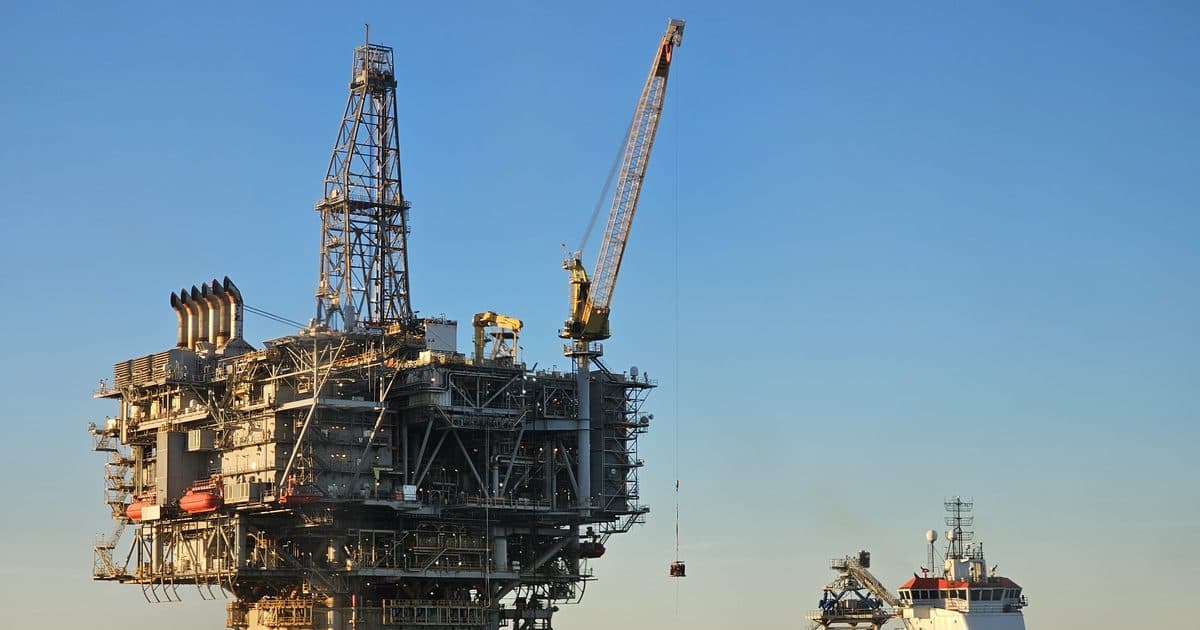
Senegal and Mauritania became hydrocarbon producers within the space of a year, and the supply chain behind that is still being built.
The Sangomar field, offshore Senegal and operated by Woodside Energy, produced 17.9 million barrels in the first half of 2026, running close to nameplate capacity, with a second development phase under evaluation. The Greater Tortue Ahmeyim gas project, straddling the Senegal–Mauritania maritime boundary and operated by BP with Kosmos Energy, achieved first LNG in February 2025 and exported its first cargo that April; production in 2026 is running at around 2.9 million tonnes per annum, with a Phase 2 decision pending.
Two producing assets, a growing service sector around them, and a set of onshore logistics problems that are not the same as ordinary commercial freight.
The customs regimes are the first thing to get right
Hydrocarbon operations are governed by a petroleum code and, usually, by an agreement between the state and the operator. Those instruments commonly provide relief or suspension on equipment and inputs imported for petroleum operations — and the relief is not automatic.
It is claimed by presenting the supporting documents at the moment the declaration is lodged: the operator's or subcontractor's entitlement under the applicable agreement, and evidence that the goods are destined for petroleum operations. Claimed afterwards, it becomes a refund application, and refund applications take a long time while your equipment sits in a yard.
Temporary admission is the other regime that matters here, because so much of what enters for an offshore project leaves again: drilling equipment, tools, testing and inspection kit, contractor plant. Duty is suspended against a guarantee, and the re-export must be documented or the guarantee is called. It requires an inventory discipline that project teams under schedule pressure routinely lose.
Both regimes are provided for in the standard customs framework — the Revised Kyoto Convention covers temporary admission and inward processing — and both are administered nationally, with national documentation.
Drilling chemicals are dangerous goods
A large share of what an offshore operation consumes onshore is regulated cargo. Barite, bentonite, corrosion inhibitors, biocides, acids, methanol and diesel each carry their own classification, and several fall under ADR.
That means compliant vehicles, trained drivers, correct placarding, transport documents that match the classification, and segregation rules on mixed loads. It also means that the cheapest available truck is not an option, and that a carrier who has never moved classified goods will find out at a checkpoint.
Where the field is offshore, the onshore leg ends at a quay rather than at a site, which adds a marine interface and its own scheduling constraint: a supply vessel sails on a window, and cargo that misses it waits for the next one.
The rhythm is different from commercial freight
Commercial cargo is planned around cost. Offshore operations are planned around the cost of not having something.
A rig or a floating facility waiting on a part is losing money by the hour, at a rate that makes freight cost irrelevant by comparison. That inverts the usual decisions: air freight becomes rational, expediting becomes standard practice, and the value of a logistics provider is measured in how fast they can be told to move and how fast they move.
It also raises the standard on documentation and traceability. Operators audit their supply chains, and a subcontractor who cannot produce a clean paper trail is a subcontractor who does not get renewed.
Where the onshore risk actually sits
Port scheduling. Heavy and out-of-gauge cargo needs a crane and a booked window. A project moving equipment repeatedly does not improvise those.
Customs entitlement. Getting the regime right on the first shipment sets the pattern for every one after. Getting it wrong the first time creates a precedent that is tedious to correct.
Carrier capability on classified goods. Not a formality. A rejected or detained ADR load is both a delay and a compliance incident on an operator's record.
Visibility. A logistics coordinator who cannot say where a consignment is cannot plan a vessel loading, and the vessel does not wait.
What we do — and what we do not
We work on the onshore side: port operations, customs clearance under the applicable regime, inland and quayside transport, ADR-compliant carriage of classified goods, escort where value or route requires it, and position reporting your coordinators can read from any time zone.
We are a freight forwarder and customs agent based in Dakar. We do not operate offshore supply vessels, we are not a marine logistics contractor, and we do not run a shorebase. On an offshore scope, we are the party that gets cargo cleared and to the quay — not the party that takes it to the field.
We would rather state that plainly than be discovered at a pre-qualification review. If your requirement is onshore, tell us the scope and we will tell you exactly what we can hold.
Sources
- Woodside Energy — Sangomar development, operator information on the field.
- Kosmos Energy — Greater Tortue Ahmeyim, project overview and status.
- Enerdata — GTA LNG project starts commercial operations.
- World Customs Organization — Revised Kyoto Convention, Specific Annexes on temporary admission and customs warehousing.
Production figures move. The ones above are first-half 2026; check operator reporting for current output before relying on them.
Read next
Mining and industrial projects: the logistics of the first three years, and getting heavy equipment from the port to site.