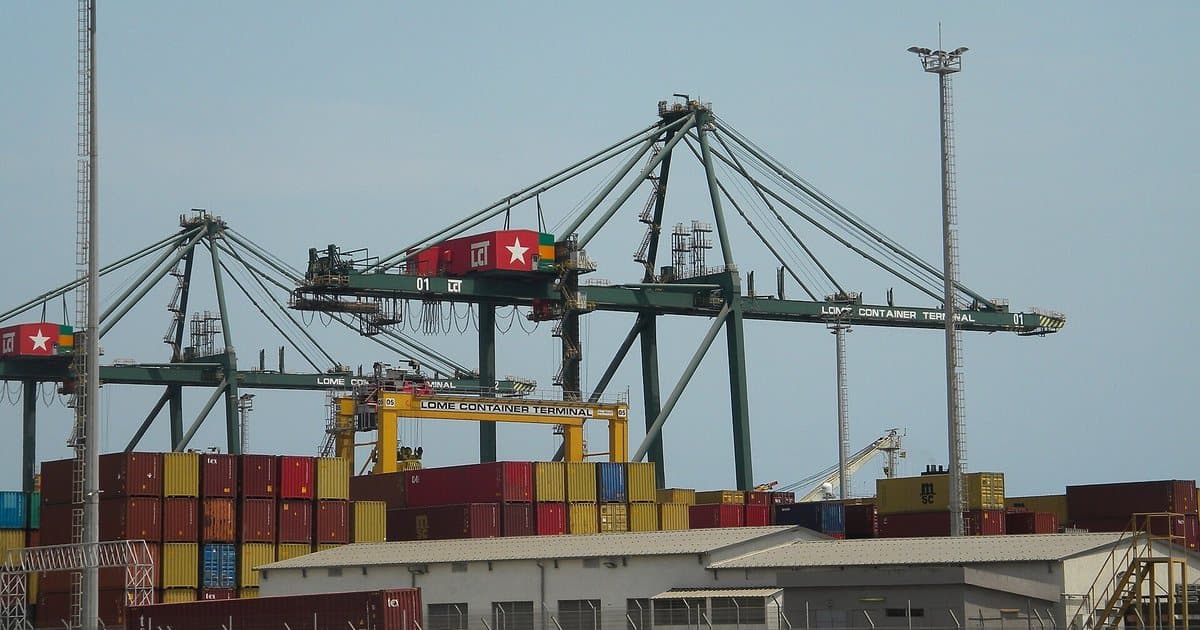
The word "freight" has two meanings, and they are often confused. It means the goods being carried: a truck leaves "with freight", a ship waits "for freight". It also means the price of carriage: sea freight is what you pay the shipping line to move goods from one port to another.
Either way, freight sits at the heart of every purchase from abroad. Here are its forms, how it is priced, and what it really costs in West Africa.
Freight, chartering, charges: the vocabulary
- Freight: the goods, or the price of carrying them.
- Chartering: hiring a whole means of transport, a ship or an aircraft, from its owner or operator.
- Ancillary charges: everything other than the main carriage, such as port handling, storage, customs clearance or final delivery. They come on top of freight and sometimes exceed it.
Sea freight
It is the mode of most African imports.
Full container load: the price is quoted per container, 20 or 40 foot, port to port.
Less than container load (groupage): when your goods share a container, the price is quoted per freight unit, the tonne or the cubic metre, whichever is greater. A cubic metre of light goods therefore costs as much as a tonne.
Bulk or ro-ro: for grain, cement, fertiliser or vehicles, the price is negotiated per tonne or per unit.
On top of the base rate come surcharges that change often: bunker surcharge, peak season surcharge, war risk surcharge when a sea route becomes dangerous, and terminal handling charges. In times of crisis, as in the Gulf in 2026, they can weigh heavily. A quote that does not itemise surcharges is not a complete quote.
Air freight
It is for the urgent and the valuable: spare parts, medicines, high value fresh produce. It is priced per kilogram, but on chargeable weight: the greater of actual weight and volumetric weight. The usual air rule counts one cubic metre as about 167 kilograms. A light but bulky parcel is therefore charged by volume.
Road freight
In West Africa it is often the most expensive link, especially for landlocked countries.
Take Dakar to Bamako. Mali publishes an official grid that sets the distance at 1,353 kilometres and the price at 56,152 to 63,334 CFA francs a tonne, or 2.25 to 2.53 million CFA francs for 40 tonnes. In September 2026, on the requests we handle, a full truck nonetheless trades at 4 to 7 million CFA francs depending on tonnage. Before the September 2025 blockade, the same trip cost around 1.4 million.
Why such a gap? Diesel makes up about 80 percent of a truck's variable costs on this route, according to a World Bank study, and a round trip burns a little over 1,000 litres. Add waiting days, a return often empty, escorts and risk. We broke the calculation down line by line in our article on Bamako truck rates.
What drives the price of freight
- Distance and route, with its roads, borders and risks.
- Fuel, the largest road cost and the basis of sea surcharges.
- The balance between outbound and return: a truck that comes back empty charges the return to the outbound trip.
- Time: every day waiting at port or at a border costs money.
- The nature of the goods: dangerous, fragile, perishable or out of gauge cargo needs equipment and precautions.
- The season: the rainy season slows roads and pushes prices up between July and October.
Our reading
For many African importers, ocean freight is no longer the bulk of the bill. It is the road after the port that weighs most, and varies most. Comparing freight quotes without comparing what they include, from ship to last kilometre, means comparing prices that do not describe the same thing.
Frequently asked questions
What is freight in transport?
The word means both the goods carried and the price paid to the carrier to move them. You speak of sea, air, road or rail freight depending on the mode.
What is sea freight?
The price paid to the shipping line to carry goods by sea from one port to another, by container, groupage or bulk, plus surcharges and port charges.
How is air freight calculated?
Per kilogram, on chargeable weight: the greater of actual and volumetric weight, the usual rule counting one cubic metre as about 167 kilograms.
What is the difference between freight and ancillary charges?
Freight pays for the main carriage. Ancillary charges cover everything else: handling, storage, clearance, final delivery. A complete quote must show them.
What we do
GraceRoad gives you a complete price, from the port of arrival to your door, including road freight, port charges and clearance, with vetted and tracked trucks. Tell us the goods, weight, volume and route.
Read next: the inland leg costs more than the ocean and hidden costs in a West African trucking quote.
Sources: Mali trade portal, freight rate grid for the Dakar corridor (distance, price per tonne); Mondafrique, 20 July 2026 (trip prices before and after the blockade); World Bank, Teravaninthorn and Raballand, Transport Prices and Costs in Africa, 2009 (fuel share of variable costs); our article of 19 September 2026 on the cost of a Dakar to Bamako trip (consumption, prices negotiated in September 2026); International Air Transport Association, volumetric weight rule.