A buyer in Bamako sees two numbers on the same file and cannot believe the second one. The ocean freight from Shanghai to Dakar, roughly 12,000 nautical miles, sits between 4,680 and 5,720 dollars for a 40 foot container in mid 2026. The road leg from Dakar to Bamako, 1,200 kilometres, comes back at a figure in the same range. Corridor studies put the average cost of a Dakar Bamako trip at about 4,160 dollars.
The reaction is always the same. Somebody is stealing.
Nobody is stealing. The inland leg is expensive because of how it is made up, and once you see the components you can act on them. Distance is the smallest one.
Waiting is the largest line item
A container ship earns while it sails. A truck earns only while it rolls, and on this corridor it does not roll very much.
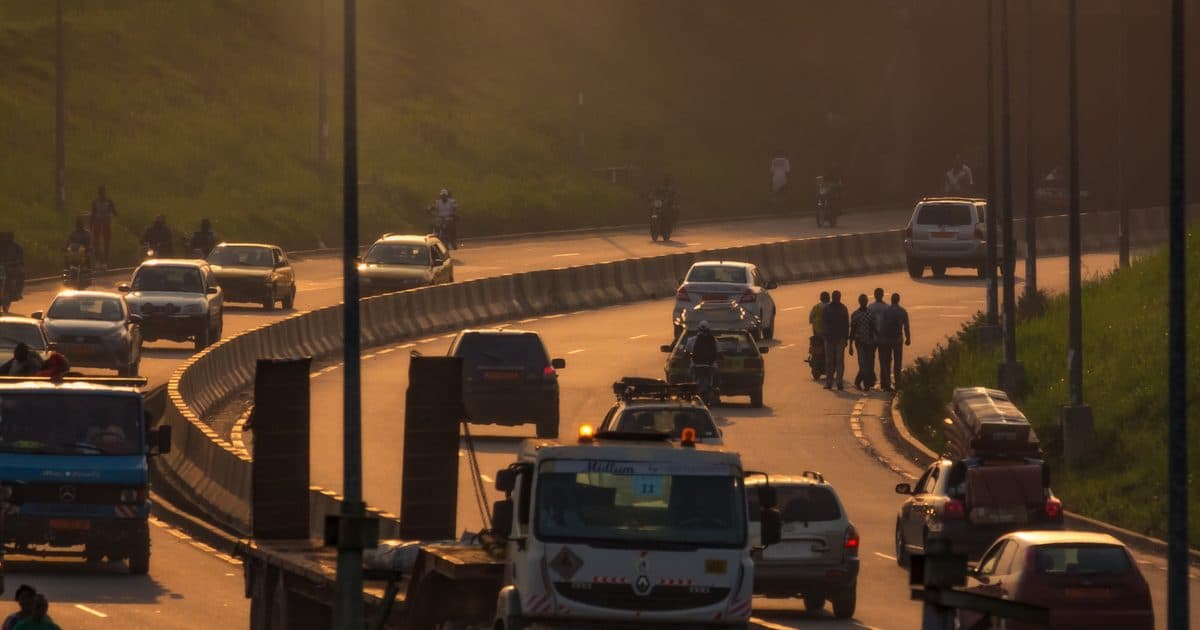
Corridor monitoring records around 27 controls on a single Dakar Bamako run, border delays that reach 316 minutes, the highest of the regional transit corridors, and a turnaround of roughly a fortnight for a round trip. The vehicle costs the same whether it is moving or parked at a barrier at two in the morning. Financing, insurance, depreciation and the driver keep running.
When a haulier prices a trip, he is not pricing 1,200 kilometres. He is pricing fourteen days of his asset.
The return leg is usually empty
Flows into Mali and flows out of Mali do not match. Containers, cement, fuel, fertiliser and consumer goods go east. Gold leaves by air. Cotton has its own season and its own logistics. So a large share of vehicles come back with nothing.
An empty return has to be paid for by the loaded leg. That single fact adds a meaningful share to every tonne going inland, and it is the item most within our reach: a backhaul that fills half of those trucks takes cost out of the corridor without a single kilometre of new road.
The informal payments
Corridor surveys record around 40,000 CFA paid at controls on a single trip. In a transparent quotation that money has to be somewhere, and if it is not shown it has simply been buried in the rate.
This is not a moral remark. It is a costing remark. A shipper who understands that this line exists can ask for it to be visible, can compare operators on it, and can push for the transit regimes that reduce the number of stops.
The risk premium nobody prints
The eastern part of the corridor carries a security risk that varies by month. Detours add hundreds of kilometres. Convoys wait for escorts. Insurance on both cargo and vehicle reflects it.
A serious operator prices that risk. An operator who does not will either refuse the file when it becomes real, or take it and cut something you were counting on: the insurance, the maintenance, or the duty prefinancing.
What the sea leg has that the road leg does not
The ocean leg is cheap per tonne kilometre for reasons that have nothing to do with water. It is scheduled, so the asset is never idle. It is high volume, so fixed costs are spread. It crosses no barriers between two port gates. It uses standardised equipment. It is measured, so a bad performer loses the account.
Every one of those properties can be built on land. Scheduled departures rather than trucks that leave when they are full. Terminals where customs clears once. Standard equipment. Published transit times that are actually tracked.
That is what a corridor becomes when it is run as a service rather than a series of individual trips.
What to do with your own file, today
Ask for the breakdown. Haulage, transit documents, escort where it applies, waiting time, demurrage exposure, and the informal costs. A quotation that arrives as a single number hides the parts you could act on.
Ask for the turnaround, not the transit time. Transit time is what a truck does when nothing goes wrong. Turnaround is what your cargo will actually live with.
Group your volume. Two full trucks a month on a fixed day are priced differently from six unpredictable ones a year, because the haulier can plan a return load.
Push the clearance inland. Clearing at a dry port near the destination rather than at the seaport changes both the dwell time and the storage bill.
What we do
GraceCorp is a Senegalese company in Dakar. We quote the inland leg with the waiting, the controls and the risk in the open rather than hidden in a round number, and we run the trucks with vetted hauliers whose licences, insurance and roadworthiness are checked before they carry anything.
Send us the corridor, the commodity, the volume and the frequency. You will get a costed file that shows where your money goes, and where it does not have to.
Read next
What the corridor looks like when rail disappears, and shipping a container from abroad to Senegal and Mali.