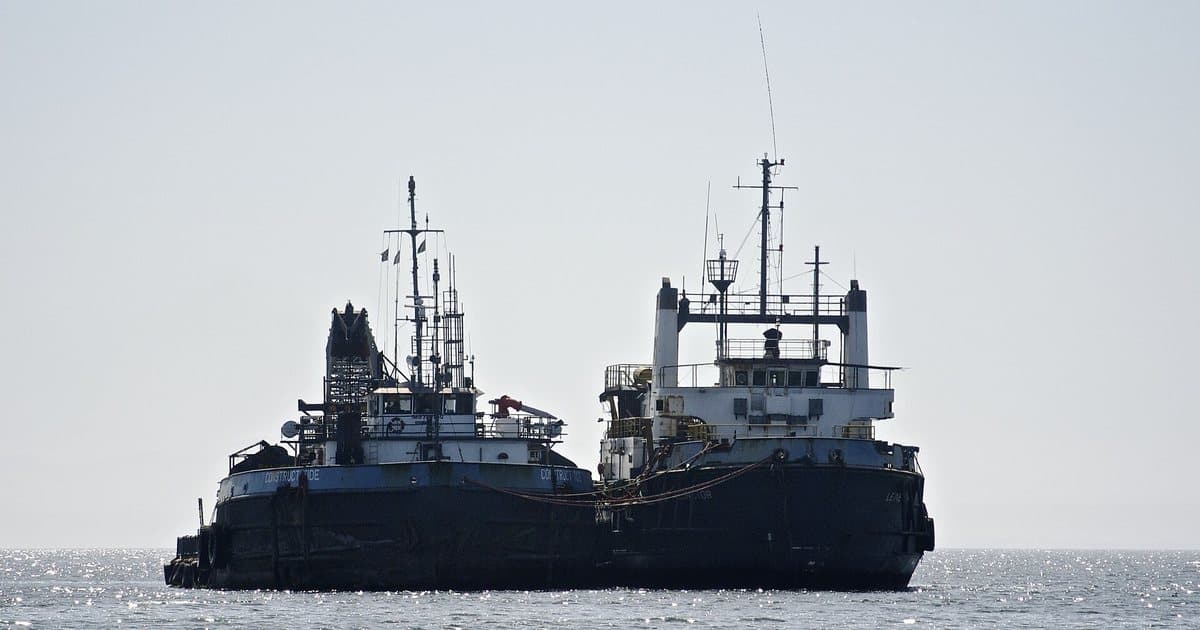
On 9 October 2026, a first diesel cargo sold by the Omani trader OQ Trading reached Botswana through the Mozambican port of Matola. Three weeks later, Minister of Minerals and Energy Bogolo Kenewendo told Bloomberg she had opened talks with Dangote, Angola and Côte d'Ivoire to diversify the country's supply. At the same moment, in neighbouring Malawi, motorists were sleeping at petrol stations for lack of diesel.
Zambia, Malawi, Botswana and Zimbabwe are landlocked and import their fuel. Everything depends on the port of entry, the corridor that follows, and how payment is made. Here is what to know, country by country.
Take action
- Get an offer delivered to your port: write to us on WhatsApp.
- See our fuel offer: delivery by ship from 2,000 tonnes.
The ports of entry
| Port | Country | Serving |
|---|---|---|
| Dar es Salaam | Tanzania | Zambia (road and TAZAMA pipeline), Malawi (road) |
| Beira | Mozambique | Zimbabwe (pipeline), Malawi and Zambia (road) |
| Nacala | Mozambique | Malawi (rail) |
| Matola | Mozambique | Botswana |
| Walvis Bay | Namibia | Botswana, Zambia, through the Walvis Bay corridors |
| Durban | South Africa | Botswana; Zambia as a fallback |
Zambia: the TAZAMA pipeline and open access
Zambia imports all of its fuel. Its key asset is the TAZAMA pipeline linking Dar es Salaam to Ndola. Built for crude oil, it has been converted to carry refined low sulphur gasoil, a conversion TAZAMA announced as complete in October 2024. Its managing director said the conversion lifted capacity from 600,000 to 800,000 tonnes a year, and the authorities expected the cost of moving diesel to fall from 170 to 121 dollars a tonne.
Since April 2025, an open access framework lets private oil marketing companies use the pipeline. According to Zambia Monitor, the number of prequalified companies rose from 18 to 32, and the first cargo imported by marketers under the new regime, 95,000 tonnes of diesel, was discharged at Dar es Salaam in April 2025. The system has its critics: a former president of the marketers' association said in January 2026 that more than 500 import licences had been issued but only three companies were actually importing, access to the pipeline making the difference.
Dar es Salaam and Beira are the main routes. The regulator, ERB, has cited Walvis Bay and Durban as fallback routes during problems on the Mozambican corridor.
Malawi: three corridors and a currency crisis
Malawi uses about two million litres of fuel a day. Its energy policy aimed for 50 % of imports by road from Beira, 30 % by road from Dar es Salaam and 20 % by rail from Nacala. Reality leans towards Beira, about 800 kilometres away against 1,500 for Dar es Salaam: the regulator, MERA, said the Beira route supplied 65 % of national needs.
Rail is still marginal but growing: in August 2023 the national oil company NOCMA received its first diesel train from Nacala, 29 tank wagons and 1.1 million litres.
Imports are shared between the state-owned NOCMA and Petroleum Importers Limited, a consortium of marketers. In October 2026 the country is in a severe shortage: NOCMA's chief executive blames the lack of foreign currency, and an IMF report had noted that international banks had stopped confirming the country's letters of credit. We cover the mechanism and the solutions in dollar shortage: how to pay for and secure fuel imports.
Botswana: moving away from dependence on South Africa
Botswana buys between 60 and 67 % of its fuel from South Africa depending on the source, the rest coming through Mozambique and Namibia. Its stocks are short: in November 2025 an official put them at 13.9 days of consumption, against 18 considered necessary. In March 2026 the government reported strategic storage capacity of 62.5 million litres, and Botswana Oil, the state company in charge of imports and reserves, held 33.1 million litres.
The country organises its entry points by depot: Gantsi for imports from Namibia, Francistown for those from Mozambique, Tshele for South Africa. The Tshele Hills depot, planned at 187 million litres, is meant to take reserves to 60 days by 2035. And since October 2026, diversification has gone by sea: through Matola, and talks with West African suppliers.
Zimbabwe: the Beira to Harare pipeline
Zimbabwe uses about three million litres of petrol and four million litres of diesel a day, according to The Herald. Most of it arrives through the pipeline from Beira: a 294 kilometre section to Feruka, operated on the Mozambican side by CPMZ, then the Feruka to Msasa section to Harare, operated by NOIC. Its capacity, long at 2.19 billion litres a year, is being raised to 3 billion, with a target of 5 billion by the end of 2027; CPMZ has launched an expansion meant to raise capacity on the Mozambican side by 67 % by the end of 2027.
What to know to get delivered
- Choose the port by final destination, not by sea freight alone: the cost of the inland corridor often outweighs the freight difference between two ports.
- Check who may import in the destination country: a licensed marketer in Zambia, NOCMA or PIL in Malawi, Botswana Oil in Botswana. An end user usually goes through one of them for customs clearance.
- Settle payment before loading: in a country short of hard currency, a buyer earning its revenue in dollars outside the country, a mine for example, can pay from abroad and secure its deliveries.
- Plan storage at the port or inland: a 2,000 tonne cargo, about 2.4 million litres of diesel, is then moved on by truck, rail or pipeline.
Frequently asked questions
Which port does Zambia's fuel come through?
Mainly Dar es Salaam, by road and by the TAZAMA pipeline now converted to diesel, and Beira. Walvis Bay and Durban serve as fallback routes.
Why is there a fuel shortage in Malawi?
According to the national oil company NOCMA, because of a lack of foreign currency to pay for imports. Tobacco earnings, the main source of dollars, fell sharply in 2026, and international banks had stopped confirming the country's letters of credit.
Where does Botswana import its fuel from?
Between 60 and 67 % from South Africa depending on the source, the rest through Mozambique and Namibia. The country has been diversifying since 2026, notably through Matola.
How does fuel reach Zimbabwe?
Mainly through the pipeline from Beira to Feruka, then on to Msasa near Harare.
What we do
GRACECORP AMD GROUP delivers diesel, Jet A-1 and CST 180 fuel oil by ship directly to ports in southern and eastern Africa, Walvis Bay, Matola, Beira, Nacala, Dar es Salaam or Durban, from 2,000 tonnes, with independent inspection at loading and a certificate of analysis for every lot. The price follows the international quotation for the product plus a stated premium, and the loading port is written into the contract. Payment is by documentary credit or 50 % with the order.
Request an offer on WhatsApp or see our fuel offer.
Read next: dollar shortage: how to pay for and secure fuel imports and diesel consumption in mining.
Sources: Nairametrics, 28 October 2026, citing Bloomberg (Bogolo Kenewendo's statements, OQ Trading cargo through Matola on 9 October); Forbes Africa, 23 October 2026 (Malawi queues); TAZAMA, "It's done: the pipeline conversion", October 2024, and operations page; Times of Zambia (capacity from 600,000 to 800,000 tonnes, transport cost from 170 to 121 dollars a tonne); Zambia Monitor (open access framework of April 2025, 18 then 32 marketers, first 95,000 tonne cargo); Lusaka Times, 3 January 2026 (criticism of import licences); Energy Regulation Board of Zambia, supply statements; The Nation (Malawi), on corridor policy, Beira's share according to MERA, distances and NOCMA's first rail shipment in August 2023; allAfrica, 1 and 5 October 2026 (consumption, currency, IMF report); BusinessTech, citing the World Bank (South Africa's share); Botswana Daily News and Botswana Speaks, "Fuel Supply Update", 26 March 2026 (stocks and capacity); Your Botswana and Mine Travel (Tshele Hills, 60 days by 2035, Gantsi, Francistown and Tshele depots); The Herald and NewsDay (Zimbabwe), Freight News and AIM, August 2026 (Beira Feruka Msasa pipeline, capacity, CPMZ expansion, daily consumption).