In 2025, Guinea exported 182.8 million tonnes of bauxite. The same year, Côte d'Ivoire shipped 271,000 tonnes of bananas, making it Africa's largest banana exporter. In between are mines burning millions of litres of diesel, cashew processing plants, sawmills, and laboratories looking for medicinal plants.
A cargo of ore and a container of bananas have almost nothing in common: not the volume, the ship, the temperature or the documents. Yet buying either without bad surprises rests on the same method. Here is that method, then what it becomes for each product, from the mine to the banana container.
Take action
- Send your sourcing request: an answer within two working days, no commitment.
- Ask for a fuel quotation on WhatsApp: diesel and gasoline delivered to site.
- Get a container delivered from the port of Dakar: port clearance, customs support, delivery.
One method, five steps
- The specification. Product, grade, quantity, preferred origin, destination, schedule. "Cashew" is not a request; "W320 kernels, 15.9 tonnes, vacuum packed, CFR Jebel Ali in December" is one.
- Supplier verification. Registration, export licence, real capacity, a site visit when the volume justifies it. The supplier must hold the goods, not resell someone else's stock.
- Pre-shipment inspection. An independent body checks quality and quantity against your specification before the goods leave Africa.
- Payment against documents. Documentary credit or payment against compliant documents, never in advance to a stranger.
- Transport to destination. The right vehicle, the right vessel, the right documents, to the port or the warehouse.
What changes from one product to another are the specification criteria, the checks, the logistics and the rules of the destination country.
For a mine: fuel and logistics
An open pit mine runs on its equipment, its trucks and often its generators. According to manufacturers' data sheets, a generator burns 0.25 to 0.31 litres of diesel per kilowatt-hour produced. A 1,000 kVA set running at 75% of its power burns 148 litres an hour, or more than 106,000 litres a month: two and a half 45,000 litre road tankers.
What to specify: 50 ppm diesel compliant with the ECOWAS standard, monthly volume, delivery point, on-site storage capacity, frequency.
What to check: a certificate of analysis for every batch, sealed tankers, quantities measured at 15°C, and a written price formula, for example the product's Platts assessment plus a fixed premium.
The logistics that come with it: a mine also receives oversized machines and parts. Above 2.55 metres wide, 4 metres high or 51 tonnes, an exceptional transport permit is required in each UEMOA country crossed, under Regulation 14.
Read more: generator fuel consumption and project cargo in West Africa.
For an ore: Guinea's bauxite
Guinea overtook Australia in 2023 as the world's largest bauxite exporter. In 2025, its exports reached 182.8 million tonnes, and 74% went to China, according to Chinese customs data.
What to specify: alumina and reactive silica content, moisture, particle size, volume per cargo and port of loading.
What to check: sampling at loading, analysis by an independent laboratory, and an umpire laboratory named in the contract in case of dispute.
What to know: most Guinean bauxite is exported by large mining groups, often to their own refineries or under long term contracts. A smaller buyer generally goes through a trader, and must check who actually holds the ore. We do not deal in gold, diamonds or precious stones.
For an agricultural commodity: cashew, cocoa, shea
Each sector has its quality criteria and export rules, often set by the State each season:
- cashew nuts are judged on kernel outturn and grade; Côte d'Ivoire processed about 600,000 tonnes of raw nuts in 2025, and Benin has banned raw nut exports since April 2024;
- cocoa and coffee fall under the EU deforestation regulation from 30 December 2026: plot geolocation will be required;
- shea kernel exports are restricted in most producing countries, in favour of butter.
For prices and rules product by product: import from Africa: 10 commodities and their 2026 prices.
For fresh produce: the banana container
This is the most demanding product on the list, because it is alive.
Volumes. In 2025, Africa exported about 753,000 tonnes of bananas. Côte d'Ivoire led with 271,000 tonnes, ahead of Cameroon with 244,000 tonnes and Ghana with 129,000 tonnes, up almost 28%.
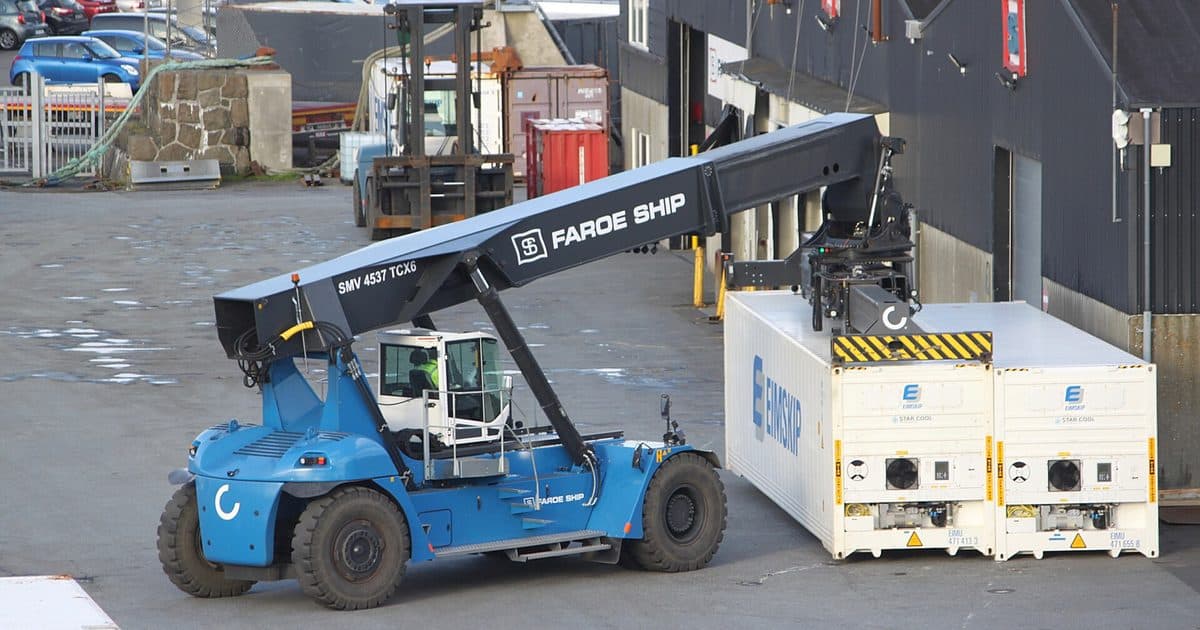
The cold chain. Bananas travel green, in refrigerated containers, at 13 to 14°C. Below about 13.3°C, they risk chilling injury; above, they ripen too early. The container must stay plugged in at every stage: at the terminal, on the vessel, and all the way to the ripening room.
What to specify: variety, quality class and size under the European Union's marketing standard for bananas, packing, number of cartons per container, set temperature.
What to check: the condition of the fruit at stuffing, temperature records during the voyage, the phytosanitary certificate and the destination country's pesticide residue limits.
What to know: a reefer container does not forgive delays. One missing document at the port, and the fruit ripens on the quay. The file must be ready before stuffing.
For timber and medicinal plants
- Timber requires proof that the concession is legal, a CITES permit for protected species, and planning for the CEMAC log export ban from 1 January 2028.
- Medicinal plants require exact botanical identification, laboratory analyses and, depending on the species and use, a CITES permit or the access documents required by the Nagoya Protocol.
Our view
Buyers in Africa rarely fail on price. They fail on a supplier that did not exist, a quality that was not as announced, a missing document, a container that waited. Method matters more than the product: a precise specification, a vetted supplier, independent inspection, payment against documents, logistics prepared before loading.
That holds for a cargo of bauxite as for a container of bananas. And it is what allows a buyer who has never set foot in Africa to buy there without unnecessary risk.
Frequently asked questions
What is sourcing in Africa?
Finding, vetting and buying raw materials or products from African suppliers, through to delivery to the buyer.
Can you supply a mine with fuel?
Yes: 50 ppm diesel and gasoline, delivered to site by road tanker, with a certificate of analysis for every batch and a written price formula.
Can you buy bauxite in Guinea?
Most of it is exported by large mining groups, often to their own refineries or under long term contracts. A smaller buyer generally goes through a trader, checking who actually holds the ore.
At what temperature are bananas shipped?
Between 13 and 14°C, in refrigerated containers. Below about 13.3°C, the fruit risks chilling injury.
Which African country exports the most bananas?
Côte d'Ivoire, with 271,000 tonnes in 2025, ahead of Cameroon and Ghana.
What we do
GraceRoad finds, vets, buys and delivers all raw materials from Africa, except precious metals and precious stones, as well as fuel, on mandate and for a sourcing fee agreed upfront. From the mine to the banana container, we apply the same method.
Take action
- Send your sourcing request: an answer within two working days, no commitment.
- Describe your need on WhatsApp: product, quantity, destination.
- Arrange trucking in West Africa: vetted carriers, a quote within 24 working hours.
Read next: sourcing, logistics and fuel supply: who we are and sourcing agent in Africa: what it does, what it costs.
Sources: China Global South and Reuters, 26 January 2026, from Chinese customs data, on Guinea's bauxite exports in 2025; Ecofin Agency, 4 February 2026, on African banana exports in 2025; MSC and Port Economics, Management and Policy, on banana carriage temperature; Kohler SDMO and Caterpillar, generator data sheets; UEMOA Regulation No. 14/2005/CM/UEMOA; ECOWAS Directive C/DIR.1/9/2020; African Cashew Alliance; Regulation (EU) 2023/1115 on deforestation; Commission Implementing Regulation (EU) No 1333/2011 on marketing standards for bananas.