On 27 July 2026, DP World announced that the main dredging works at the Port of Ndayane, about 50 kilometres from Dakar, were complete. The schedule had said September 2027. The dredgers finished thirteen months early, through ground that is more than 95 percent rock, some of it harder than 100 megapascals, well beyond the concrete in an ordinary building.
What has been dug is now on record: a navigation channel 5 kilometres long and 20 metres deep, a turning basin 600 metres across, and an 875 metre berth pocket along the future quay. In mid September, the group's head of Africa, Mohammed Akoojee, confirmed delivery for the third quarter of 2028. The announced investment is 1.2 billion dollars, described in Senegal as the largest private investment the country has received.
Two years is not long if you are signing a warehouse lease or a five year logistics contract today.
Why a second container port
Dakar has not failed. DP World, which has operated its container terminal since 2008, says volumes have grown from 265,000 TEU that year to 850,000 TEU in 2025, and that vessel waiting time has gone from 35 hours to almost nothing. The World Bank ranked Dakar the best container port in Sub-Saharan Africa in its 2024 performance index.
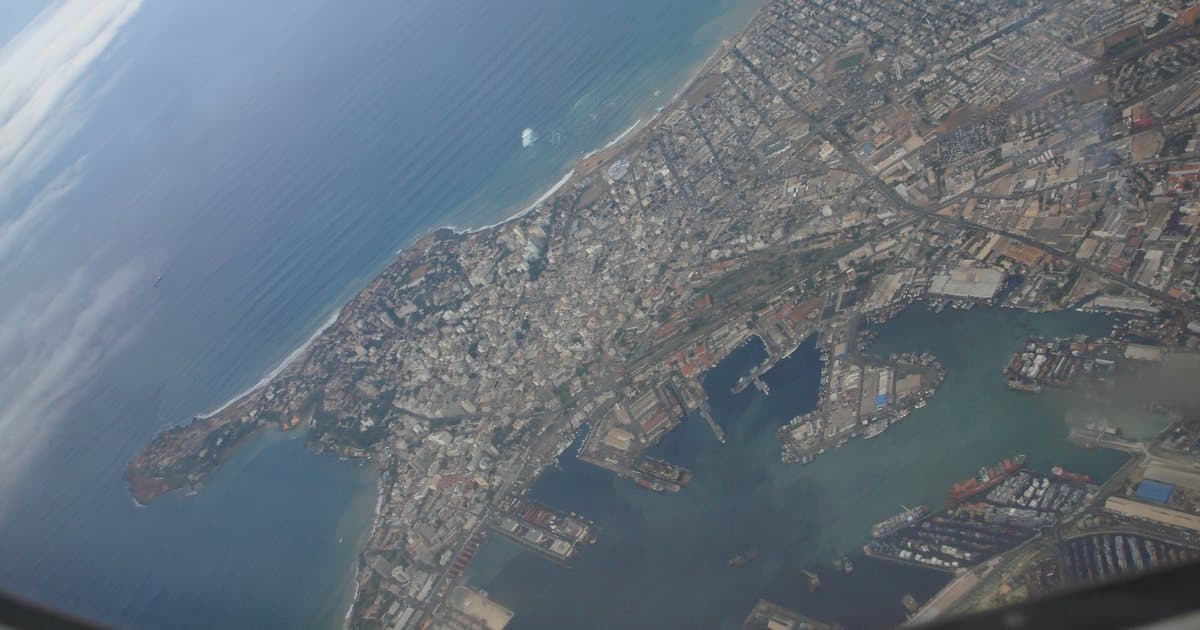
The problem is geography. The port sits at the tip of a peninsula, wrapped by a city of several million people, and its berths cannot take the largest container ships now in service, which draw between 16 and 17 metres. Every truck leaving for Bamako or Kaolack crosses the whole urban area before it reaches open road.
Ndayane solves both constraints. A 20 metre channel lets the biggest ships call. The site, reported at 1,200 hectares, lies south of Rufisque near the motorway and the Diamniadio development zone, away from the city centre. Phase one provides 840 metres of quay and two berths, with announced capacity of 1.2 million TEU a year, more than the Dakar terminal handles today.
Three ports instead of one
Ndayane is not arriving alone. About 20 kilometres south of Dakar, the Bargny-Sendou bulk port, developed by Sénégal Minergy Port, is due to be handed to the state by the end of 2026. It is built for dry and liquid bulk: minerals, phosphates, grain and hydrocarbons.
Within three years Senegal will have three separate maritime gateways along a few dozen kilometres of coast: Dakar, Bargny-Sendou for bulk, and Ndayane for containers. For an importer, the choice of port of discharge becomes a real decision again, after a century in which it answered itself.
What changes for a shipment
Fewer transhipments, if the carriers follow. Part of the container traffic for Dakar currently arrives after transhipment through a large hub in the region or in southern Europe. A port that can take the largest ships makes direct calls from Asia possible. Possible, not certain: shipping lines design their networks around volume, and they will decide.
An easier road out. A truck loaded at Ndayane will not need to cross Dakar to head for Mbour, Kaolack and Tambacounda. For cargo bound for Mali, that can remove half a day on bad days, and one uncertainty from the plan.
Space around the quay. The project pairs the port with a logistics and industrial zone near Blaise Diagne International Airport. The warehouses, truck parks and workshops that Dakar has no room for can be built where land exists.
What not to assume
A new port does not perform on day one. IT systems, customs procedures, forwarders' habits and access roads take months to settle. Build that period into transit times rather than discovering it.
Dakar is not closing. How traffic will be split between Dakar and Ndayane has not been made public. Both will run, and the choice will be made shipment by shipment.
The Mali corridor does not depend on the port. What slows cargo for Bamako is mostly beyond the coast: border posts, road condition and security. We covered it in shipping to Mali under blockade. A better berth does not shorten a queue at the border.
What to decide now
Warehouse leases. A ten year lease near the port of Dakar signed in 2026 should be written with 2028 in mind. If most of your containers eventually land at Ndayane, a warehouse at the other end of the city becomes a daily cost. An exit clause, or a site between Diamniadio and Mbour, deserves a look.
Logistics contracts. A contract that names Dakar as the only port of discharge will need renegotiating. Better to provide now for the port to be chosen case by case, with a rate for each.
Investment. For an investor, the next two years are when logistics land around Ndayane gets allocated. Truck parks, bonded warehouses, workshops: these are assets the region already lacks, and the port will create the demand for them.
What we do
We are following the works and the operating procedures as they are published. Once the port opens, our quotations will compare both ports of discharge on full landed cost and door to door time, as we already do between Dakar and the other gateways of the region. Our partner carriers will load wherever your cargo lands, and every truck stays tracked to destination.
If you are planning a facility or a logistics contract in Senegal, talk to us before you sign. The Ndayane timetable changes the answer.
Read next: which West African port your cargo should enter and forward stock in a bonded warehouse.
Sources: DP World press release, 27 July 2026 (dredging completed thirteen months early, channel and basin dimensions, ground conditions, 1.2 billion dollar investment, Dakar terminal volumes 2008 to 2025); statements by Mohammed Akoojee, DP World head of Africa, reported by the Senegalese press in September 2026 (delivery in the third quarter of 2028, 1,200 hectare site); Seatrade Maritime (840 metre phase one quay, 1.2 million TEU); World Bank and S&P Global, Container Port Performance Index 2024; allAfrica, 5 February 2026 (Bargny-Sendou port, delivery by end 2026).