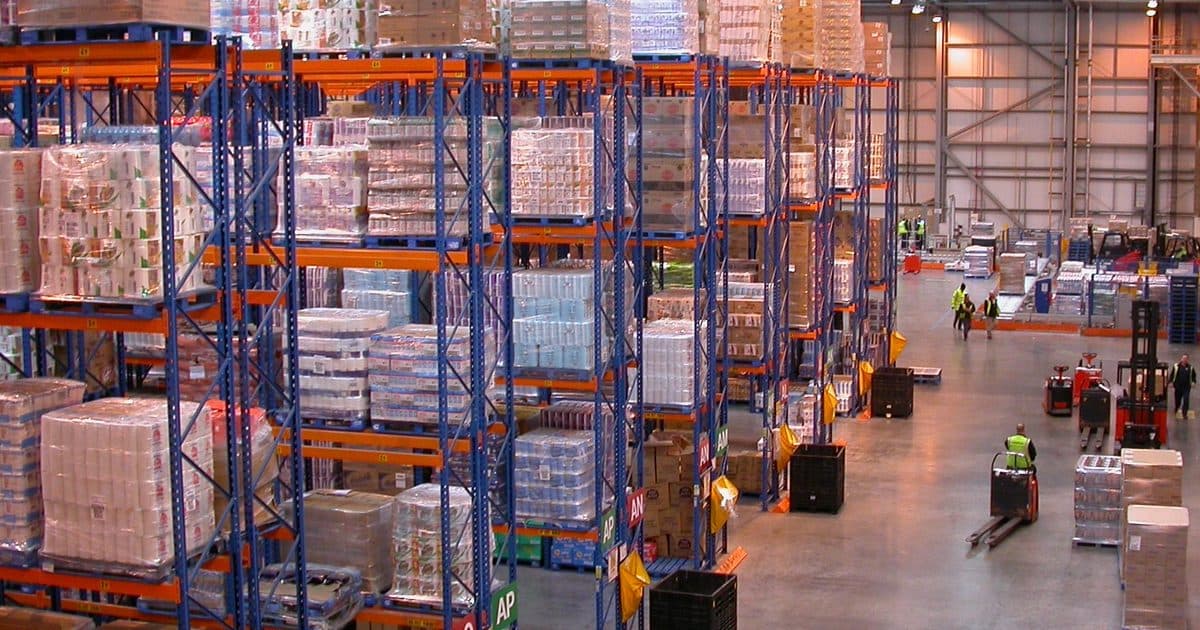
A European spare parts manufacturer sells into Senegal, Mali and Mauritania. His customers order small quantities, urgently, and will not wait six weeks. He wants no subsidiary, no local payroll and no heavy commitment.
His question is simple: can I hold stock there without setting up? The answer is yes, and it has a technical name few foreign sellers know: suspensive customs regimes.
What bonded warehousing allows
The Senegalese Customs Code, law 2014-10 of 28 February 2014, organises the economic customs regimes: transit, warehousing, temporary admission, free zones. Their common principle fits in one sentence: the goods enter the territory and stay there without duties and taxes being paid, which become due only when the goods are released for consumption.
In practice, for a foreign seller:
- the goods arrive in a full container, at full container rates;
- they are placed in a warehouse under customs control;
- they leave in small quantities, at the pace of sales;
- duty and VAT are paid on the way out, on what leaves;
- what does not sell can, depending on the case, leave again or change destination.
Storage duration depends on the type of warehouse. For an industrial warehouse it is twelve months. Other regimes have their own durations and conditions, to be checked case by case with customs.
Why it pays, in simple numbers
Compare two ways of serving the same customer.
Without forward stock. Every order ships from the factory, as groupage or a small lot, at a high unit freight rate, with a four to eight week lead time and a customs clearance each time. The customer waits, and eventually buys elsewhere what he can get immediately.
With forward stock. A full container lands once a quarter, at the lowest rate per kilo. Orders leave the hub within twenty four to seventy two hours. The customer is served, and the seller pays duty only on what he actually sells.
The gain shows on three lines: unit freight, delivery time, and cash, since duty and VAT only leave the account at the moment of sale.
Who it pays for, and who it does not
It pays for spare parts, industrial consumables, electrical equipment, agricultural machinery parts, pharmaceutical and veterinary products under conditions, and generally anything sold in small urgent quantities from a broad catalogue.
It does not pay for a product sold by the full container to a single customer, for very slow moving goods, or for anything that loses value quickly. Sleeping stock costs more than the occasional air freight.
The test is simple: if you lose orders because of lead time, or if you often ship small lots at high rates, forward stock pays for itself quickly.
The real risks, and how they are held
Tied up capital. Stock is money asleep. The answer is sizing: start small, on the references that move, and widen on observed figures rather than forecasts.
Storage conditions. Humidity, heat, dust. Not every warehouse suits every product, and one damaged pallet cancels the freight saving.
Tracking what leaves. A bonded warehouse requires stock accounts kept current and presentable to customs. It is not heavy, but it cannot be improvised.
Product compliance. Standards, labelling, prior authorisations depending on the goods. They are checked before the first container, not at the counter.
What we take on
We bring the goods in, place them, store them, release them and deliver them to your customers, with the right document at every step.
The foreign seller keeps ownership of his stock and control of his prices. He has no subsidiary to create, no team to hire, no warehouse to lease. He has an address in West Africa and someone who answers.
If you are losing sales to lead time, send us the list of your fastest moving references and the annual volume. We will tell you what forward stock would cost, and from what volume it becomes cheaper than your current shipments.
Sources: Senegalese Customs Code, law 2014-10 of 28 February 2014 (economic customs regimes: transit, warehousing, temporary admission, free zones; twelve month duration for the industrial warehouse); Senegalese Customs Administration, presentation of the economic regimes; practice observed on our own storage and distribution operations in West Africa.