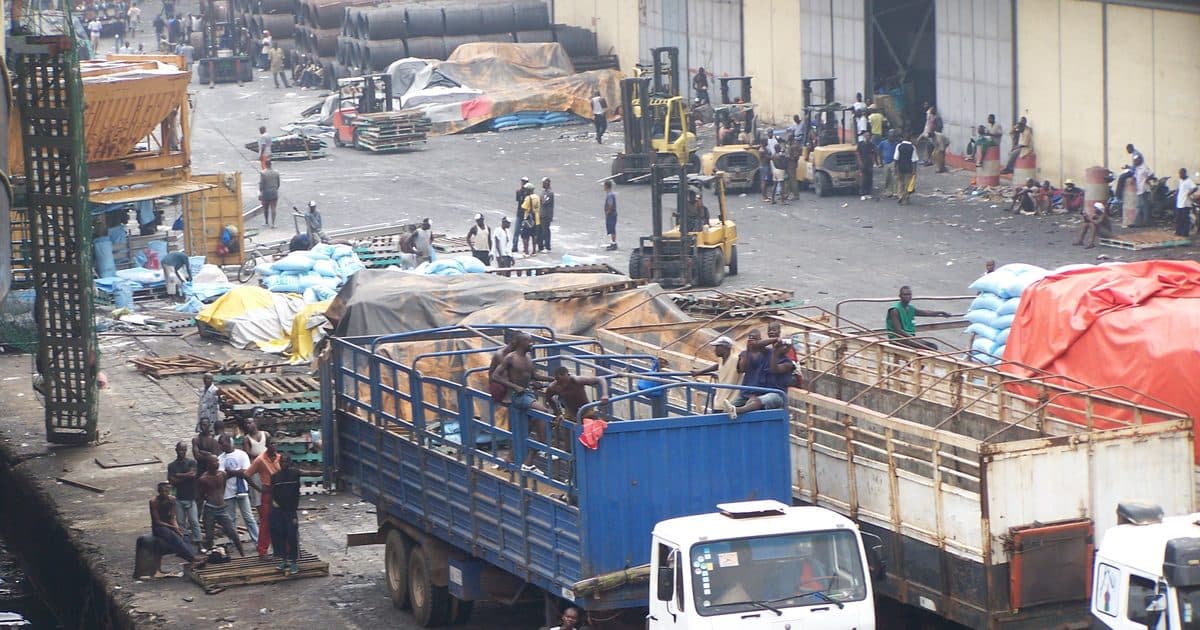
A shipper who watches a truck on a map sees the same thing every time. Long stretches of steady movement, then a dot that does not move for hours, then movement again. The dot is not resting. It is at a control.
On the Dakar Bamako corridor, monitoring records about 27 controls on a single trip and border delays reaching 316 minutes, the worst among the region's transit corridors. Around 40,000 CFA is paid along the way. Turnaround runs to about a fortnight.
Those hours are not distributed evenly across the trip. They are concentrated in a handful of places where a procedure exists, and where nothing prevents that procedure from taking as long as the person applying it decides.
Why a transit regime exists, and why it is underused
The regional transit regime, TRIE in the ECOWAS space, was designed for exactly this. Goods that enter at a port and are destined for another member state are sealed and moved under a single guarantee, so they are inspected at departure and at destination rather than at every stop in between.
Where it is applied properly, the number of interventions falls. Where it is not, each control becomes an independent opportunity to open the file.
Three things make the difference on the ground. The guarantee has to be in place before the truck leaves, which means the operator must have a standing arrangement rather than improvising per trip. The manifest has to match the cargo exactly, because any discrepancy converts a sealed transit into an inspection. And the escort or convoy arrangements, where they apply, have to be planned with the departure rather than discovered at the first post.
The costs a shipper never sees itemised
Time. Fourteen days of turnaround instead of eight changes the number of trips a vehicle makes in a month, and therefore the rate you are quoted.
Cash. Duty, guarantees and informal payments move before your goods do. Somebody is financing that, and it is priced into your file.
Risk. Cargo that sits at a barrier at night is cargo exposed. The insurance rate reflects it.
Reputation. A buyer in Bamako who receives late goods twice starts ordering from a supplier with a shorter, duller, more predictable chain.
What actually reduces the stops
Complete documents before departure. A file with the bill of lading, the invoice, the packing list, the certificate of origin, the transit declaration and the guarantee reference travels faster than a file assembled at the border by telephone.
One operator responsible end to end. When haulage, transit and clearance sit with different parties, every handover is a queue. When one party answers for the whole corridor, the queue has an owner.
Seals and tracking. A sealed container with a working tracker and a printed transit document is a harder file to open without cause, and it gives the shipper the timestamps to see where the hours went.
Measured routes. If nobody records how long each post took, nothing improves. We log the stops, and the pattern shows up quickly: the same three places account for most of the loss.
Convoy planning in insecure sections. On the eastern part of this corridor, waiting for an escort is part of the schedule. It should be in the plan and in the quotation, not a surprise.
The part that is not in our hands, and the part that is
Regional harmonisation, interconnected customs systems and the number of agencies at a post are matters for governments, and they are moving slowly.
Everything else is operational. The guarantee, the documents, the seal, the tracker, the planning of escorts, the choice of crossing point, the decision to clear inland rather than at the quay. These are decisions taken by an operator, and they are where most of the recoverable time sits.
What we do
GraceCorp moves cargo between the coast and the landlocked markets under the regional transit regime, with vetted hauliers, tracked vehicles and documents prepared before departure. We give a turnaround, not a fantasy transit time, and we tell you where your file will actually wait.
Send us the corridor, the commodity and the volume. You will get the document list, the realistic timings and the cost of each step, including the ones nobody prints.
Read next
Why the inland leg costs as much as the ocean leg, and why Dakar port should not be your warehouse.