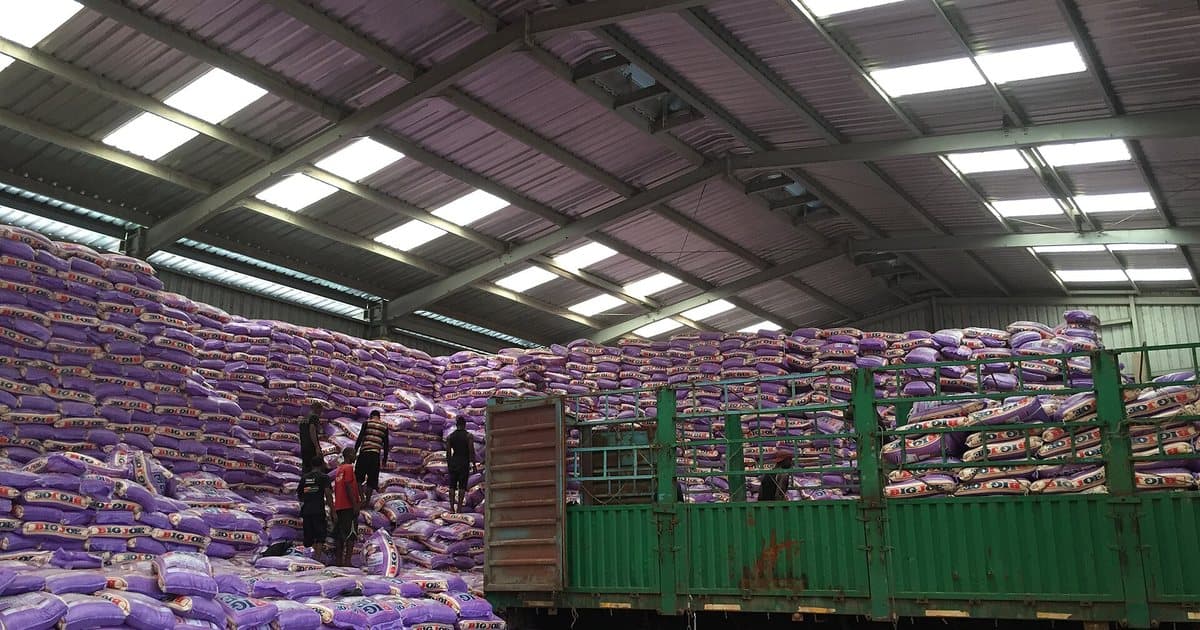
When we opened GraceRoad, we assumed the hard part would be finding customers. We were wrong. Requests come in for rice, cement, containers to be cleared out of the port of Dakar, fresh produce for Nouakchott. The hard part is finding the truck.
Our partner carriers are fully booked. Not busy: booked. When we call them with a job, the most common answer is not a price but a lead time. Some turn work down because they no longer have a single vehicle free. A market in which sellers have to refuse business is not a market short of demand.
This is what the first weeks taught us, without varnish.
Demand is there, and it is growing faster than the fleet
What we see on the ground matches the research. The UN Economic Commission for Africa estimates that the continent will need 2.09 million additional trucks by 2030 to carry the trade created by the African Continental Free Trade Area, 39 % of them in West Africa. We unpacked that number in our piece on the truck gap.
Prices tell the same story. In its reference study on transport prices and costs in Africa, the World Bank found that on West and Central African corridors, the rates shippers pay carry margins of 60 to 160 % over operating costs. That is not greed. It is what scarcity does: whoever owns a truck sets the price.
A vicious circle that feeds itself
The mechanism is simple, which is exactly why it is so resilient.
A new carrier cannot enter the market without a truck. He cannot buy a truck without financing. He cannot get financing without a track record, and he has no track record because he has no truck. Meanwhile, established carriers are saturated, charge accordingly, and have no reason to change anything.
Nobody in this chain is acting in bad faith. The banker follows his rules, the manufacturer sells to whoever pays cash, the incumbent carrier enjoys the scarcity. The result, though, is an entire economy overpaying for freight, and thousands of capable entrepreneurs left on the side of the road.
Manufacturers: new trucks on one side, end-of-lease trucks on the other
This is where our experience surprised us most. Chinese manufacturers are chasing this market with new trucks, warranties and payment terms. China exported 118,000 heavy trucks to Africa in the first ten months of 2025, up 54 % on a year earlier. From Europe, what we are mostly offered is second-hand trucks at the end of their lease, and very little financing.
We believe this is a major strategic mistake, and that Europe is losing the African truck market the way it lost the African car market. We make the case, with figures, in a dedicated piece on manufacturers. The core argument fits in one sentence: African risk is real, but it can be insured, and the tools to insure it already exist.
Banks move at the speed of paper
Money in West Africa now moves in a second. The Central Bank of West African States counted 248 million electronic money accounts across the WAEMU in 2024, with transactions worth 119 % of the Union's GDP. Since 30 September 2025, its instant payment platform has connected banks, mobile money operators and microfinance institutions around the clock.
Credit has not kept up. A truck loan is still assembled on paper, judged against real estate collateral that few carriers own, and decided in weeks. The truck waits, the customer waits, and the freight goes to whoever already has a fleet.
Roads and counters cost time, and time is trucks
A truck held up is not just a late truck. It is a truck that does not make its next trip. On the Bamako to Dakar route, the latest published report of the WAEMU's Observatory of Abnormal Practices, covering 2019, recorded over 100,000 FCFA of illicit payments per trip and close to two and a half hours lost at checkpoints. On Cotonou to Niamey the same year: under 10,000 FCFA and 17 minutes.
The lesson is in the gap. This is not geography, it is organisation. Every hour handed back to a truck is transport capacity gained without buying a single vehicle. We look at those delays in detail in our piece on banks, checkpoints and customs.
What we take away
West African trucking does not lack customers. It lacks well placed capital, and it wastes time. Both can be fixed.
The capital exists: export credit agencies, development finance institutions and private investors are all looking for real assets, and a truck working a saturated corridor is one. Lost time can be recovered with complete paperwork before departure, electronic payments and tracking that reassures everyone. None of it requires waiting for a new highway.
What we do
We are working on both fronts. On capacity, we are talking to manufacturers, lenders and investors about a simple model: trucks paid over several years, insured, GPS tracked, and put to work on jobs we bring. On time, every job we assign leaves with a checked file, a traceable payment by Orange Money, Wave, card or bank transfer, and a tracking key for the customer.
If you are a carrier who wants to grow, a manufacturer who wants to sell into West Africa on terms other than cash, or an investor looking for an asset that earns, write to us. We know the ground, and the ground is telling us the time is now.
Read next: new Chinese trucks, European end-of-lease trucks and where the money goes on a truck to Bamako.
Sources: GraceRoad's experience with its partner carriers; UN Economic Commission for Africa, truck requirements under the AfCFTA to 2030; World Bank, Transport Prices and Costs in Africa (margins on West and Central African corridors); chinatrucks.org, 29 December 2025 (Chinese heavy truck exports, January to October 2025); BCEAO, annual report on digital financial services in the WAEMU, 2024; BCEAO, launch of the interoperable instant payment platform, 30 September 2025; WAEMU Observatory of Abnormal Practices, 2019 report published in 2021.