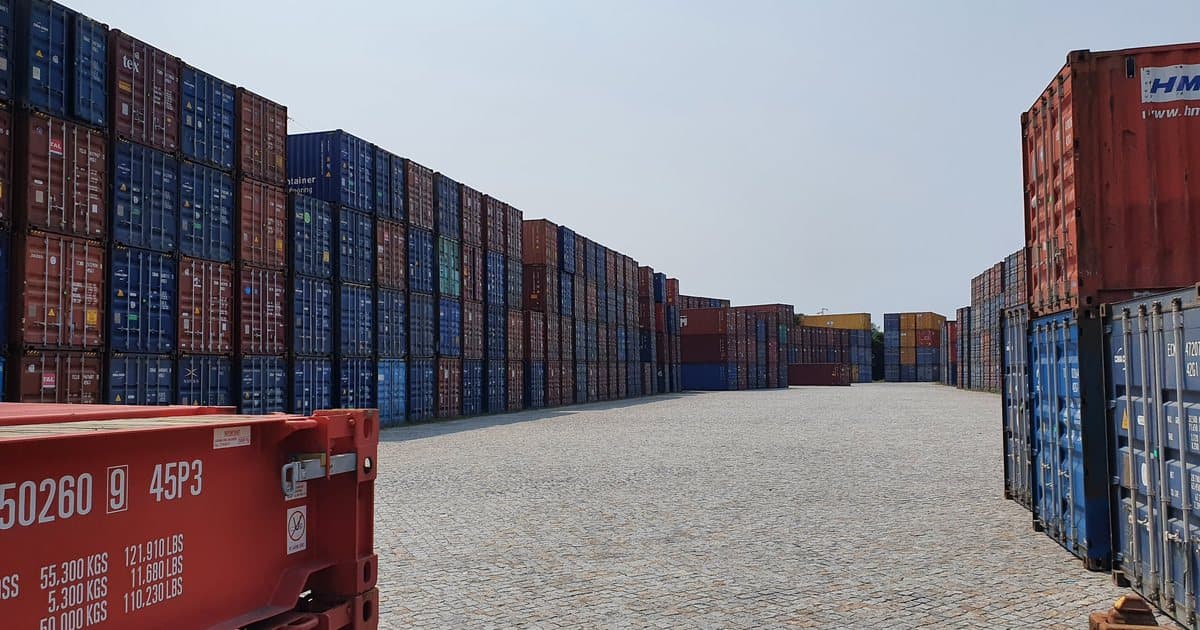
In February 2026, according to the Institute for Security Studies, about 4,000 empty containers were sitting in Bamako, their drivers refusing to take the road back to Dakar. Each of those boxes belonged to a shipping line, and every day it was not returned, someone was paying.
That someone is almost always the importer.
Two charges not to confuse
Shipping lines give the importer free time to use their container. Beyond it, two charges can run, as the industry defines them.
Demurrage applies when the container stays inside the terminal or depot beyond the free time. That is the box waiting in port because the paperwork is not ready.
Detention applies when the container has left the terminal and is used outside beyond the free time. That is the box that went to Bamako and has not yet come back to the depot.
Some lines combine the two into a single clock. Either way, free time and daily rates depend on the line, the container type and sometimes the destination. They are in the line's tariff, and they are negotiated before shipment, not after.
Why a container bound for Mali gets expensive
A container going to Bamako makes a round trip of more than 2,700 kilometres. In normal times that is already one to two weeks. In 2026, with convoys, detours via the southern branch and border queues, it is often much longer. And nobody wants the empty return: a carrier bringing back an empty box earns almost nothing on that leg, especially when the road is dangerous.
The result: free time runs out long before the container is back, and the clock runs for weeks.
The calculation to make before choosing
Option 1, the container goes to Bamako. Cost: carrying the full container, returning the empty one, and detention for every day beyond free time. Estimate the full round trip honestly, waiting included, not the transit time of a good dry season month.
Option 2, devan in Dakar. Cost: handling to empty the container, loading the goods onto a flatbed or curtainsider, and returning the empty box to the depot straight away, usually within free time. The clock stops in Dakar.
The comparison takes a few lines and three numbers: the free time granted, the daily rate beyond it, and a realistic round trip time. As soon as the round trip clearly exceeds the free time, devanning almost always wins.
When to keep the container anyway
Devanning is not always the right answer.
High value or theft prone goods. A sealed container protects better than a tarpaulin. For electronics, spare parts or branded goods, the seal is worth the detention.
Fragile or poorly packed goods. Every handling is a breakage risk. Cargo that cannot be unloaded and reloaded without damage should stay in its box.
Water sensitive goods in the rainy season. A watertight container beats a tarpaulin on a flooded road.
Formalities that require the original seal. Some transit procedures or inspections expect the container to arrive closed as loaded.
What to negotiate before shipment
The best time to cut these costs is before the container leaves the port of origin. Ask for free time suited to an inland destination, get the daily rate in writing, and find out whether the line requires a guarantee to release a box to a landlocked country. Once the container is in Bamako, there is nothing left to negotiate.
What we do
For every Mali file, we compare both options with you on your own numbers: free time, daily rate, nature of the cargo, current route. When devanning wins, we organise the handling and the return of the empty box in Dakar, and the cargo leaves on a tracked truck. When the container has to go up, we plan its return from the day it leaves.
Read next: Dakar port is not a warehouse and shipping to Mali under blockade.
Sources: Institute for Security Studies (ISS Africa), 4 June 2026 (about 4,000 empty containers stuck in Bamako in February 2026); Digital Container Shipping Association, container shipping glossary (demurrage, detention, free time, combined clock); official rate grid for the Dakar corridor (Dakar to Bamako distance).