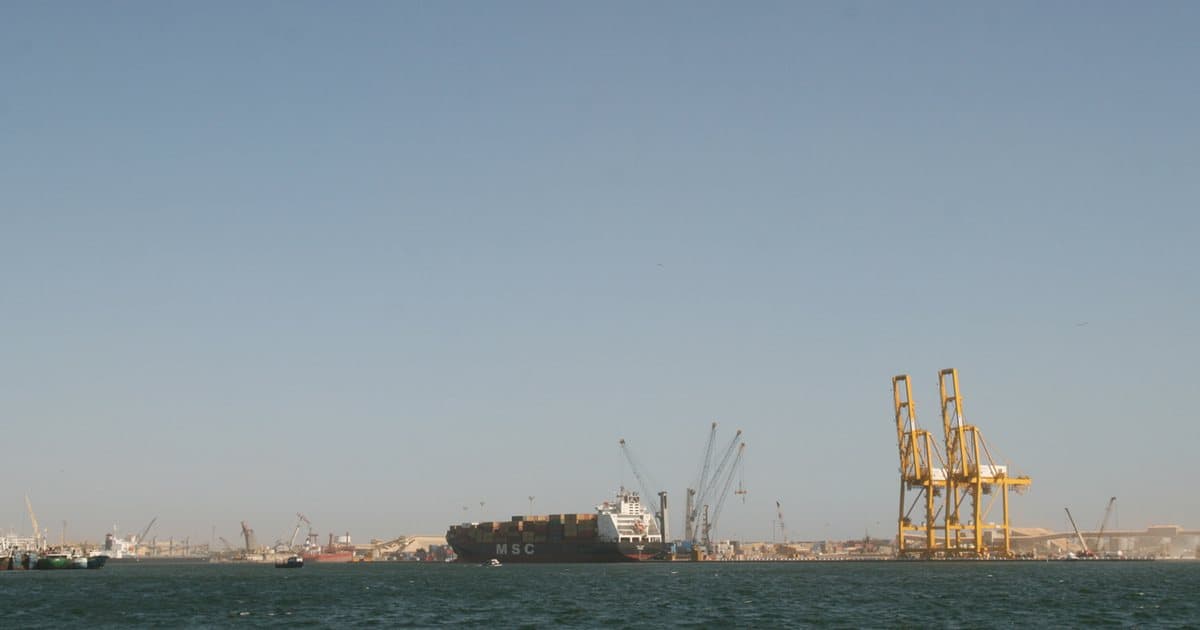
In Senegal, the "transitaire" is the person who gets your cargo out of the port. The word actually covers two trades, often carried out by the same company: organising transport and clearing customs. Knowing which of the two you are buying, and from whom, avoids plenty of bad surprises.
Two trades under one name
The freight forwarder, strictly speaking, organises the transport chain on behalf of its client: booking with the shipping line or airline, consolidation, transport documents, coordination with the terminal, collection and transport to destination.
The licensed customs broker completes customs formalities on behalf of others. It is a regulated trade: in Senegal nobody may file customs declarations for a third party without a licence granted by order of the minister of finance. Licensing orders are published in the Official Journal.
Many Senegalese "transit" companies hold this licence and do both. But not all. A forwarder without a broker licence must subcontract the declaration to a licensed colleague.
When do you need a licensed broker?
In Senegal, goods with a customs value of up to 200,000 CFA francs may be declared by their owner. Above that you must use a licensed customs broker, unless you hold an authorisation to declare for yourself. In practice every commercial import goes through a broker.
Since 1 May 2024 there is an extra step before arrival: the pre-import declaration (DPI), mandatory for any import with an FOB value of at least 500,000 CFA francs, and for every container whatever its value. It is filed on GAINDE 2000's ORBUS platform. A good forwarder has it filed before the goods leave origin.
What a forwarder costs: reading the quote
There is no single tariff. A serious quote separates two things:
Disbursements, the sums the forwarder advances for you and recharges without margin: customs duties and taxes, terminal handling and storage, shipping line charges, fees. They must be backed by documents (customs assessment, terminal and carrier invoices).
Fees, the forwarder's pay for its work: opening the file, declaring, follow up, coordination, delivery.
A quote that mixes the two, or announces an "all in" price with no detail, cannot be compared or checked. And an unusually low quote is often recovered through disbursements.
The documents it will ask for
- commercial invoice and packing list;
- bill of lading, or air waybill;
- pre-import declaration;
- certificate of origin, if you claim a tariff preference;
- health, phytosanitary or conformity certificates depending on the goods;
- your tax identification number (NINEA in Senegal).
The more complete the file before the vessel arrives, the less you pay in demurrage and storage.
Five checks before choosing
- The customs broker licence: ask for the order and its number.
- An itemised quote: fees on one side, disbursements on the other.
- Supporting documents: get a commitment to receive the customs assessment and terminal invoices.
- Knowledge of your goods: tariff classification, standards, special documents. Ask before, not after.
- The ability to finish the job: collection, transport, delivery, and for inland destinations or Mali, transit under customs control.
Our reading
The right forwarder is not the cheapest one; it is the one that gets the cargo out quickly and without a customs adjustment. One day of storage avoided, or one revaluation avoided, is worth more than the fee difference between two quotes. Choose on the transparency of the quote and the quality of the questions you are asked before the vessel arrives.
Frequently asked questions
What does a freight forwarder do?
It organises the transport chain for its client, from booking to delivery, and, if licensed as a customs broker, handles customs clearance.
What is the difference between a freight forwarder and a customs broker?
The forwarder organises transport; the licensed customs broker files customs declarations on behalf of others. In Senegal the second trade requires a ministerial licence.
Can I clear customs myself in Senegal?
Yes, for goods with a customs value of up to 200,000 CFA francs. Above that you need a licensed customs broker, unless you hold an authorisation to declare for yourself.
What is the DPI in Senegal?
The pre-import declaration, mandatory since 1 May 2024 for any import with an FOB value of at least 500,000 CFA francs and for every container, filed on the ORBUS platform.
What we do
GraceRoad handles your import end to end with licensed customs brokers: pre-import declaration, clearance, collection, transport and delivery, with a quote that separates fees from disbursements. Send us the invoice and bill of lading: we will tell you what is missing before the vessel arrives.
Read next: choosing a freight agent in West Africa and importing into Senegal as a foreign company.
Sources: French customs (DGDDI), "10 questions pour exporter au Sénégal", 21 February 2020 (200,000 CFA franc threshold, licensed customs broker); Official Journal of Senegal no. 6920 of 26 March 2016 (orders of the Ministry of Economy, Finance and Planning of 30 November 2015 licensing customs brokers); Law 2014-10 of 28 February 2014, Senegal Customs Code; Ndarinfo and Senego, April 2024, citing Senegal customs (pre-import declaration mandatory from 1 May 2024, 500,000 CFA franc threshold, ORBUS and GAINDE 2000).