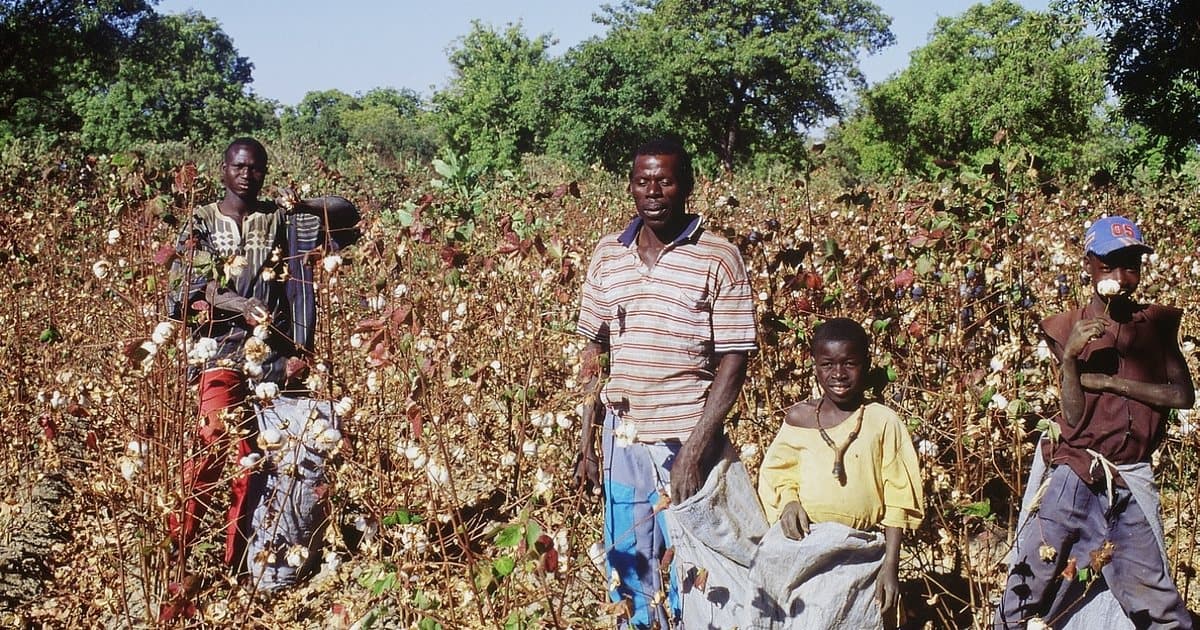
Cotton is Mali's "white gold": it supports much of the south of the country, and the Malian textile development company (CMDT) runs the value chain from seed to ginning. But for two years the crop has suffered, and Mali has lost its place as the region's top producer. Here are the figures and what they mean for a lint buyer.
Production: 433,700 tonnes in 2025-2026
In the 2025-2026 season Mali produced 433,700 tonnes of seed cotton, according to results presented at the 16th session of the Higher Council for Agriculture on 9 June 2026, chaired by General Assimi Goïta. The authorities stressed that this was achieved despite climate, security and economic constraints.
Benin, with forecasts of 632,000 tonnes for the same season, has regained first place in West African cotton production.
Producer price: 300 CFA francs a kilo
For the 2026 season, the subsidised price per kilogram of first grade seed cotton is held at 300 CFA francs. The state mobilised 164.389 billion CFA francs for the sector, including 25 billion from the West African Development Bank (BOAD) for collection and ginning.
The 2026-2027 target: 598,500 tonnes
Mali is aiming for 598,500 tonnes of seed cotton in 2026-2027, a 38 percent increase. The target assumes 630,000 hectares planted and an average yield of 950 kilos per hectare, up 17 percent.
It is under pressure. By mid July, growers in Kita and Yorosso reported shortages of subsidised fertiliser and unpaid arrears from the previous harvest, while weather forecasts pointed to dry spells in the west.
From seed cotton to lint
Seed cotton is not what spinning mills buy. It first goes through ginning plants, which separate fibre from seed. The lint, pressed into bales, is exported; the seed goes to oil and animal feed. A lint buyer therefore thinks in tonnes of lint, a fraction of the seed cotton tonnage, and in quality: length, fineness, strength, cleanliness.
Who buys Malian cotton
West African cotton goes mainly to Asia. According to Agence Ecofin, Africa supplied 41 percent of Bangladesh's cotton imports in 2024-2025, when Bangladesh was the world's top importer, with Benin, Cameroon, Burkina Faso and Mali among its suppliers. Vietnam, the second largest importer that year, is the other major Asian outlet.
The road to port
Mali grows its cotton hundreds of kilometres from the sea. Lint reaches Dakar, Abidjan or other coastal ports by road, on corridors made less predictable by the blockade of fuel convoys since September 2025, particularly towards Senegal.
For a buyer this is the first risk to manage: a bale stuck on a corridor costs demurrage, time and sometimes quality. Port choice, convoy organisation and truck tracking matter as much as the lint price.
Our reading
Malian cotton is going through a difficult patch: a smaller crop, late inputs, a fragile road. But Asian demand for African lint is strong, and Mali is aiming for a clear recovery from 2026-2027. For a spinner in Bangladesh, Vietnam or elsewhere in Asia, Malian lint remains an important origin, provided the route to port is secured.
Frequently asked questions
How much cotton does Mali produce?
433,700 tonnes of seed cotton in the 2025-2026 season. The country is targeting 598,500 tonnes in 2026-2027.
What is the seed cotton price in Mali in 2026?
300 CFA francs per kilogram for first grade seed cotton, a subsidised price held for the 2026 season.
Which country is West Africa's top cotton producer?
Benin, with forecasts of 632,000 tonnes of seed cotton for 2025-2026, ahead of Mali.
Where does West African cotton go?
Mainly to Asia: Africa supplied 41 percent of Bangladesh's cotton imports in 2024-2025, and Vietnam is the other major outlet.
What we do
GraceRoad organises the haulage of cotton lint from Mali, Burkina Faso and the region to the ports of Dakar, Abidjan, Lomé or Cotonou, with tracked trucks and fallback routes, and can buy on your behalf from authorised sellers. Tell us the quantity, quality and preferred loading port.
Read next: shipping to Mali under blockade and which West African port should your cargo enter.
Sources: Mali 24, June 2026 (16th session of the Higher Council for Agriculture on 9 June 2026, production of 433,700 tonnes, price of 300 CFA francs); Journal du Mali, 2026 (598,500 tonne target, area and yield, difficulties in Kita and Yorosso, 164.389 billion financing including 25 billion from BOAD); Agence Ecofin, December 2025 (Benin forecast of 632,000 tonnes) and 18 December 2025 (Africa's share of Bangladesh imports, suppliers, Vietnam's rank); Africanews, 27 October 2025 (fuel convoy blockade).