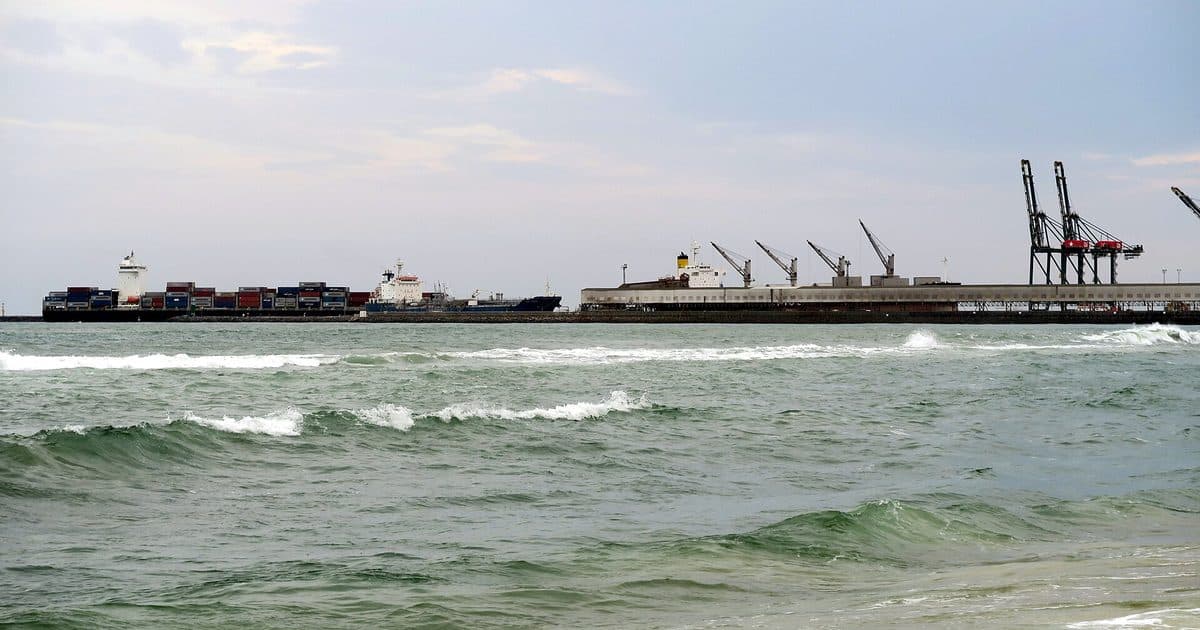
Two contracts for the same 500 tonnes of cashew nuts: one FOB Abidjan, the other CIF Rotterdam. The second costs more, since it includes freight and insurance. But in both cases, risk passes from exporter to buyer at the same place and the same moment: when the goods are on board the ship, in Abidjan.
It is the most common confusion about Incoterms, the International Chamber of Commerce (ICC) rules that split costs and risks between seller and buyer. Here is what FOB and CIF really say in their 2020 version, and which one to choose.
FOB and CIF in one sentence
FOB, free on board: the seller delivers the goods on board the vessel nominated by the buyer, at the agreed port of shipment. The buyer pays freight and insurance.
CIF, cost, insurance and freight: the seller delivers the goods on board at the port of shipment, and also pays freight and insurance to the agreed port of destination.
The comparison
| FOB Abidjan | CIF Rotterdam | |
|---|---|---|
| Who books the vessel | The buyer | The seller |
| Who pays sea freight | The buyer | The seller |
| Who insures the voyage | The buyer, if it chooses to | The seller, at the Incoterms minimum |
| When risk passes to the buyer | Goods on board, in Abidjan | Goods on board, in Abidjan |
| Export clearance | The seller | The seller |
| Import clearance | The buyer | The buyer |
| Mode of transport | Sea or inland waterway only | Sea or inland waterway only |
Under CIF, the seller pays for the voyage, but the buyer carries its risk. If the ship sinks, it is the buyer who turns to the insurer.
The CIF insurance trap
Under CIF, the seller only owes minimum insurance: clauses C of the Institute Cargo Clauses, for 110% of the contract value. They only cover major events, such as fire, stranding or sinking of the vessel, collision or jettison. Theft and seawater entering the hold, for example, are not covered.
Incoterms 2020 raised that minimum for CIP, the equivalent rule for any mode of transport, which now requires clauses A, known as "all risks". Not for CIF. If you buy CIF and want proper cover, write into the contract that insurance will be taken out on clauses A.
What about containers?
FOB and CIF are designed for sea transport of goods loaded directly on board, such as bulk. A container is handed over at the terminal before loading: the seller loses control of it while keeping the risk until it is on board.
For containers, the ICC recommends in a guidance note using FCA, free carrier, or CPT, carriage paid to, instead. Since 2020, the FCA rule also allows the parties to agree that the carrier will issue an "on board" bill of lading, often required by banks under a documentary credit.
Which one to choose when buying from Africa
Choose FOB if:
- you buy large volumes and have access to good freight rates;
- you want to choose the vessel, the shipowner and the date;
- you want to control your own insurance.
Choose CIF if:
- you buy modest volumes and the seller gets better freight rates than you;
- you want a simple delivered port price to compare offers;
- you have no logistics set up at origin.
Either way, name the port, the Incoterms version ("Incoterms 2020"), and for CIF the level of insurance.
And when you sell into West Africa
In several countries of the CIMA zone, the inter-African conference on insurance markets, insurance of imported goods must be taken out with a local insurer. According to a review presented at FANAF in 2018, this applies in Benin, Burkina Faso, Côte d'Ivoire, Mali and Senegal. In Côte d'Ivoire, it is required by an ordinance of 16 May 2007.
As a result, an importer in these countries usually buys FOB or CFR, cost and freight, and insures the goods locally. A CIF offer does not fit.
Our view
The choice between FOB and CIF is not a question of price, it is a question of control. Whoever charters the vessel decides the date, the shipowner and the insurance. New buyers often prefer CIF, which is simpler; regular buyers move to FOB to take back control of freight.
For a buyer who wants to handle neither freight, insurance nor customs, there is a third way: buy delivered to the warehouse, duties paid.
Frequently asked questions
What is the difference between FOB and CIF?
Under FOB, the buyer pays freight and insurance. Under CIF, the seller pays them to the port of destination. In both cases, risk passes to the buyer when the goods are on board at the port of shipment.
Who pays insurance under FOB?
The buyer, if it decides to insure the goods. FOB imposes no insurance.
What insurance does the seller owe under CIF?
At least clauses C of the Institute Cargo Clauses, for 110% of the contract value, unless the contract provides for more.
Can FOB be used for containers?
It often is, but the ICC recommends FCA or CPT for containers, which are handed over at the terminal before loading.
What is CFR?
Cost and freight: the seller pays freight to the port of destination, but not insurance. It is CIF without the insurance.
What we do
GraceRoad quotes FOB, CIF or delivered to your warehouse, duties paid, depending on what you prefer to handle yourself. We check that the documents your documentary credit calls for match the chosen Incoterm before anything is loaded.
Read next: DDP vs DAP: Incoterms for Africa and bill of lading meaning in West Africa.
Sources: International Chamber of Commerce, Incoterms 2020, FOB, CIF, CIP and FCA rules; ICC guidance note "Incoterms 2020 FCA and CPT: Best practice for shipping containers through ports"; HFW, "Incoterms 2020 at a glance and commentary"; ASACI, "Assurances obligatoires" presentation, CIMA FANAF general assembly, March 2018; Ivorian Ordinance No. 2007-478 of 16 May 2007, as reported by Abidjan.net.