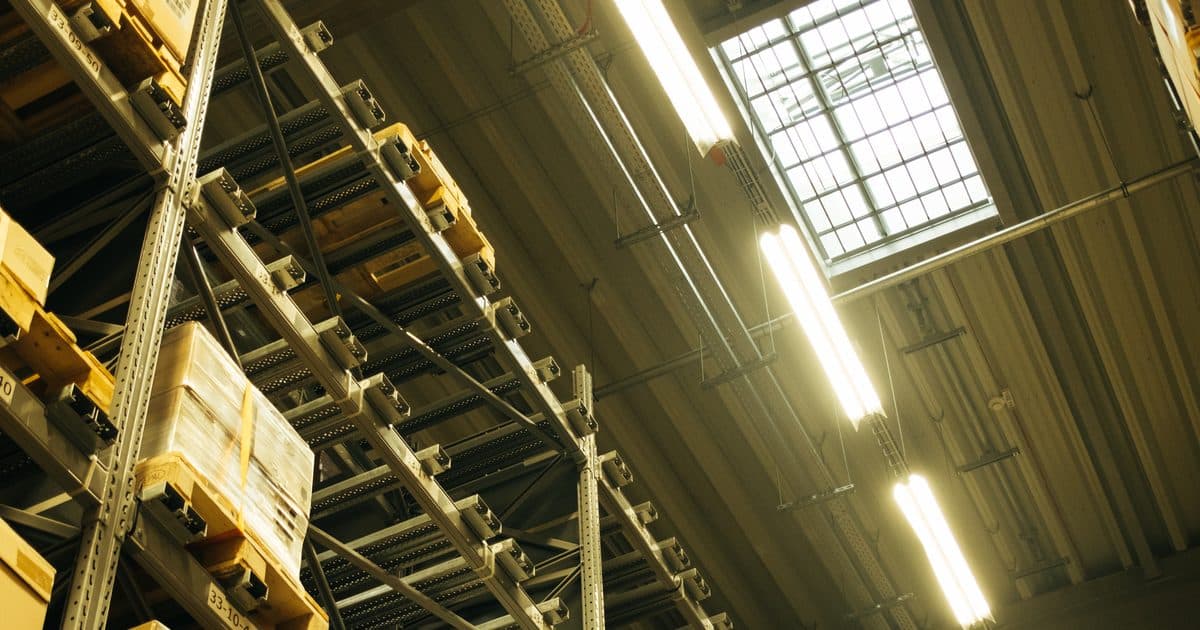
There is no Amazon fulfilment centre in Abidjan. None in Dakar, none in Kinshasa. Alibaba has no warehouse in Lagos either.
The comfortable explanation is that these companies do not take Africa seriously. The evidence says something else, and it is more useful.
Alibaba did build in Africa. Its electronic world trade platform hubs went to Rwanda in 2018 and Ethiopia in 2019, each one organised around a smart logistics base close to an airport. Amazon announced marketplaces for Nigeria and South Africa in 2022, then paused the expansion, and when it finally moved on Nigeria it kept the footprint deliberately light.
Read those two facts together. The companies go where somebody has already built the node. Where nobody has, they sell across the border and keep their inventory somewhere else.
Market researchers put African e commerce at around 317 billion dollars in 2024, heading towards a trillion in the 2030s. Nobody neglects a market of that size out of indifference. They stay out because the operating conditions are not there, and those conditions are physical.
What a warehouse actually requires
A fulfilment centre is not a shed. Before anyone signs a lease, four things have to exist.
Goods that arrive predictably. Not eventually. On a date, cleared, at a cost that can be modelled. Today a container inland from a West African port carries a turnaround measured in weeks and a cost that moves with security and queues.
Traceability. The operator has to know where every unit is, which means addressing that works, scanning at each handover, customs data that can be interrogated and a returns flow. Without it there is no inventory accuracy, and without inventory accuracy there is no promise to a customer.
A last mile that can be priced. Delivery to a street that exists on a map, with proof of delivery, at a cost per parcel that does not swing by half from one week to the next.
Somewhere to put the stock. Bonded warehousing, cold storage where it applies, a yard, power that does not fail.
Every one of those is logistics. None of them is a question of whether a foreign company respects our consumers.
The capital is already there, and it is embarrassing how visible it is
The usual objection arrives on schedule: fine, but who will pay for the node.
In September 2025 Arise Integrated Industrial Platforms closed a 700 million dollar capital raise, described as one of the largest private infrastructure fundraisings on the continent. That money is for industrial zones, the kind with roads, power, customs and warehousing inside the fence.
Africa50 passed 1.4 billion dollars of assets under management, with the IFC taking a 20 million dollar equity position in a fund that invests in transport and logistics among other sectors. Its project development fund reached a first close of 118 million dollars in August 2025, backed by the African Development Bank, KfW, the West African Development Bank and others, with a stated ambition of unlocking as much as 10 billion dollars of bankable projects.
Add the institutions that lend directly in our own countries. BADEA has committed around 700 million dollars to Senegal across 95 operations. The Islamic trade finance arm signed a five year framework with Senegal worth two billion euros. The African Development Bank put 63.6 million euros into a single agro processing project and nearly 87 million into an agropole.
And in December 2025 a ship sailed from Guinea with iron ore at the end of a programme costing more than 20 billion dollars, including 650 kilometres of new railway.
There is no shortage of capital for African infrastructure. There is a shortage of projects that arrive structured, with an operator, a tariff and a client.
What initial risk actually means
Someone has to build before the demand is proven. That is the whole difficulty, and no bank will do it for you.
Benin did it. The Glo Djigbé industrial zone was launched as a partnership between the state and a private developer on 1,640 hectares. It now hosts a group of companies on its first 400 hectares, with more than thirty reservation contracts signed for the next phase. Its textile park produces garments for Kiabi, Gémo, The Children's Place and U.S. Polo Assn, and in 2026 a World Cup related order was placed there.
Nobody knew in advance that European retailers would source garments from Benin. The zone was built, the conditions became real, and the buyers came. That is what the initial risk buys: it converts a country from a possibility into an address.
Rwanda did the same thing on a smaller scale with a logistics base near an airport, and Alibaba arrived. Ethiopia followed and was the second in Africa to get a hub.
The pattern is not mysterious. Build the node, and the companies that need a node show up. Wait for them to build it, and they will keep selling to us from Dubai and Guangzhou.
What we would have to do here
Nothing exotic. A bonded warehouse with real power, near the port and near a main road. Customs presence on site with authority to release. Scanning at every handover, so a parcel has a history. An addressing and delivery layer that can be priced. Cold storage for the flows that need it.
Jumia, which knows this market better than anyone, consolidated into a 30,000 square metre warehouse in Lagos and opened another near Casablanca. That is the same reasoning, executed by a company that had no choice but to build what it needed.
The investment is unremarkable next to the numbers above. What it requires is someone willing to sign first.
What we do
GraceCorp is a Senegalese company in Dakar. We run the part of this that already exists: freight on the corridors, customs, transit to the landlocked markets, tracked vehicles and documents that hold up. When a project needs to know what a flow really costs and where it really loses time, that is the data we produce.
If you are studying a warehouse, a distribution operation or a corridor service in this region, send us the flow. You will get transit times, cost per tonne and the loss points, measured rather than assumed.
Read next
What a bankable corridor file looks like, and road, sea and rail have to meet somewhere.