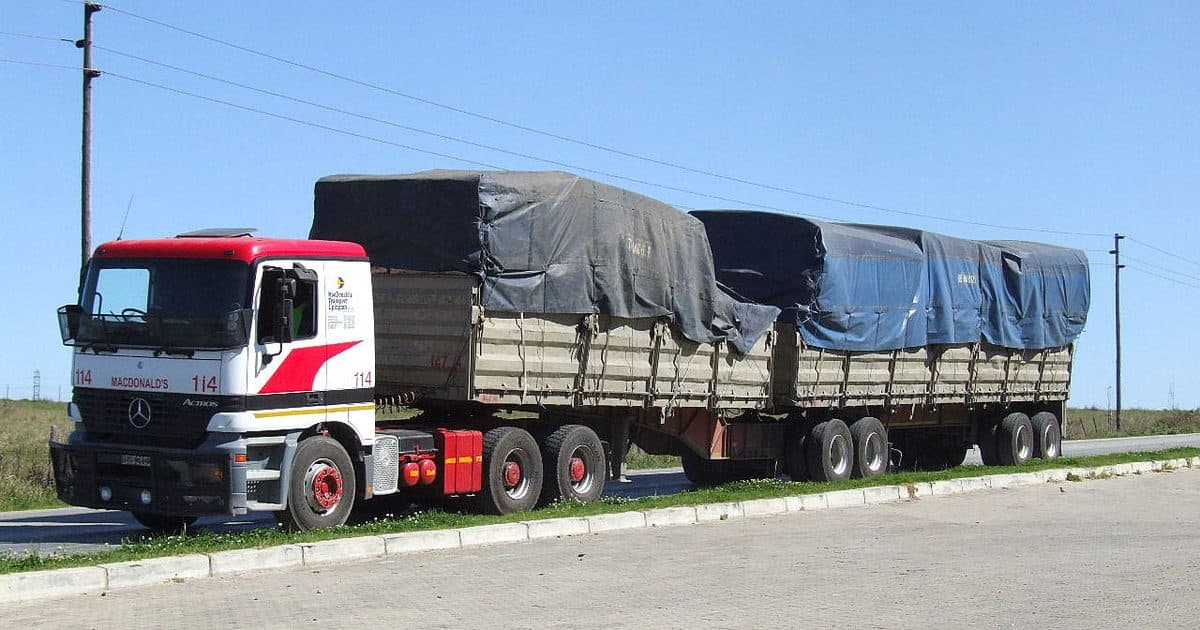
An operator in Kaolack wants to add a tractor and trailer. He has the freight, the driver and the workshop. He does not have the money. The question he asks his banker and the question he should ask are not the same.
He asks about the rate. The answer, inside the West African monetary union, is lower than most people expect. The average lending rate stood at 6.73 percent in 2025 according to the central bank, and the usury ceiling caps banks at 14 percent and finance companies at 24. Set against the 25 to 30 percent a year that Ghanaian commercial banks commonly charge, this is cheap credit.
And still, very few carriers get that financing. The price of money is not the obstacle. Access is, and so is what waiting costs.
The rate is not the cost
Take a recent second hand unit financed over five years. At 7 percent a year, interest over the term stays moderate, around a fifth of the principal. At 14 percent it approaches half. The difference is real, but it weighs less than three items nobody puts in the offer.
Dead time before the first load. Weeks usually pass between approval and the first job: registration, insurance, technical inspection, transport licence, and in some cases the international transport authorisation. Every week of waiting is an instalment paid with no revenue behind it.
Collateral. This is the real wall. Most operators hold no land title and no asset a bank will take as security. The truck itself makes poor collateral in a market where forced resale is slow. Without security the file is refused, or pushed towards more expensive money.
Idle months. A unit that works eight months out of twelve repays over twelve. That is arithmetic, and it is what breaks otherwise serious financing plans.
The real driver: loaded kilometres
A repayment plan is not judged on its rate. It is judged on the loaded kilometres the vehicle will actually cover in a year.
Two identical units, bought the same day at the same price with the same loan, can end the year a factor of three apart in revenue. That is not a figure of speech. The difference comes down to four things:
- waiting time between loads, which depends on how freight is accessed;
- the return load, or its absence: corridor authorities put the share of trucks running empty on the way back at 30 to 40 percent;
- time spent at checkpoints, which depends on the quality of the paperwork;
- downtime for breakdowns, which depends on maintenance and vehicle age.
An operator who controls those four carries credit at 14 percent without strain. An operator who does not is in trouble at 7.
Why leasing changes the picture
A classic loan finances an asset against collateral. A lease finances use against ownership: the lessor keeps title until the option is exercised, which settles the collateral question without asking anyone for a land title.
On paper the rental looks dearer than a loan instalment. In practice it often bundles insurance and part of the maintenance, and above all it is available to operators the bank turns away. For a transport business that is not an accounting preference. It is the difference between financing and not financing.
The thing to watch sits in the contract. The term has to match how long the vehicle will really be employed, not its tax life. A unit leased over three years but worked six months a year costs twice what it earns.
What a financier is actually looking at
We see both sides of that table. A financier, bank or lessor, is not shopping for a rate. He is trying to remove three uncertainties:
That the revenue exists. Contracts, invoices, a record. An operator living on casual freight has nothing to show, even if he drives a lot.
That the asset can be located. A tracked truck is a recoverable truck. It sounds trivial; it is one of the first arguments that lower an insurance premium and soften a lessor.
That the paperwork holds. Current registration, valid inspections, live insurance. An asset immobilised at a checkpoint repays nothing.
None of the three costs much to produce. They simply do not produce themselves.
What we bring to a carrier who wants to grow
A GraceRoad partner carrier is checked document by document, receives jobs that travel with a complete file, and every assigned vehicle is tracked during the run. Coming out of it, the operator holds three things he did not have: a steady flow of work, clean invoices, and proof that his vehicles run.
That is not financing. It is what makes a financing file receivable, and what makes a truck bought on credit run enough to pay its instalments.
If you are building a fleet and looking for steady freight rather than a better rate, that is the conversation we have every day.
Sources: Central Bank of West African States, banking conditions in the monetary union (average lending rate 2025, usury ceilings for banks and finance companies); public data on Ghanaian bank lending rates; corridor authorities and recent logistics studies on empty running; World Bank, Transport Prices and Costs in Africa (fleet utilisation and operator strategies).