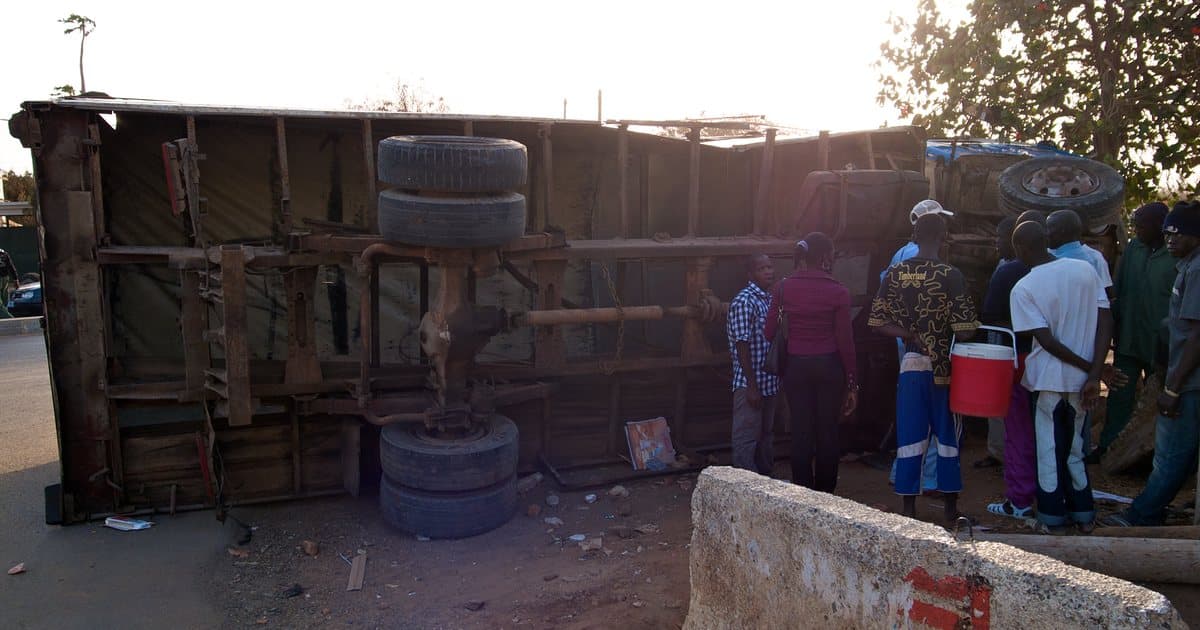
A trader hands a carrier two cartons of mobile phones, 20 kilos in total, worth 10 million CFA francs, about 15,000 euros. The cartons disappear on the way. The carrier accepts liability. It owes 100,000 CFA francs, roughly 150 euros.
This is not a mistake, nor a carrier acting in bad faith. It is the law.
What the text says
Road carriage of goods across the seventeen member states of OHADA, which include Senegal, Mali, Côte d'Ivoire, Guinea, Burkina Faso and Niger, is governed by the Uniform Act on contracts for the carriage of goods by road, adopted on 22 March 2003. It applies automatically whenever the place of loading or the place of delivery is in a member state. A shipment from Dakar to Bamako qualifies twice. Foreign shippers are often surprised to learn that their own contract terms cannot switch it off.
Its article 18 sets the rule that catches everyone out: compensation for loss or damage is capped at 5,000 CFA francs per kilogram of gross weight of the missing or damaged goods. The only way around it is a declaration of value or of a special interest in delivery entered on the consignment note.
For delay, compensation cannot exceed the price of carriage.
What that means in practice
For heavy, low value cargo, the cap barely matters. A tonne of rice is worth far less than the 5 million CFA francs the cap allows for it: if it is lost, the carrier pays in full.
For anything light and valuable, it is brutal. Phones, spare parts, pharmaceuticals, quality textiles, cosmetics, IT equipment: their value per kilo is far above 5,000 CFA francs, and the legal compensation covers only a small fraction of the loss.
The carrier is therefore not your insurer. It answers for your cargo, within a limit the law deliberately set low to keep carriage affordable.
The deadlines that cost you your claim
Even the capped amount is lost if the deadlines are missed.
At delivery. Apparent loss or damage must be the subject of reservations no later than the first working day after delivery. The simplest and safest way is to write them on the consignment note, in front of the driver, before signing: "two cartons missing", "carton 14 crushed, contents wet". A signature without reservations creates a presumption that everything arrived in good order, and the burden then shifts to you.
For hidden damage. If damage only shows when unpacking, reservations must reach the carrier within seven days, Sundays and public holidays excluded.
To claim. A written claim must reach the carrier within sixty days. Legal action is time barred after one year, three years in case of fraud.
What no contract can change
Article 28 of the Uniform Act voids any clause that departs from these rules. A carrier cannot make you sign that it is liable for nothing, cannot take over the benefit of your insurance, and cannot reverse the burden of proof. The parties may, however, choose the competent court or arbitration.
How to protect high value cargo
Declare the value on the consignment note. This is the mechanism the law provides to lift the cap. The carrier may charge a surcharge, since it takes a bigger risk. For valuable cargo, that surcharge is far smaller than what you lose without it.
Insure the cargo at its value. A cargo policy pays on declared value, with no per kilo cap, and covers events the carrier is not liable for.
Document the loading. Photos of the packages, a packing list signed by the driver, numbered seals on the container or tarpaulin. On the day of a claim, that is the proof of what was handed over.
Track the truck. A loss is easier to pursue when you know where and when the truck stopped.
Do not mix values. High value cargo travels better in a dedicated, sealed load than in an open consolidated one.
What we do
Our consignment notes show the real weight and the exact nature of the goods, and we flag the legal cap as soon as the value per kilo exceeds it. We then propose a declaration of value or suitable insurance, before departure. Every truck is tracked, and delivery is made against a note the consignee signs, with reservations if there are any.
If you are shipping light, valuable goods, tell us when you describe the shipment. It is the first thing we check.
Read next: due diligence on an African supplier and choosing a freight agent in West Africa.
Sources: OHADA Uniform Act on contracts for the carriage of goods by road, 22 March 2003, OHADA Official Journal No. 13 of 31 July 2003 (scope, article 14 on reservations, article 18 on limits of compensation, article 25 on claims and time bar, article 27 on jurisdiction, article 28 on void clauses). Euro equivalents at the fixed rate of 655.957 CFA francs to the euro.