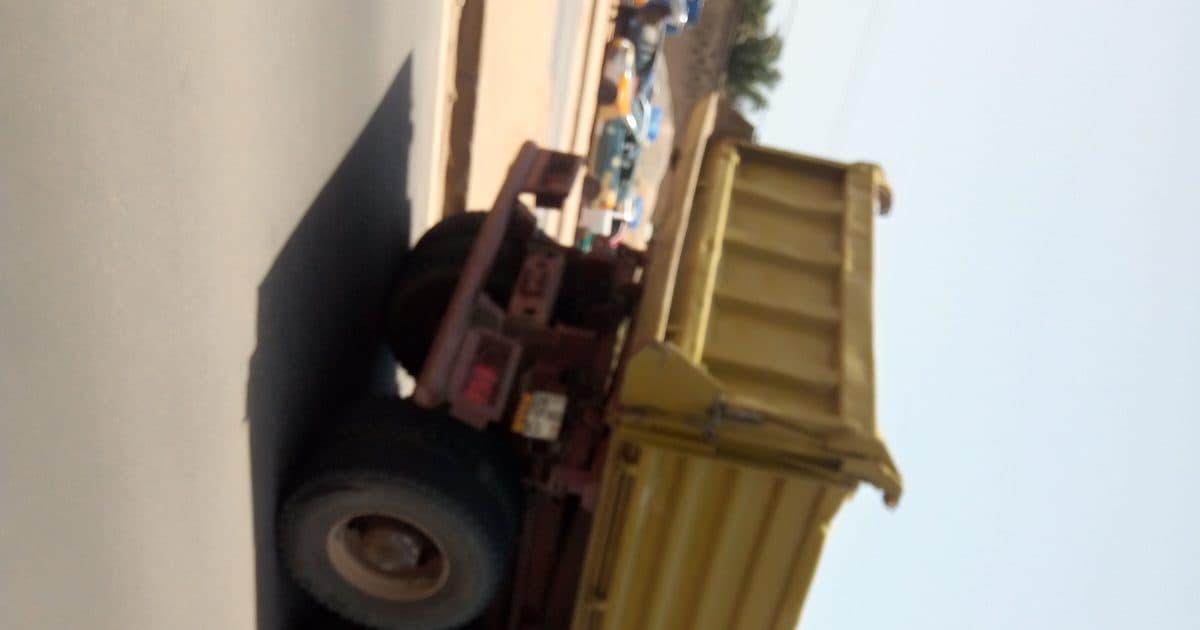
Stand at the exit of Bamako on the Kayes road and count the trucks going west. Most of them are carrying air.
The trade explains it. Mali was Senegal's leading customer in 2024, taking 26.5 percent of Senegalese exports, and in the first nine months of 2025 those flows were valued at around 662 billion CFA. Fuel, cement, food, containers of consumer goods, construction materials. The cargo goes east in volume.
Very little comes back the same way. Gold, the country's main export earner, leaves by air. Cotton moves on its own season and its own arrangements. So the vehicle that took a full load to Bamako has to find something, anything, for the return, and usually does not.
By February 2026 the imbalance had become visible in its crudest form: roughly 4,000 empty containers sitting in Bamako, with drivers unwilling to run the western route because of the security situation. Boxes that belong to shipping lines, immobilised inland, while the same lines are short of equipment at the port.
Who pays for the empty leg
The haulier does not absorb it. He cannot. The truck, the driver, the fuel to get home, the insurance and the financing all run whether or not there is cargo in the trailer.
So the empty return is loaded onto the price of the outbound trip. When a shipper in Dakar asks why the inland leg to Bamako costs what it costs, part of the answer is that he is paying for two journeys and using one.
This is the cheapest inefficiency to attack in the whole corridor. It needs no new road, no new railway, no reform of a customs code. It needs cargo to be visible to the trucks that are already rolling.
Why the loads and the trucks do not find each other
The volume exists. Malian cotton, shea, cashew and hides move to the coast every year. Empty containers have to be repositioned. Regional manufacturers ship to Senegal and Mauritania. The problem is not the absence of freight. It is that nobody knows where it is on the day the truck is empty.
A haulier in Bamako with an empty trailer on Tuesday morning has three ways to find a load. He calls the two forwarders he knows. He waits at a park where loads are allocated informally. Or he leaves empty and stops losing money on waiting instead. Most choose the third, because waiting three days to earn half a load is worse than driving home.
What is missing is not goodwill. It is a place where the demand is posted, the operator is verified, and the payment is certain.
What actually fixes it
Post the return load before the truck leaves. The moment an outbound trip is confirmed, the return slot exists and can be sold. We know the date, the vehicle type and the corridor. That is enough to be matched.
Verify the carrier once, not on every trip. A shipper will not hand a load to an unknown truck in Bamako. If licences, insurance and roadworthiness are checked and kept current by somebody accountable, that objection disappears.
Pay against documents, not promises. The reason many return loads never happen is fear of not being paid. A commissioner that stands between the two parties and settles on delivery against the signed waybill unlocks freight that is otherwise stuck.
Accept partial loads. Half a trailer of shea butter is worth more than an empty one. Grouping small consignments is administrative work, and it is precisely the work an operator should be doing.
Watch the equipment, not just the cargo. Four thousand stranded boxes are four thousand return movements waiting to be organised, and shipping lines pay for repositioning.
What it is worth
Take a corridor where a meaningful share of return trips run empty and fill half of them. The haulier earns on both legs, so his price on the loaded leg can fall without cutting into maintenance or insurance, which are the first things cut when rates are squeezed.
Cheaper inbound freight means cheaper cement, fertiliser and food in Bamako. Better paid hauliers means vehicles that pass their inspections. None of this requires an investment programme. It requires organisation, which is the part we keep waiting for somebody else to do.
What we do
GraceCorp runs road freight between Senegal, Mali, Mauritania and the neighbouring markets, with a carrier network whose papers we check before anyone carries anything, and we consult that network for both directions rather than only the outbound leg.
If you have cargo leaving Mali, or containers to reposition to the coast, tell us the commodity, the volume and the window. If we have a vehicle heading that way, you get a rate that reflects a trip that was going to happen anyway.
Read next
Why the inland leg costs as much as the ocean leg, and what happens when the railway disappears.