A baker in Tambacounda needs ten tonnes of flour. He calls his supplier in Dakar, buys it, then looks for a truck, waits for the queue, pays the transport separately, and receives the goods eight days later if nothing goes wrong.
The same day, on the same road, a loaded truck carrying flour passes thirty kilometres from his shop. It is delivering elsewhere. Nobody in the country can tell it there is a buyer on its route.
That is the whole problem, and the whole opportunity.
An enormous flow, and a blind one
Intra-African road freight is set to go from 201 to 403 million tonnes as the continental free trade area is implemented, according to the study by the United Nations Economic Commission for Africa. Road already carries 75 to 90 percent of inland freight in Sub-Saharan Africa, according to the African Development Bank.
Almost all of that moves out of sight. A truck leaving the port of Dakar exists, as far as the rest of the market is concerned, only when it arrives. What it carries, when it lands, the space left on board, the route it will take back: nobody knows except its operator and his customer.
Two consequences, both measurable.
The return leg is empty. Corridor authorities put the share of trucks running back empty at 30 to 40 percent. That unpaid kilometre is billed to the next shipper.
Goods travel twice. With no way of knowing what is passing, a buyer inland orders from the port what is sometimes already rolling a few dozen kilometres from his door.
What a hub actually changes
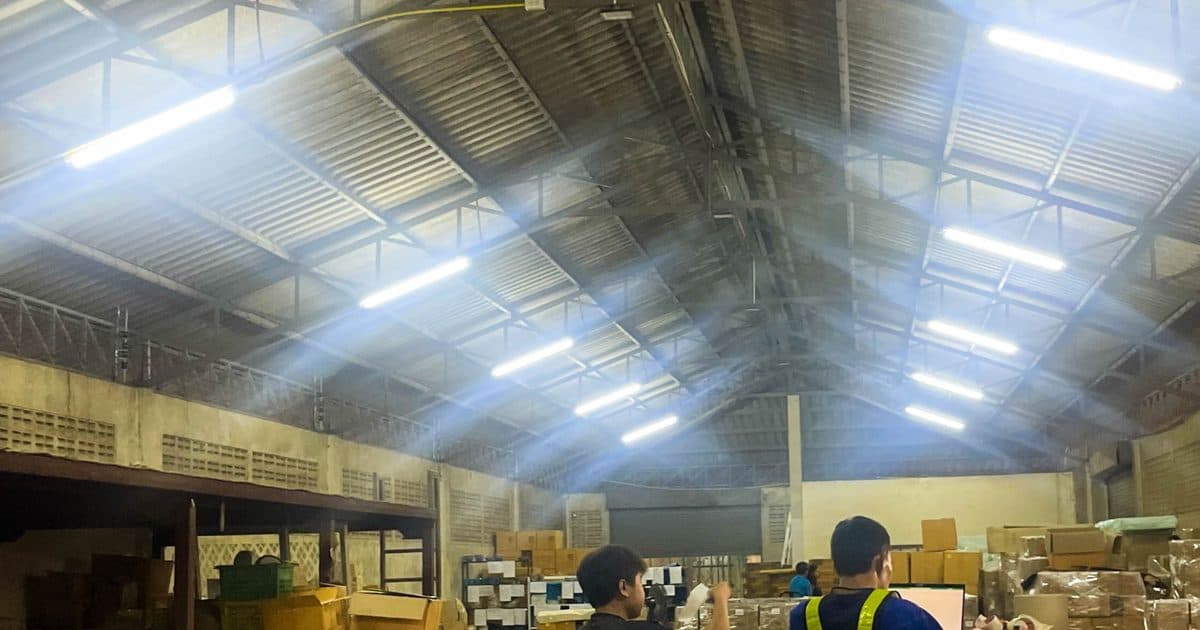
A logistics hub is not one more warehouse. It is a point where three things become possible in the same place: breaking a load, storing it for a few days, and changing trucks.
On a corridor like Dakar to Bamako, a handful of well placed points is enough to change the economics of the run. A unit going up full can drop part of the load midway, pick up freight on the spot, and leave loaded instead of returning empty. The inland buyer no longer waits for a full rotation from the port: he takes what is already at the nearest hub.
The condition is that the hub knows what it holds, what is coming and when. A hub with no information system is a shed.
Rolling stock: what is already on the road
Here is the piece the African market is missing, and the one we are building.
Part of the cargo in motion is not yet sold to its final consignee. It belongs to a trader, an importer, a wholesaler who places it as it moves. That stock rolls. It can be located, it has a price, it has an arrival date, and it can change destination before arrival as long as the truck has not passed.
Making that stock visible and buyable online changes three things at once.
For the buyer. He sees the product, the delivered price at his door, and the date. He buys the goods and the transport in a single operation, instead of negotiating twice and assembling the puzzle himself.
For the carrier. His truck fills up and redirects mid route. A forty kilometre detour beats a five hundred kilometre empty return.
For the seller. He places stock faster and further without opening a depot in every region.
Why this does not exist yet
It is neither a new idea nor a technical problem. Matching platforms exist elsewhere on the continent. What blocks it is more mundane.
Trust. Buying online a cargo you cannot see, from a seller you do not know, on a truck you did not choose, requires someone to stand behind the whole thing. Without that counterparty, the buyer sticks to his usual supplier, even at a higher price.
Data quality. A platform is worth exactly what its data is worth. Stock shown as available that is not destroys trust faster than a bad price.
Payment. As long as settlement happens in cash on delivery, the deal cannot be triggered remotely. It needs a payment that protects both sides.
Proof. The buyer wants to watch his truck move. The seller wants proof of delivery. The financier wants both.
None of these four is a technology bet. They are execution questions, and that is exactly the work we do.
What we are building
We start at the end that decides everything, the execution of the transport itself. Every partner carrier is checked document by document. Every job travels with a complete file. Every assigned truck is tracked, and the client watches the goods move. Payment runs through means that leave a record: Orange Money, Wave, bank card, bank transfer.
On that base, rolling stock becomes sellable at a distance, because the four objections fall one by one: there is a counterparty who answers, information kept current, traceable payment, and proof of delivery.
The hub then makes the operation economic: it is what allows a load to be broken, picked up again and sent back out loaded.
If you hold stock that moves, regular volumes on a corridor, or a well placed warehouse working at half capacity, that is precisely the inverse of the problem we are solving. Let us talk.
Sources: United Nations Economic Commission for Africa, study on transport requirements under the African Continental Free Trade Area (doubling of road freight, truck requirements); African Development Bank (road share of inland freight); corridor authorities and recent logistics studies (share of empty return legs).