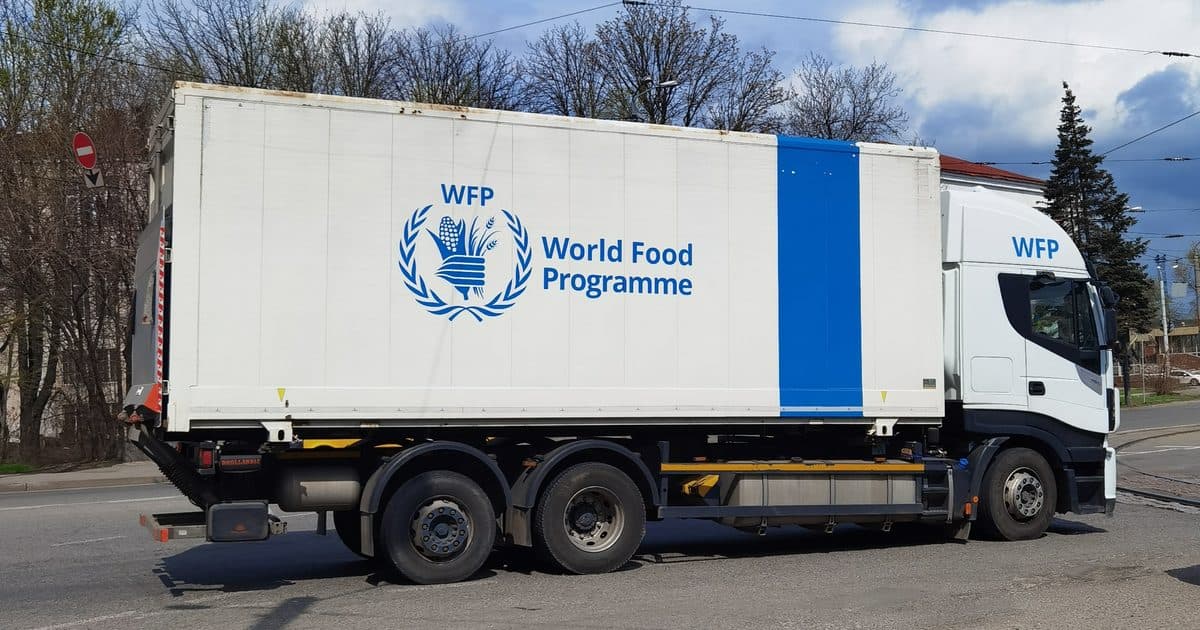
Relief cargo faces every problem commercial cargo faces, plus three that commercial cargo does not: an exemption that has to be obtained before the goods can be released, a procurement rulebook that governs how you were allowed to choose your carrier, and a delivery deadline set by a project cycle rather than by a market.
None of the three is difficult. All three are lost by organisations that discover them after the container has arrived.
The customs exemption is a document, not a status
Being a humanitarian organisation does not exempt a consignment. The exemption is granted per consignment, on presentation of a file, by the ministry or authority designated in the country of import.
The legal basis is well established. The Istanbul Convention on temporary admission, administered by the World Customs Organization, provides in its Annex B.9 for the temporary admission of goods imported for humanitarian purposes, and in Annex B.3 for relief consignments. The Kyoto Convention on the simplification of customs procedures contains a specific annex on relief consignments, providing for clearance priority and simplified declarations. Most West African states are parties to one or both.
What this means in practice: the framework exists, and it still has to be invoked. The exemption letter is requested from the competent authority, with the packing list, the invoice or pro forma, the donation certificate and proof of the organisation's accreditation in the country. Requested when the vessel is already berthed, it will be granted — after the free storage period has expired, and demurrage does not stop while an exemption file is being processed.
The practical rule is simple: the exemption request goes in when the goods ship, not when they arrive.
Duty-free does not mean charge-free
An exempted consignment still incurs terminal handling, storage beyond free days, container demurrage, the container deposit, transit formalities and inland haulage. On a Sahel destination, that last item is the largest single cost of the operation, and no exemption touches it.
Budgets built on "the goods are exempt" routinely underestimate landed cost by a wide margin.
Donor procurement rules govern how you chose the carrier
Institutional donors impose procurement rules on their implementing partners, and freight is procurement. Depending on the donor and the threshold, that means competitive quotations, a documented selection, a written contract, and an audit trail that survives an external audit two years later.
Two consequences worth planning for.
First, your carrier must be able to produce compliant paperwork: a proper invoice, a signed contract, proof of delivery, and evidence of legal existence and licensing. A haulier operating informally cannot support an audited file, whatever his price.
Second, an emergency does not suspend the rules — it changes which ones apply. Most donors provide derogations for emergency procurement, and those derogations have their own documentation requirements. Know them before the emergency, not during it.
Constrained access
In parts of Mali, Burkina Faso and Niger, routing is a security decision before it is a logistics one. Escort, convoy timing, overnight stops, driver briefing and communication protocols are part of the operation, not options added at the end.
Two things follow. Security-related routing changes cost time and money, and a budget with no contingency for them is a budget that will be revised. And information matters: a field office that knows where a convoy is can make a decision. One that does not can only wait.
The project cycle is the real deadline
Commercial cargo can arrive late and cost money. Donor-funded cargo that arrives after the end of a grant period can become ineligible expenditure, which is a different kind of problem entirely.
This is why delivery date discipline matters more in this sector than in almost any other, and why the planning has to run backwards from the end of the project period, through the delivery date, the transit time, the clearance window, the exemption processing time and the shipping schedule. Anyone who plans forwards from the purchase order arrives late.
What we do
We handle port operations, customs, transit and inland delivery for organisations operating in Senegal, Mali, Mauritania, Guinea, Burkina Faso, Côte d'Ivoire, Gambia, Togo and Benin.
Concretely, for this sector: we prepare and follow the exemption file rather than waiting for it, we operate transit under the ECOWAS TRIE regime for landlocked destinations, we use carriers whose licences, vehicle registrations, roadworthiness certificates and insurance we have verified — the only kind that can support an audited procurement file — and we provide the documentation your finance and audit teams will need, in the form they will need it.
We can arrange escort where the route requires it. We are a freight forwarder, not a security company: on high-risk routing we work with specialist providers rather than claiming a competence we do not have.
What we need from you
The commodity and packing list, the port of arrival and estimated date, the final destination, the donor and the applicable procurement threshold, the end of the project period, and whether an exemption is expected — with the accreditation documents, if so.
Sources
- World Customs Organization — Istanbul Convention on Temporary Admission, Annexes B.3 and B.9 on relief consignments and humanitarian goods.
- World Customs Organization — Revised Kyoto Convention, Specific Annex J Chapter 5 on relief consignments.
- ECOWAS — Common External Tariff, for the duty structure exemptions are granted against.
Exemption procedures are national and they change. Confirm the current requirement with the customs administration of the country of import before shipping.
Read next
Quoting DDP into West Africa for the duty and levy structure, and the West African logistics calendar for seasonal planning.